
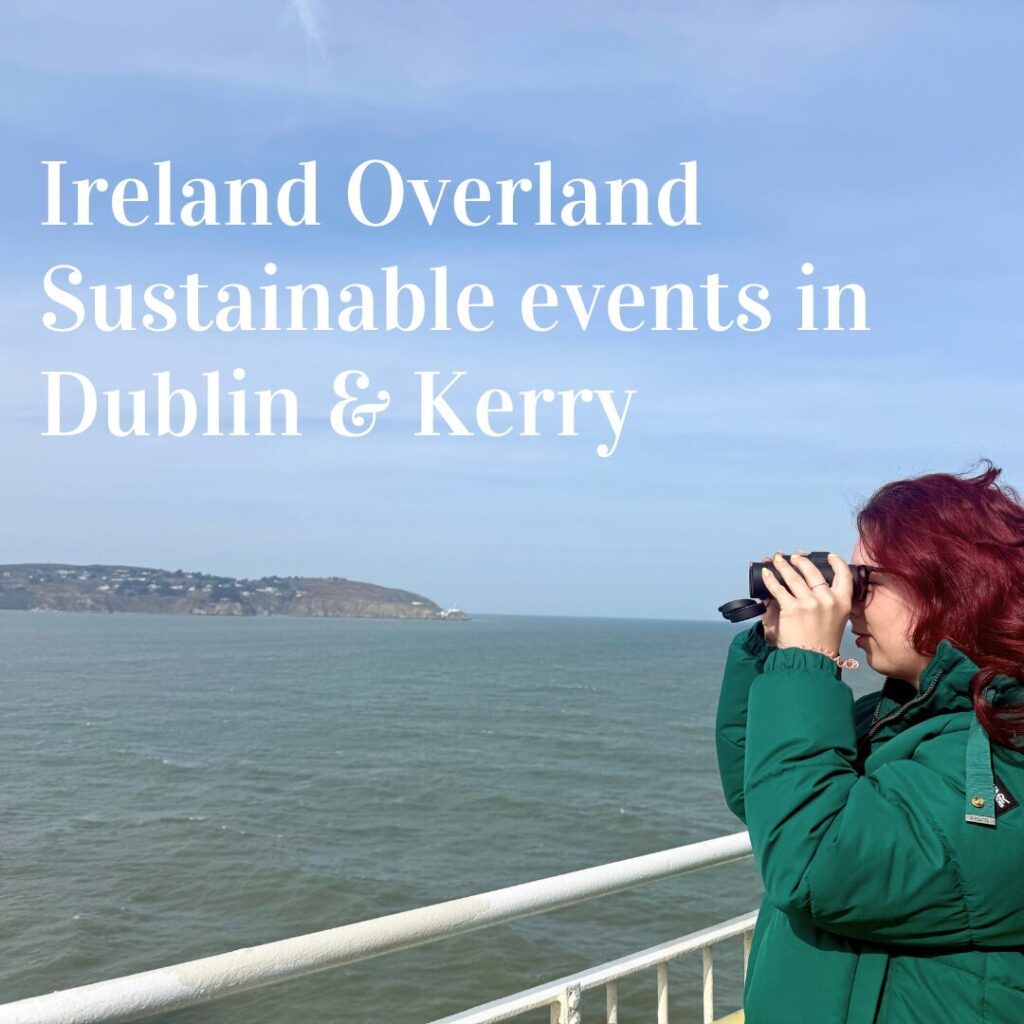
“So this is luxury travel – for people not in a hurry.” Someone said it quietly on the train, somewhere between London and North Wales. It stuck.
It’s a bold move to ask a group of very busy event planners to give up an extra day to travel slowly. But that was the point. Ireland Overland wasn’t designed as a showcase. It was a live, slightly experimental collaboration built to answer a question the events industry has been circling for years: what does sustainable event design actually feel like?
At a time when clients are under increasing pressure to reduce emissions and make more responsible choices, travel sits at the centre of that challenge, often the biggest contributor to an event’s footprint and one of the hardest things to rethink. So instead of talking about it, we decided to test it. Together.
The Journey – and why it matters more than we think
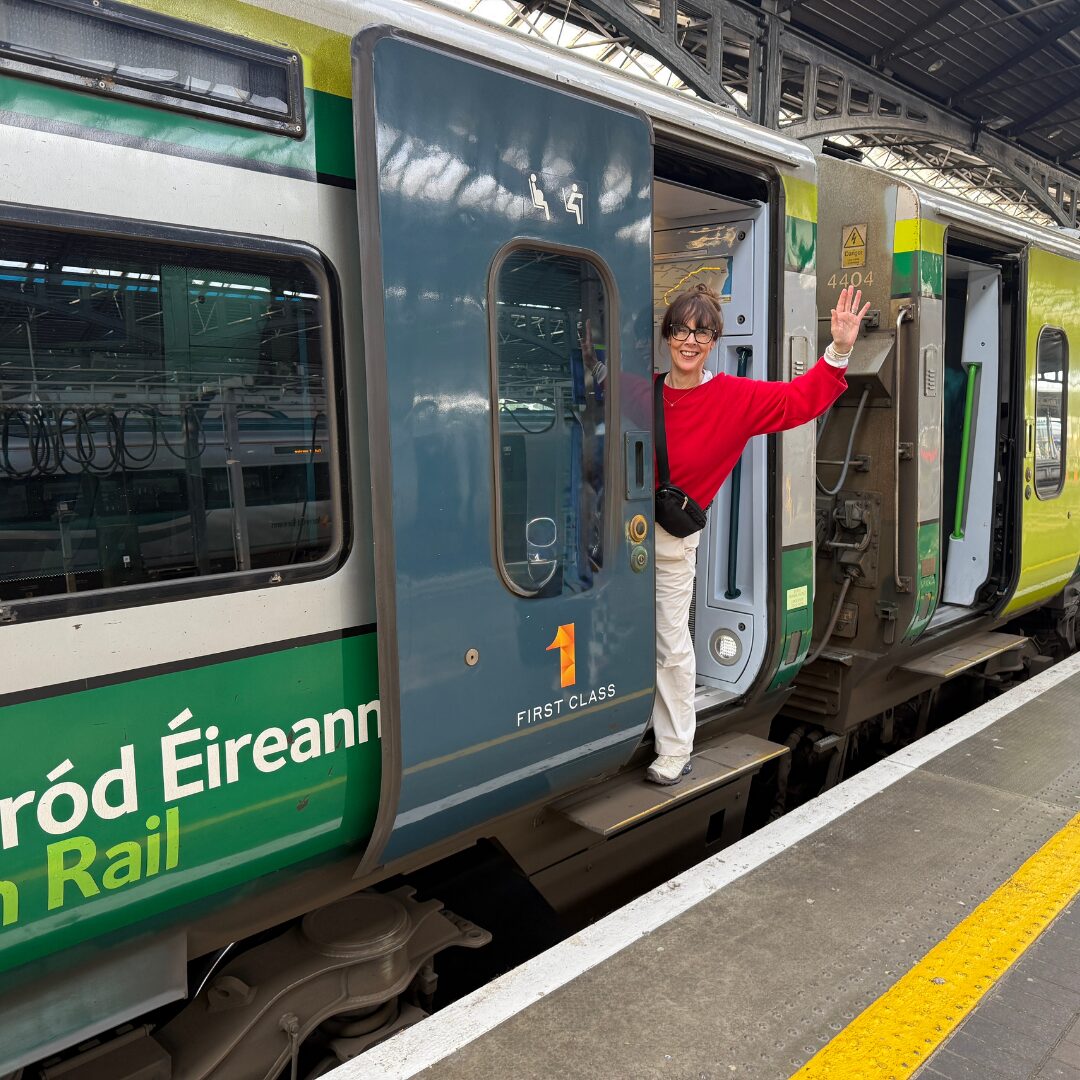
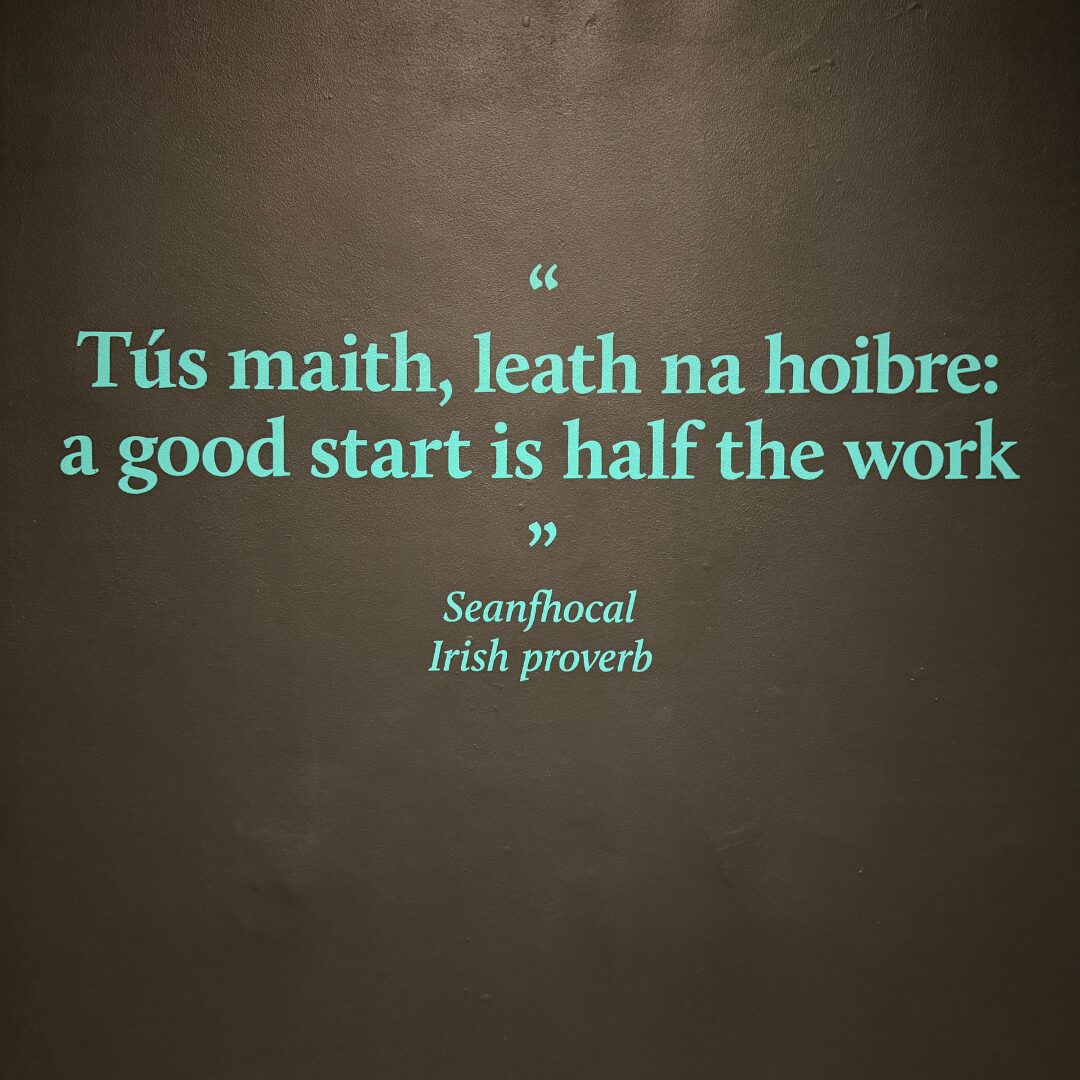
‘Tús maith leath na hoibre’ – a good start is half the work. And as it turned out, the journey itself was exactly that. The destination was Dublin and Kerry. But the journey didn’t begin in Ireland. It began as London gave way to open countryside and the dynamic started to change. Laptops closed, conversations opened; the usual urgency of travel loosened its grip.
“Being able to sit with the group you are travellingwith is great, making connections from the beginning.”
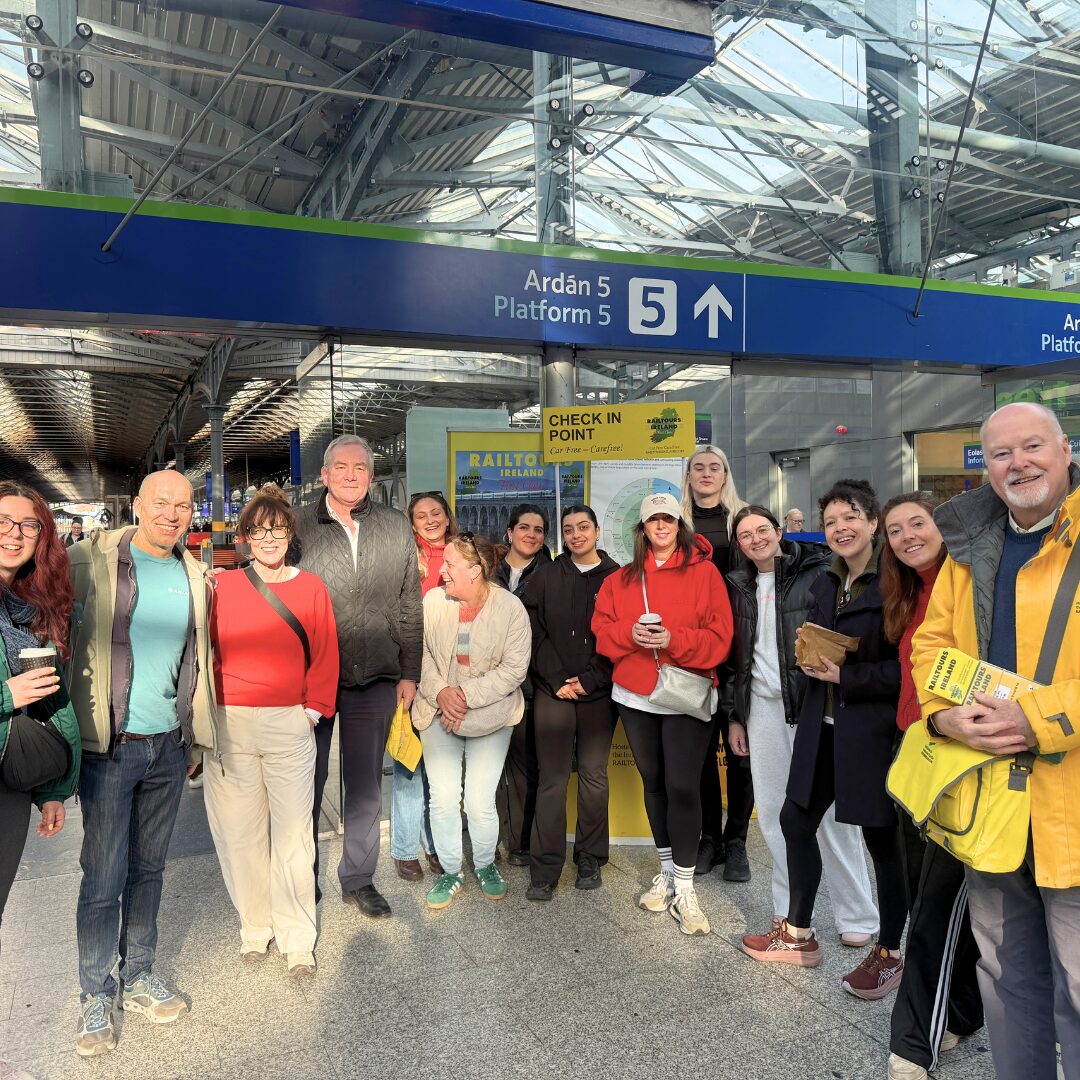
Rail and ferry travel was seamless, thanks to our partner Rail Tours Ireland, who provided a single through-ticket and a dedicated guide throughout. Our guide, Andrew Roache, handled logistics effortlessly while reading the room (or should that be the train) with perfect instinct, knowing when to step in and when to let the group simply be. He quickly became our unofficial mascot.
By the time we reached the North Wales coastline, attention had shifted outward towards estuaries, distant mountains and the unexpected appearance of Conway Castle appearing suddenly as we emerged from a tunnel.
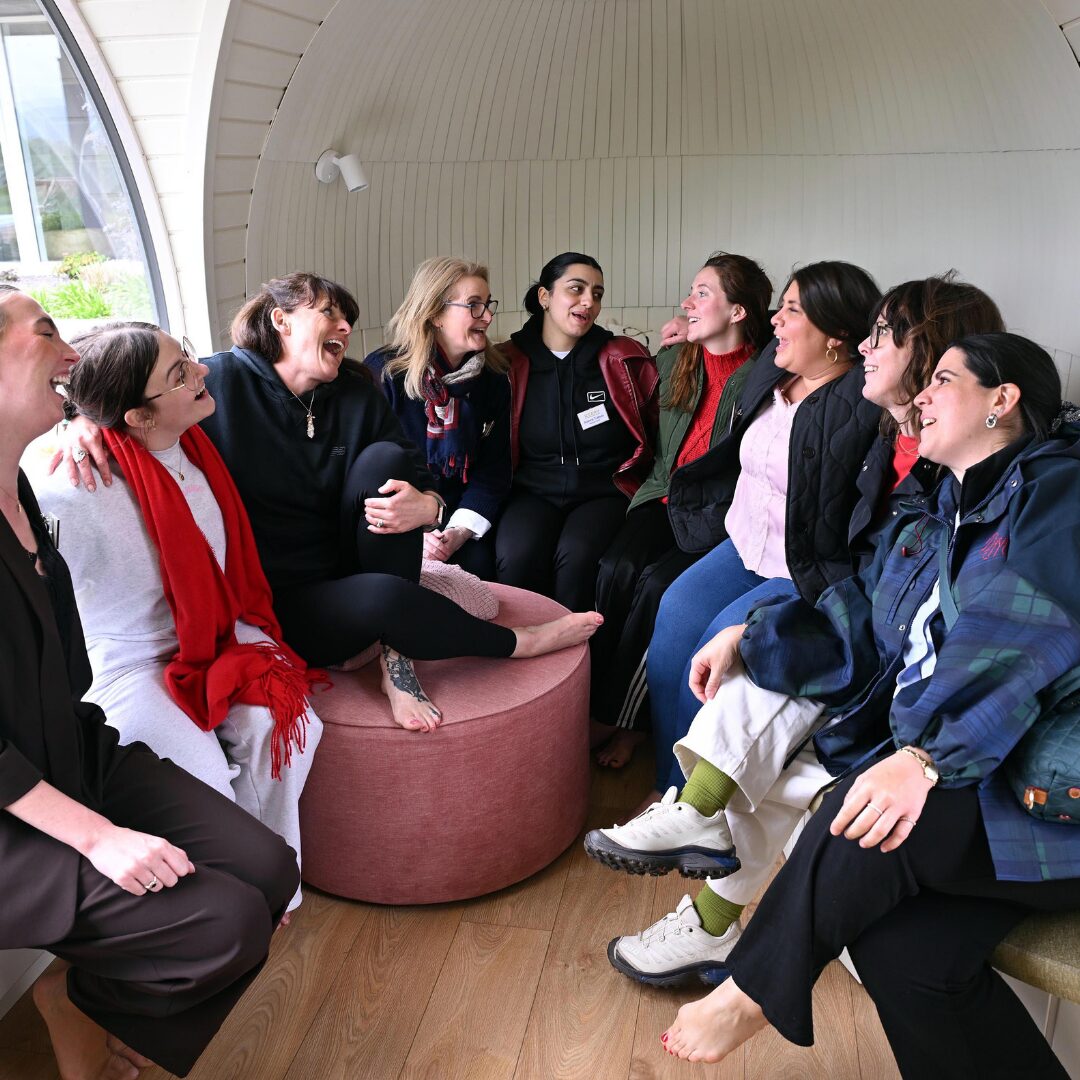
“Spending that kind of time together, moving, experiencing and reflecting at a slower pace, creates a different type of connection. It felt less transactional and more genuine. You naturally have deeper conversations, build trust more quickly.”
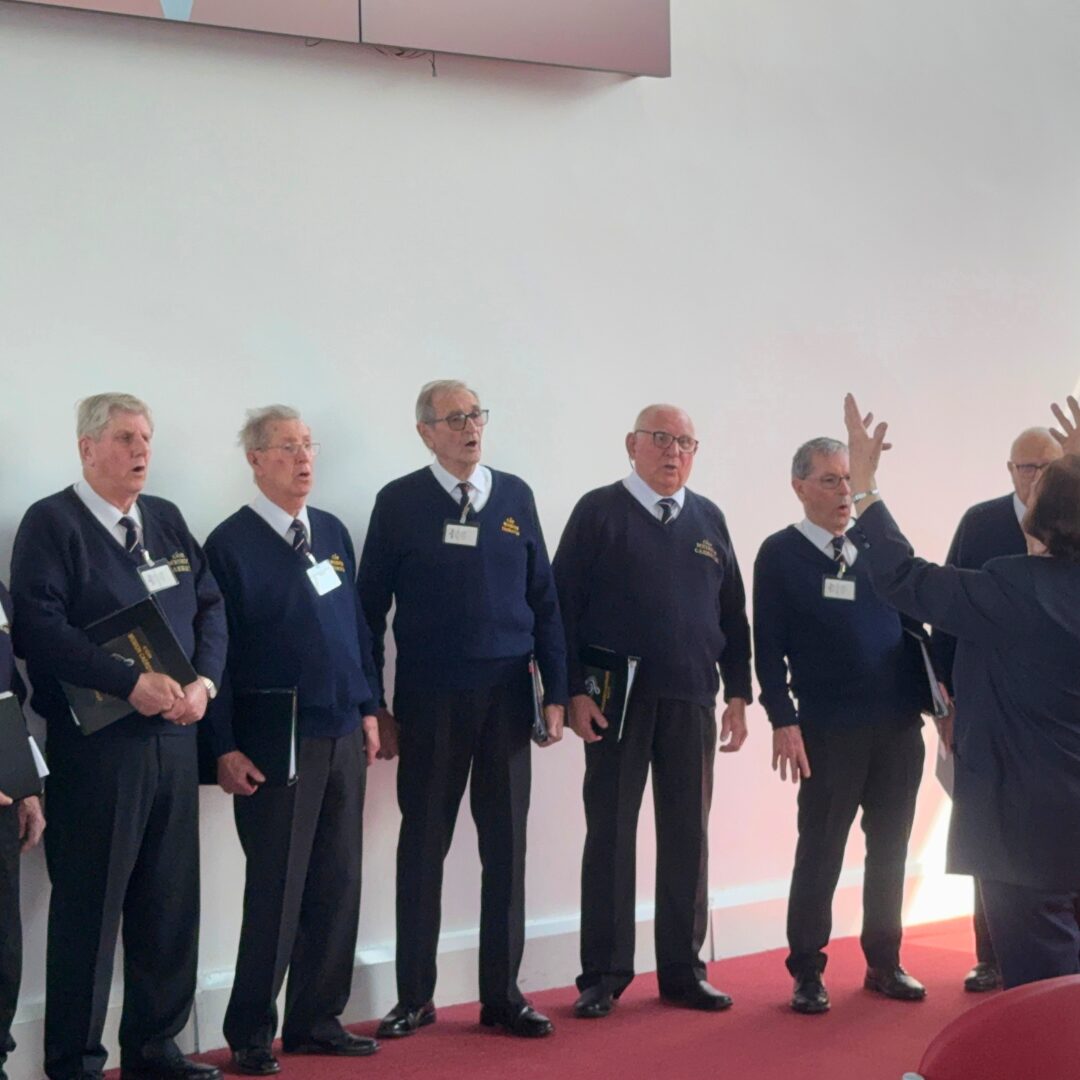
And then, at Holyhead, something happened that only overland travel makes possible. A surprise Welsh male voice choir, arranged by Meet In Wales, welcomed the group at the port. Voices carrying across the harbour. A moment that stopped people in their tracks. It wasn’t planned as a highlight, but it became one because it reminded us of something simple: when you travel differently, you create space for moments that connect you, not just move you.
Traditional Welsh tea cakes and chocolate love spoons, a chance to attempt the pronunciation of Llanfairpwllgwyngyllgogerychwyrndrobwllllantysiliogogogoch (it didn’t go well), and warm Cwtch’s (Welsh hugs) all round before we were wished bon voyage. In just thirty minutes, Meet in Wales made a lasting impression. A powerful demonstration of what warmth and intention can do within the smallest of windows.
“The choir, Captain’s bridge moment and Andrew’s in-depth knowledge of our surroundings were my highlights. It just felt so special and gave such a true flavour of Wales and Irish hospitality.”
Overland travel is still underused in MICE, but it didn’t take long to see why it has a place. Yes, it’s more sustainable but more than that, it creates something else: time. Time to arrive, time to connect, time to become a group before the programme even begins and that changes everything.
Across Water: designing for arrival
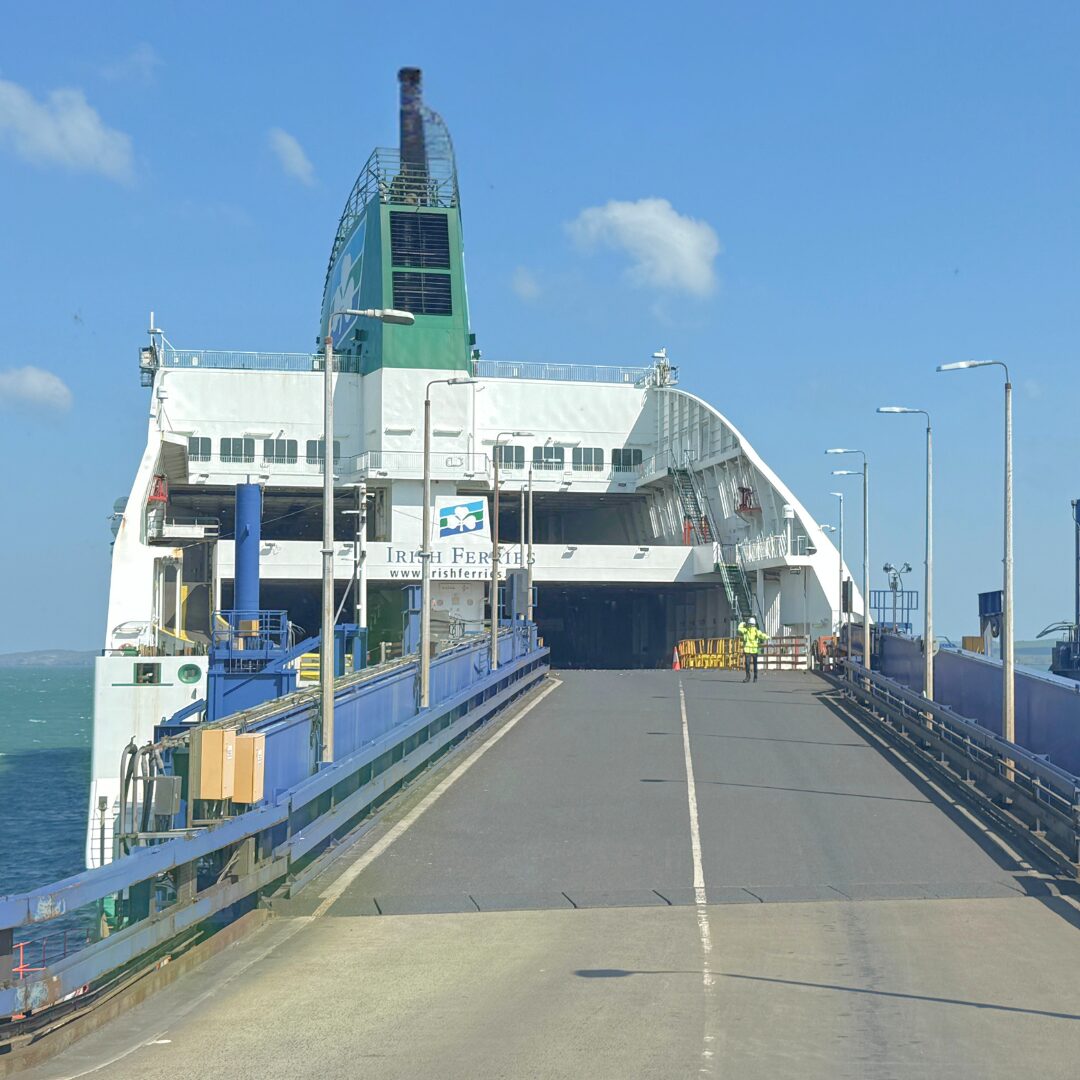
The transfer at Holyhead couldn’t have been more straightforward; a simple stroll along the platform to check-in. For groups, Irish Ferries arrange pre-check-in, private luggage transfer and lounge access, making the logistics invisible.
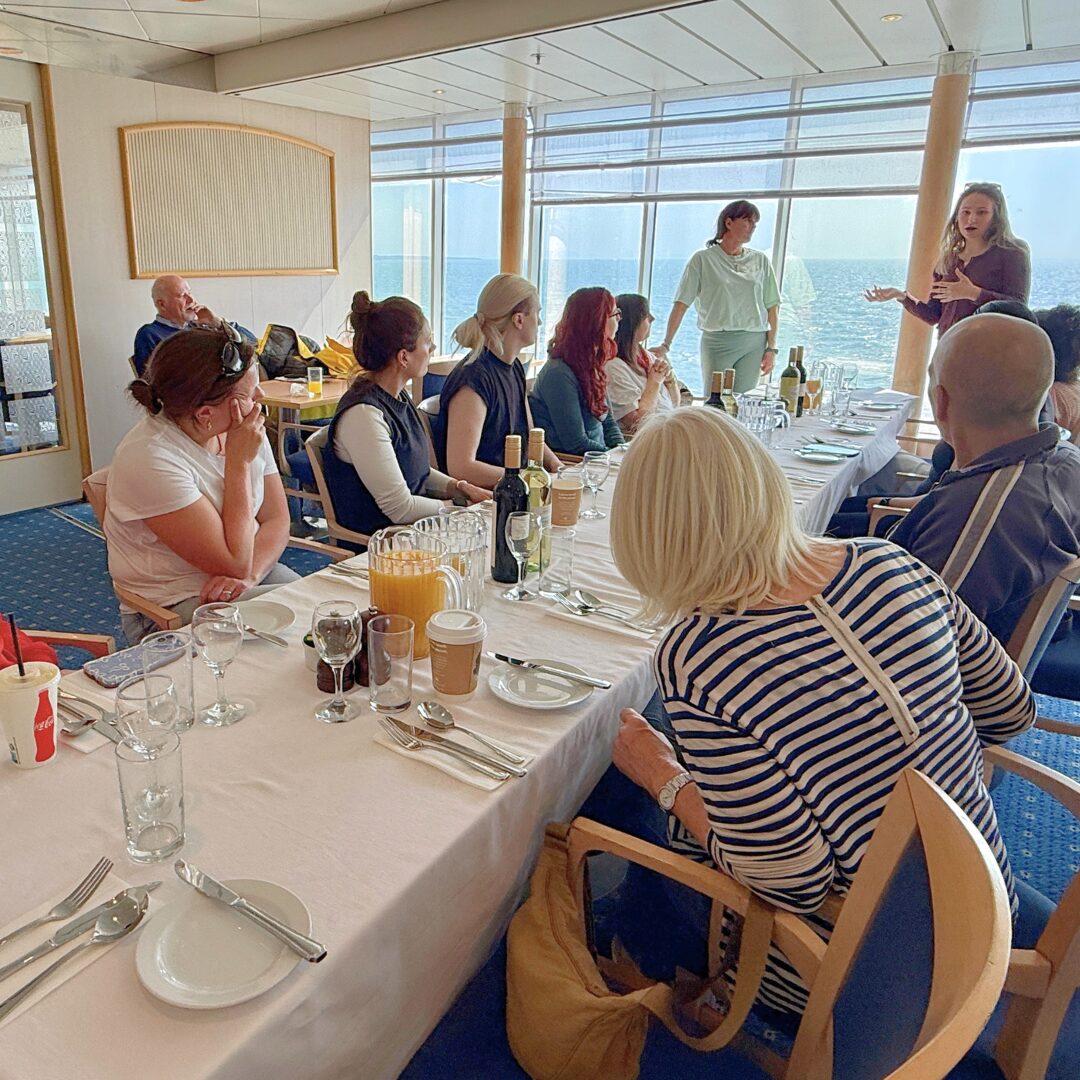
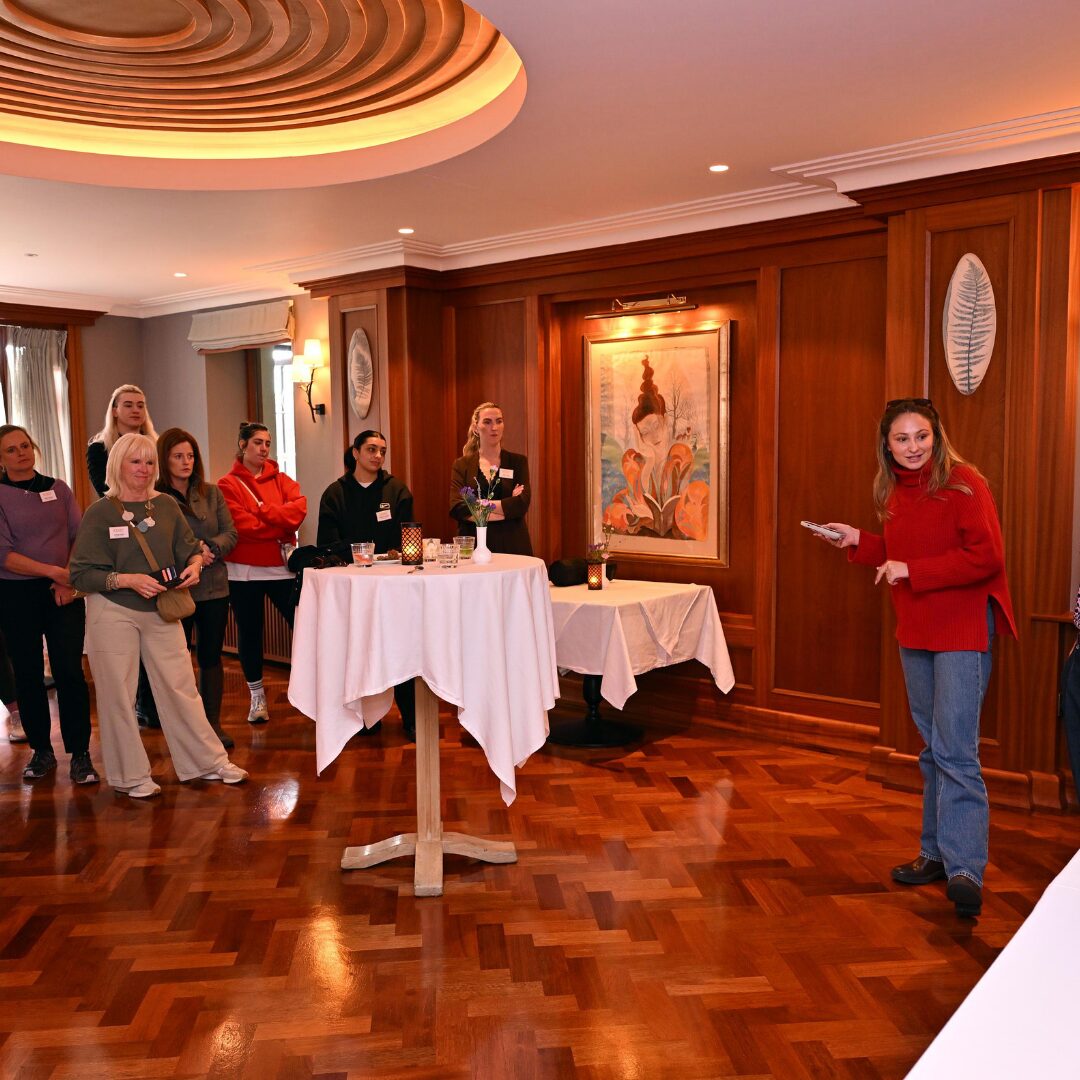
The crossing itself quickly became more than a transfer. In partnership with FromNow and Be In Your Element, we hosted an onboard session exploring a simple idea: what if we designed events around how people arrive, not just what happens when they get there? Because how people arrive shapes everything that follow. Not just energy, but how people connect, engage and show up.
“The openness of the tables allowed for greater engagement.”
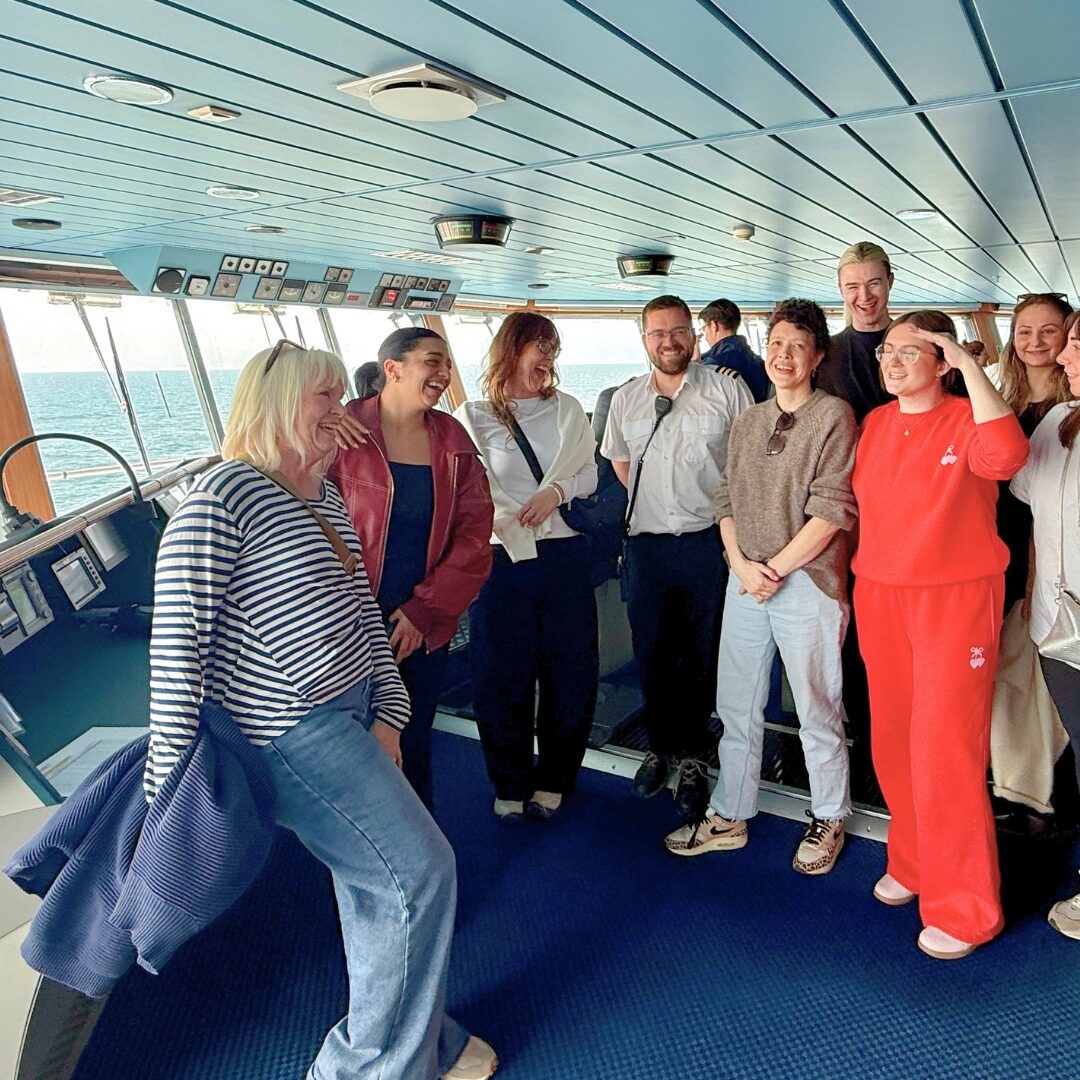
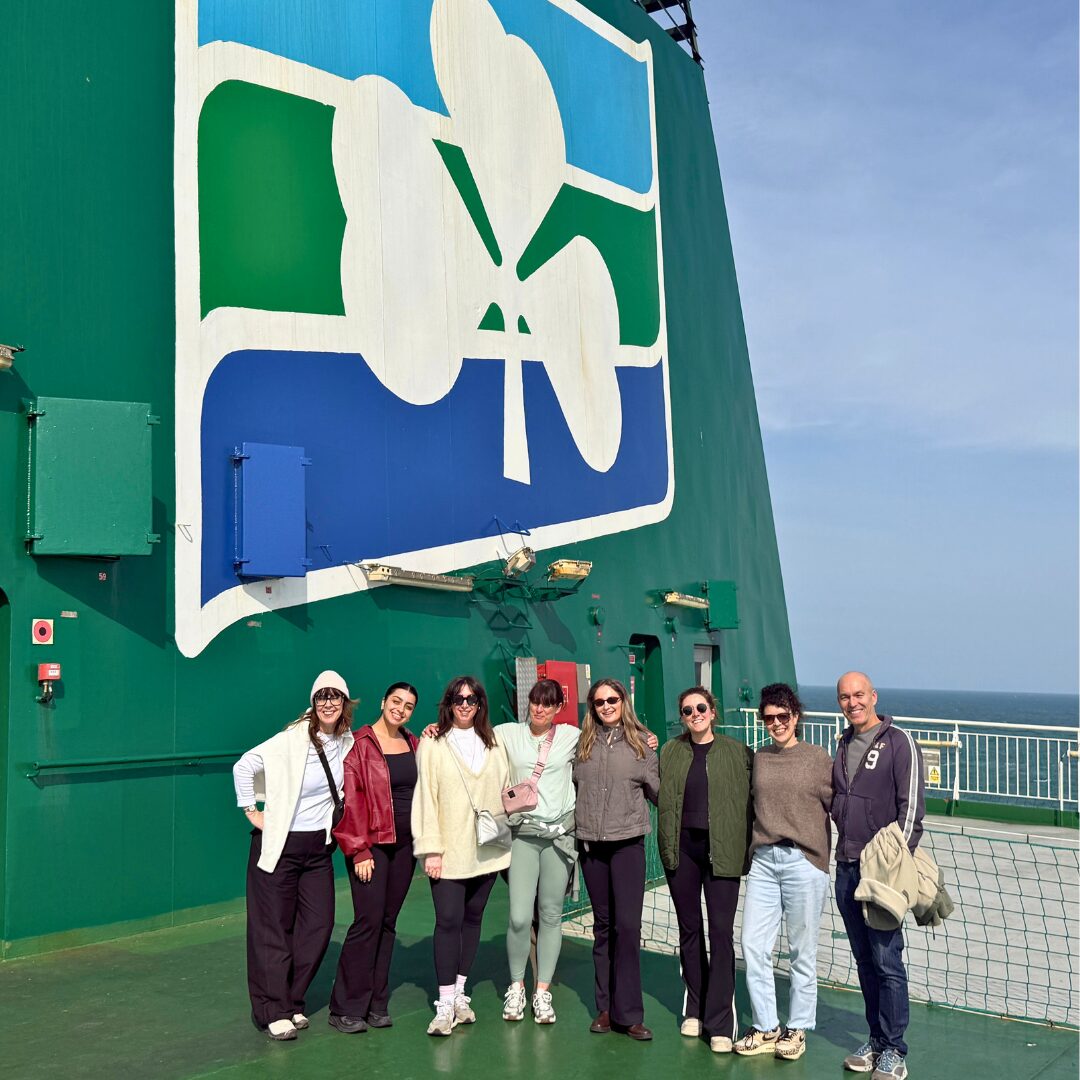
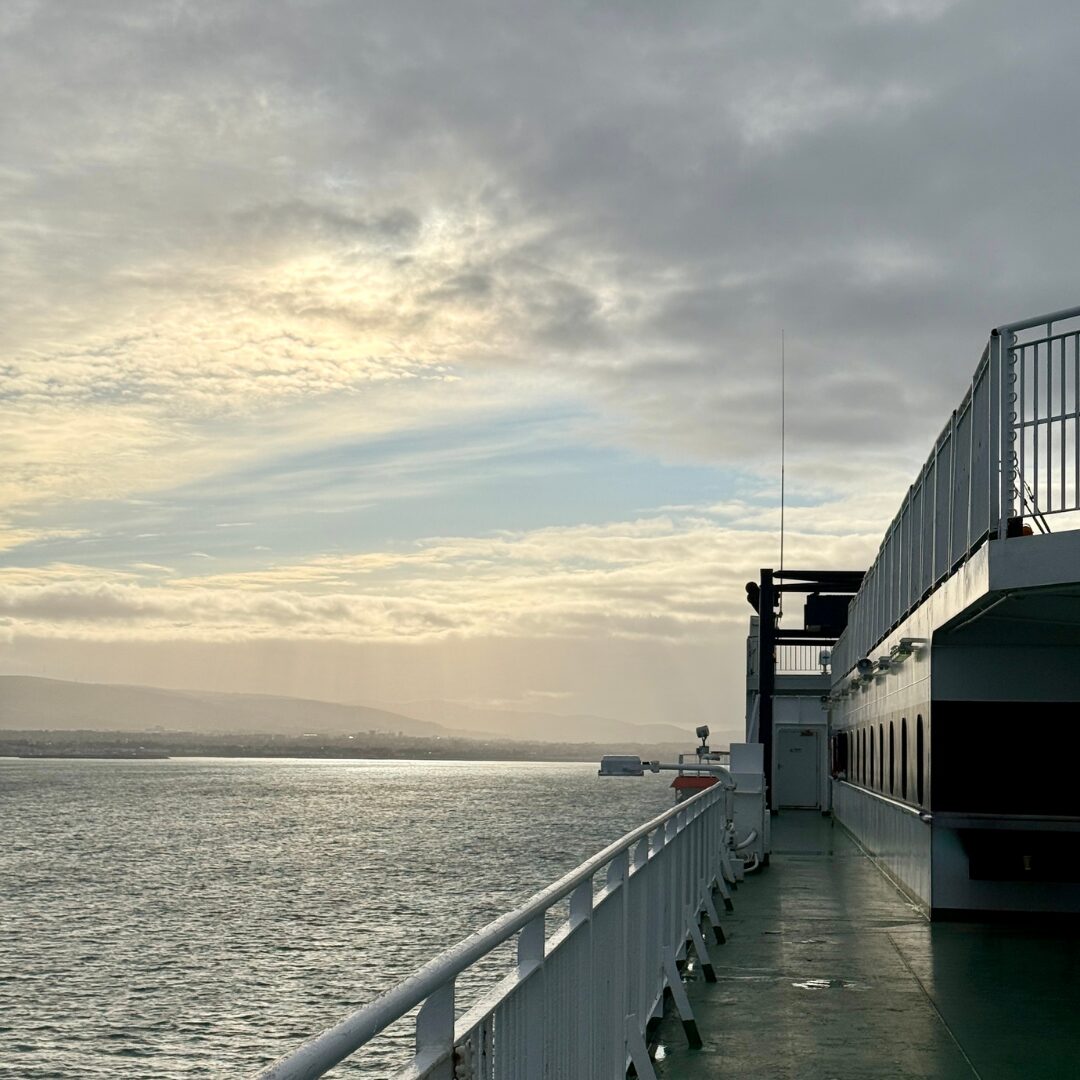
Sitting face-to-face over lunch, sharing industry insights, swapping memories of favourite bodies of water (waves crashing on cliffs to warm seas breaking on beaches) the group got to know each other. Going slowly offers frequent opportunities to build in surprise: a tour of the bridge with the captain and the best sea views on the crossing. Stepping onto the deck for ‘a bit of sea air’ turned out to be something more – wind in the hair, sun on the face, the sea air a full reset. Travelling this way you feel the journey rather than observe it through a pane of glass.
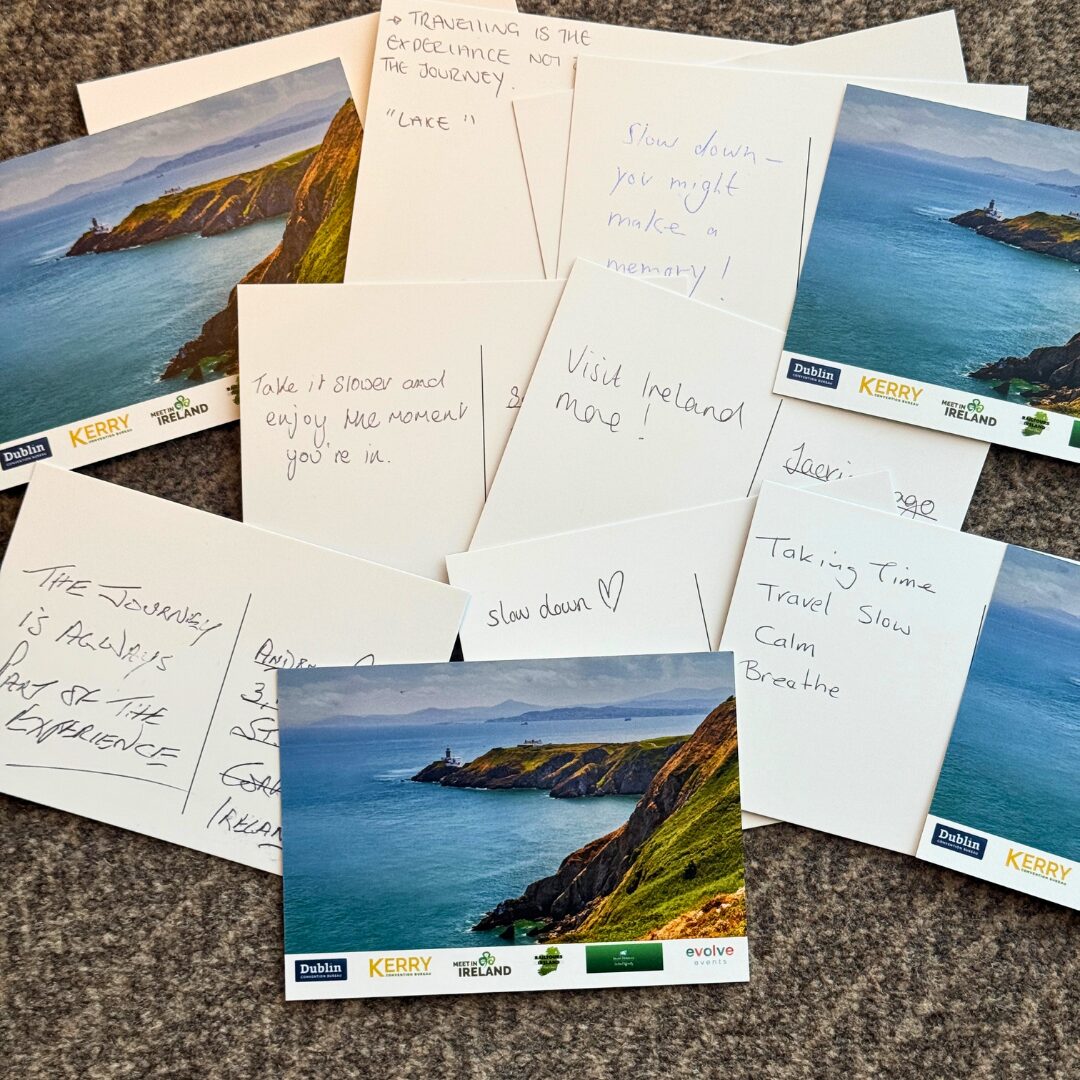
Each attendee was given a blank postcard to write their own message-in-a-bottle to their future self, posted to their homes and waiting on the doormat when they returned. A small act that from the ferry crossing that captured something worth remembering.
The rail and ferry journey would later be calculated at just 27kg CO₂e per person, a fraction of the equivalent flight. But at that point, it wasn’t just about numbers. It was about how it felt.
“Travel should be a central part of the overall event design. It makes for genuine connection and relaxed delegates, forced to slow down and enjoy the views.”
By the time the group reached Dublin, they were already one.
“It’s not often you are giggling with strangers after meeting only a few hours earlier. I have attended two-day conferences where I have barely spoken to anyone, but after an hour on the train we had already swapped war stories and bonded over the experience of train travel!”
Dublin: sustainability, quietly embedded
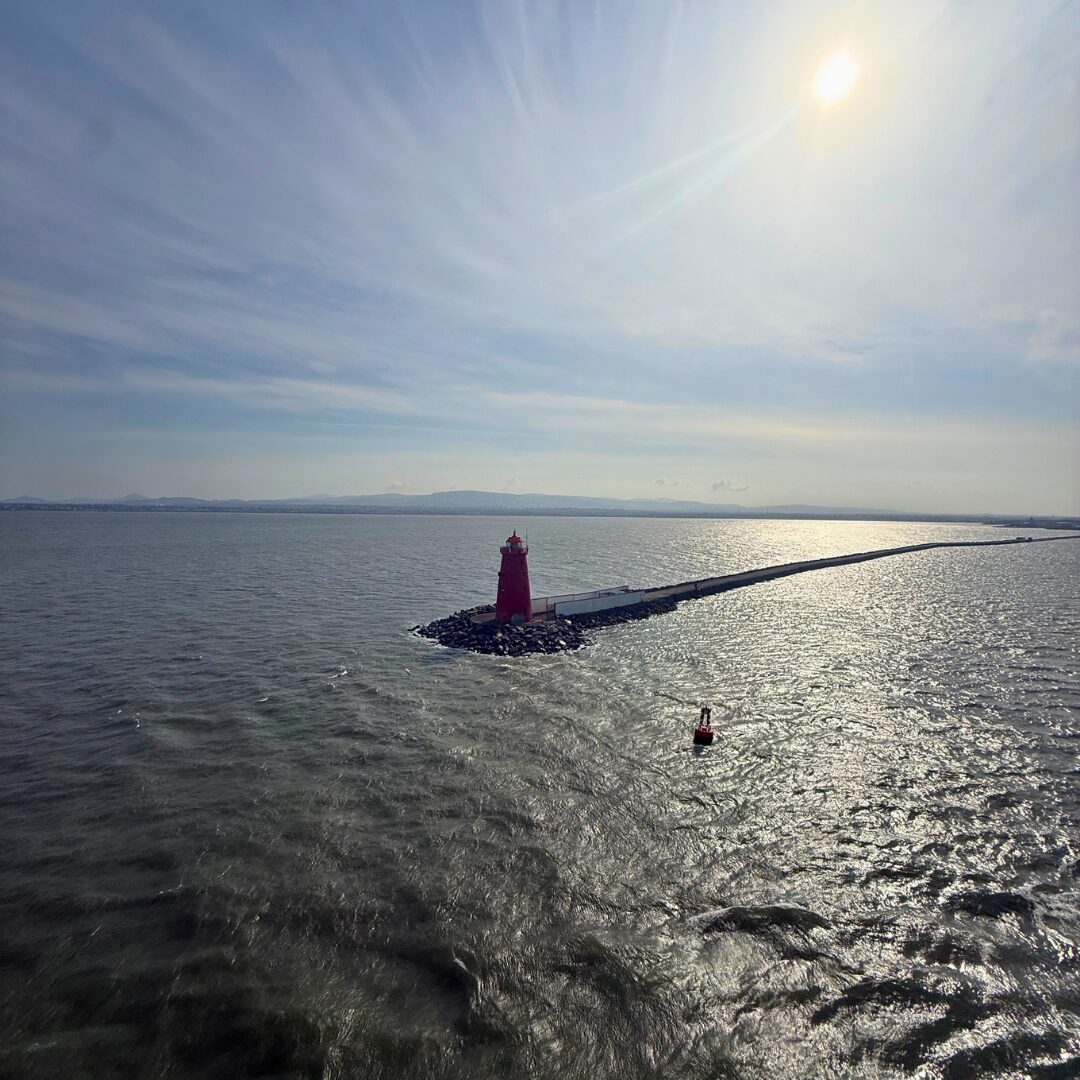
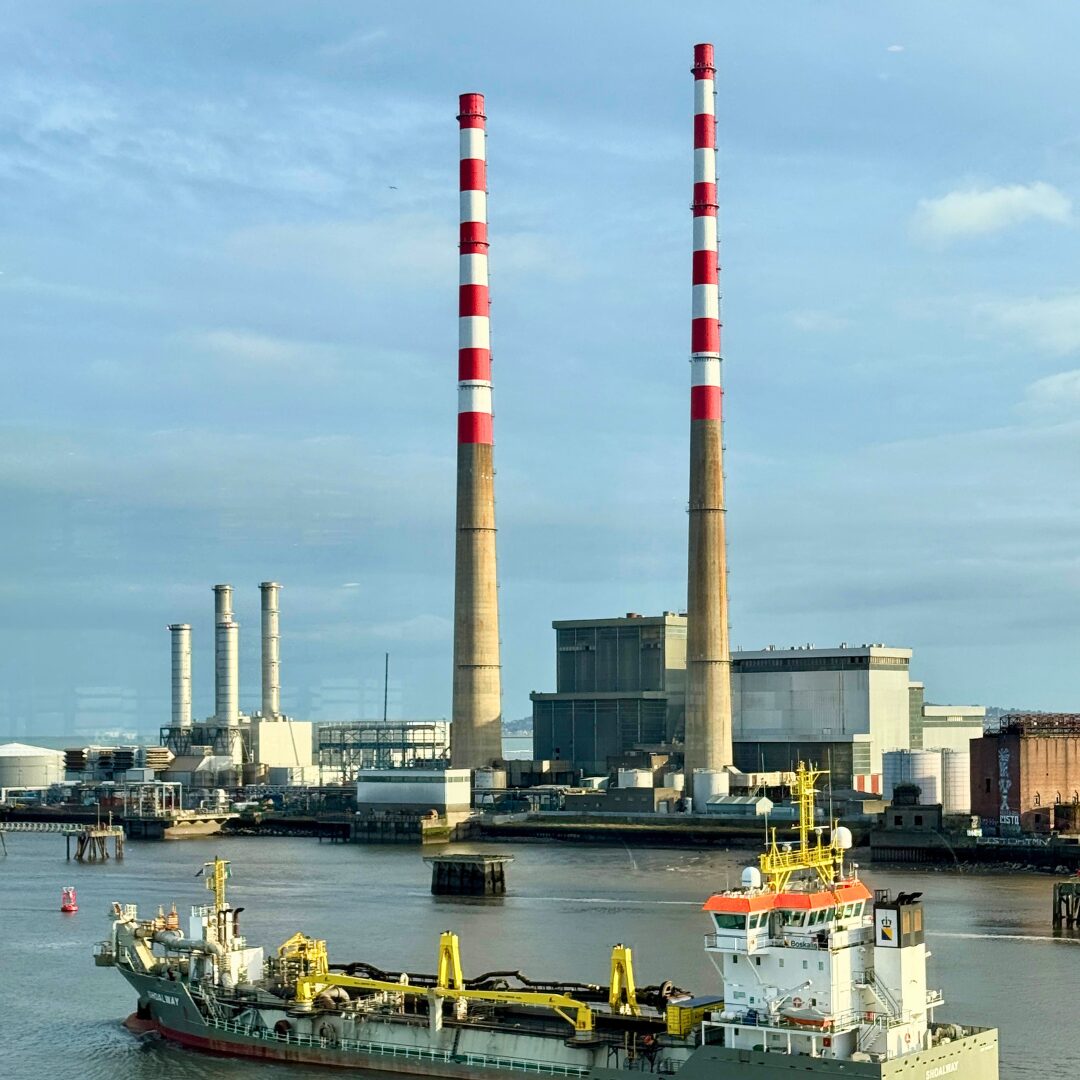
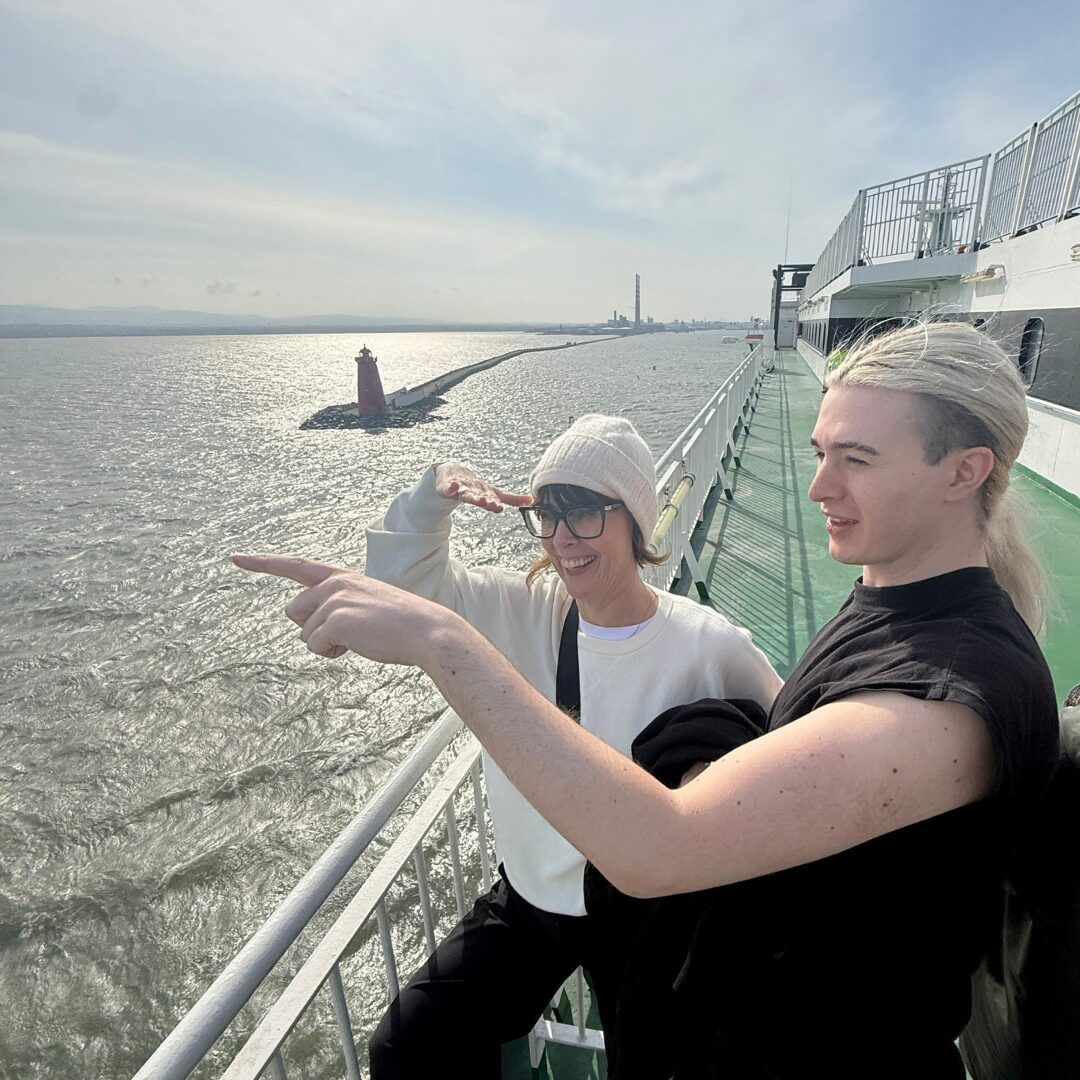
Arriving into Dublin by sea feels different. Standing on deck as the rugged cliffs of Howth and the iconic red and white Poolbeg Chimneys rise up to greet you sets a connection that carries through the city itself.
Ranked #19 in the Global Destination Sustainability Index, Dublin delivered sustainability not as a talking point but as a lived experience. Walkable, creative, full of stories; it’s a city where sustainability shows up in how you experience it, not just how it’s positioned.
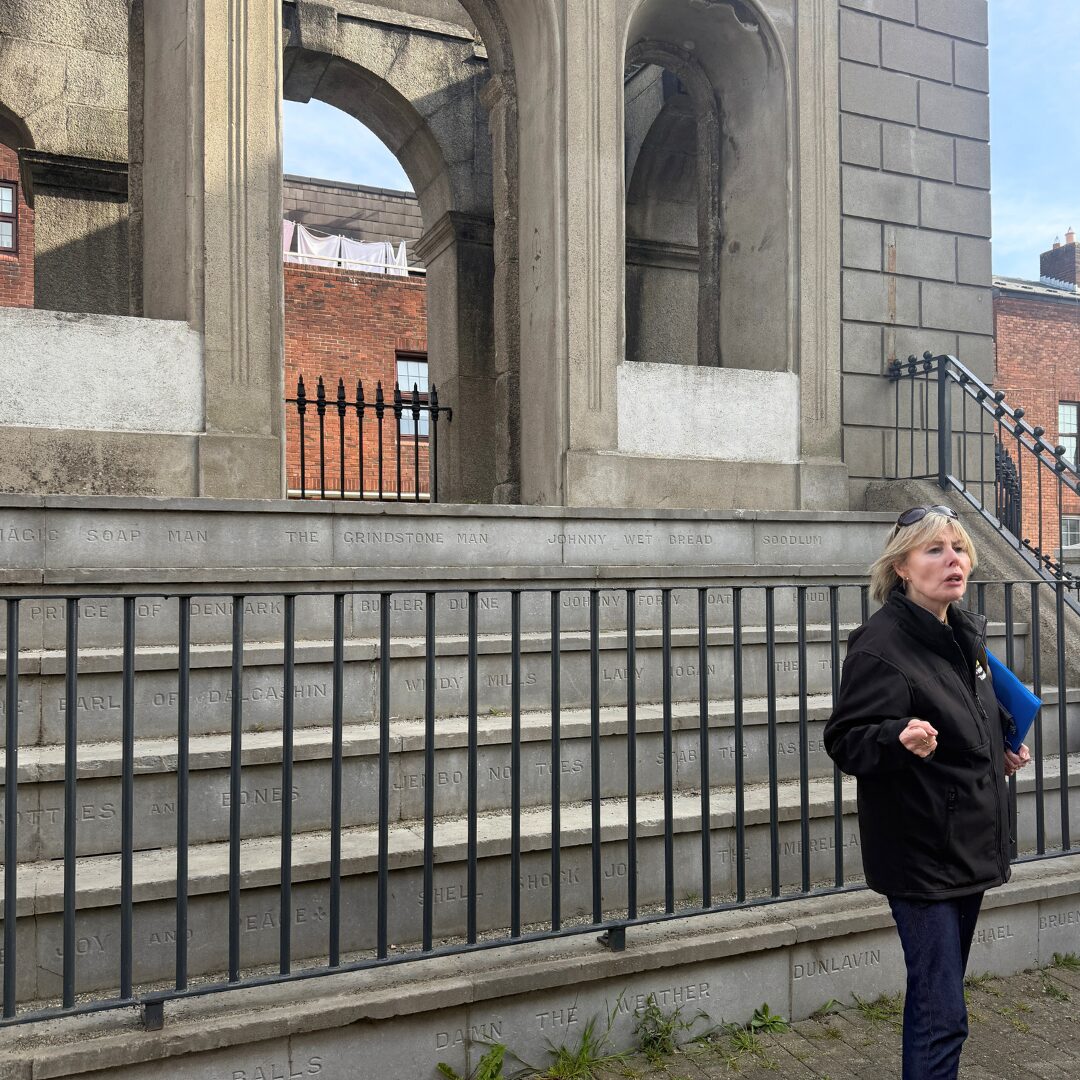
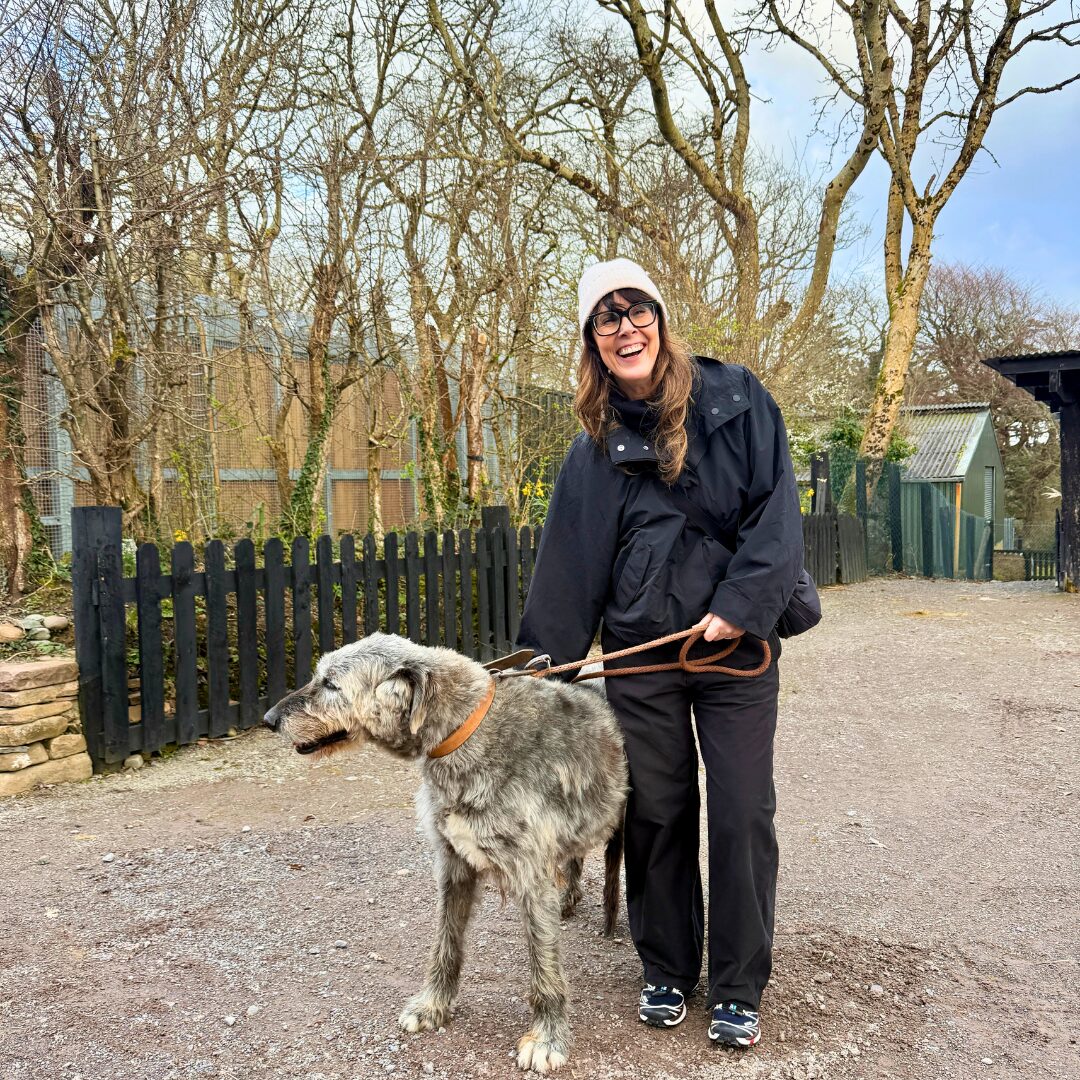
The programme wove a thread of storytelling through everything, building a sense of place. In Our Shoes Walking Tours replaced transfers, connecting the group directly to the Liberties area and offering, as one delegate put it, “a perspective of the city that we wouldn’t have experienced as typical tourists. What they’re doing as a project is both meaningful and important and it added real depth to the experience.”
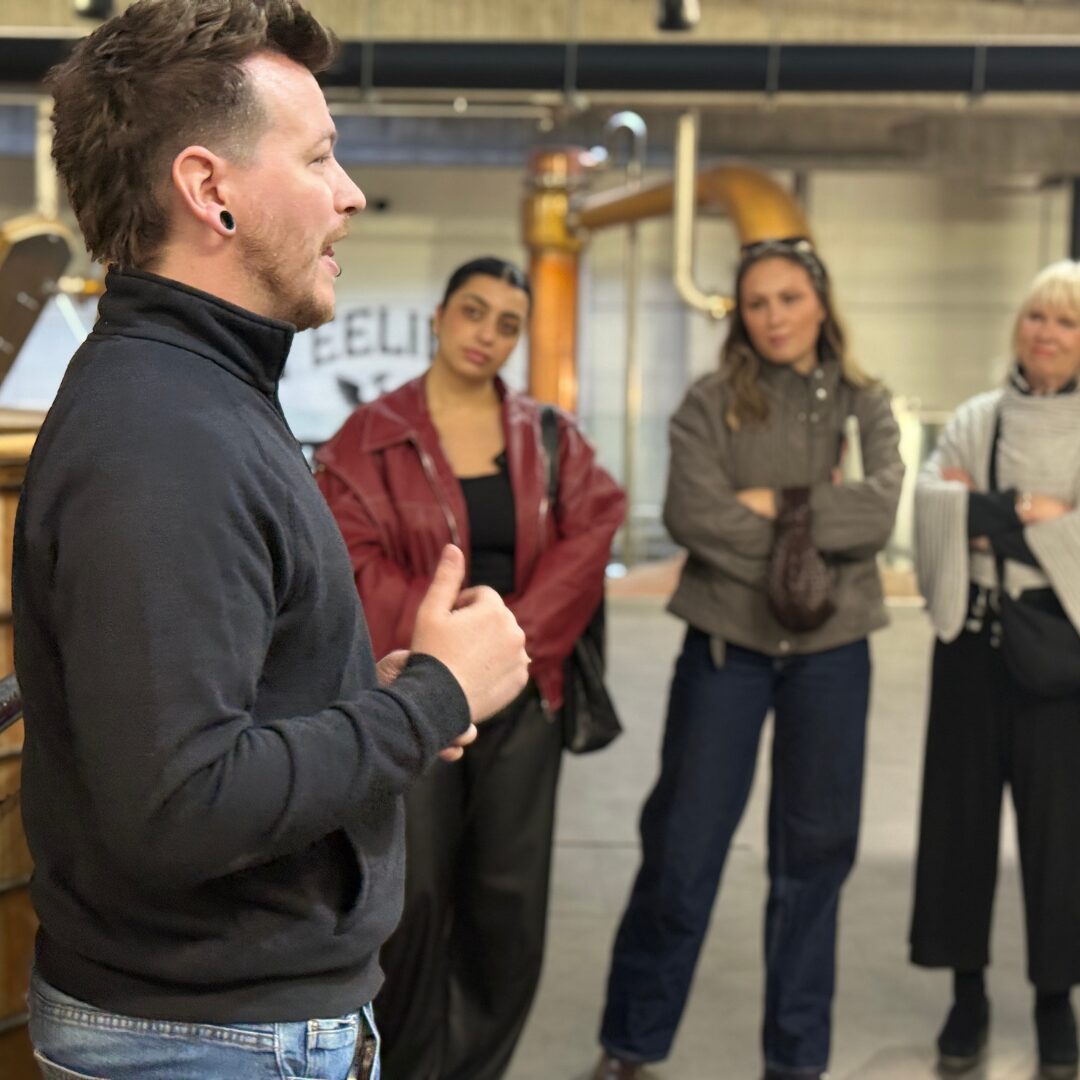
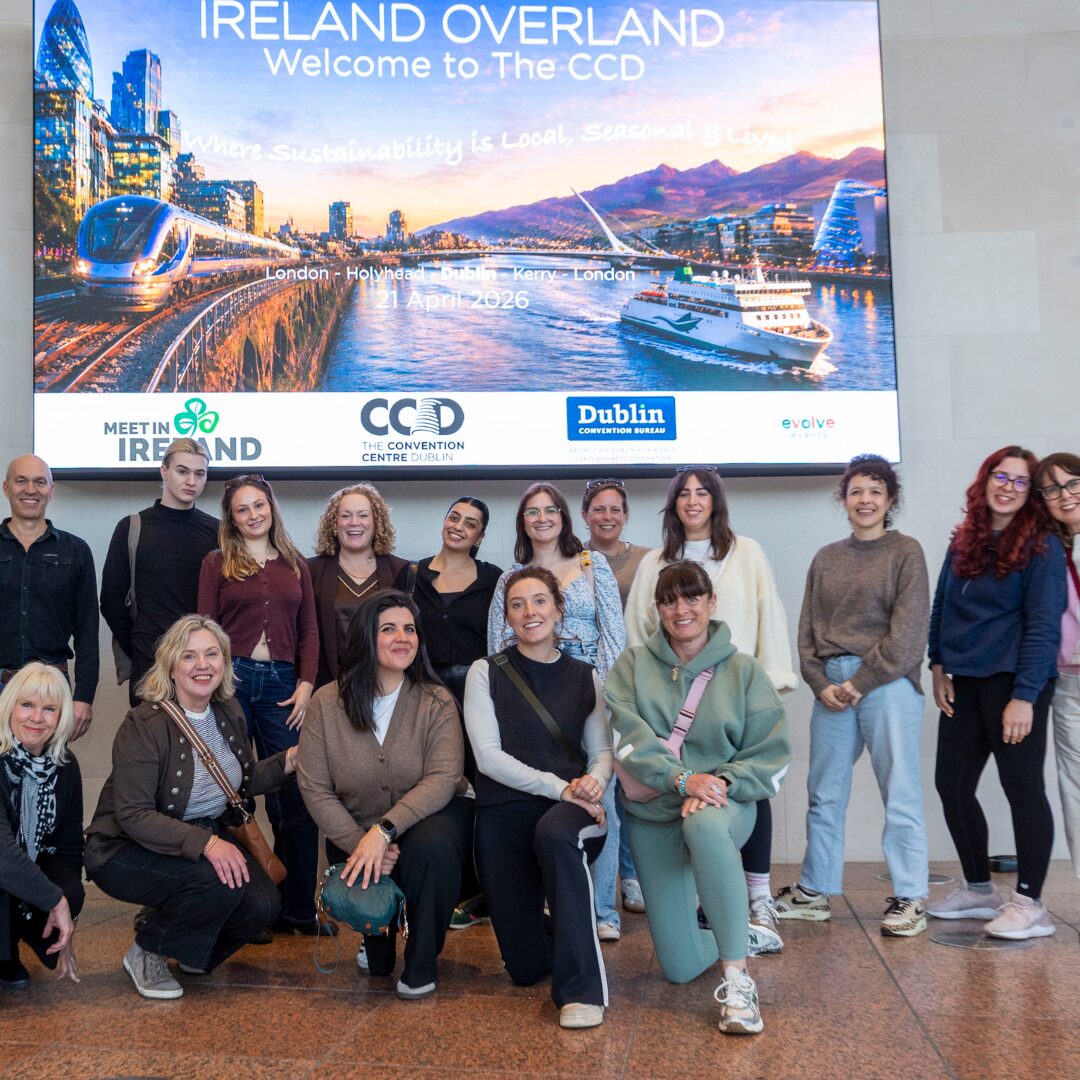
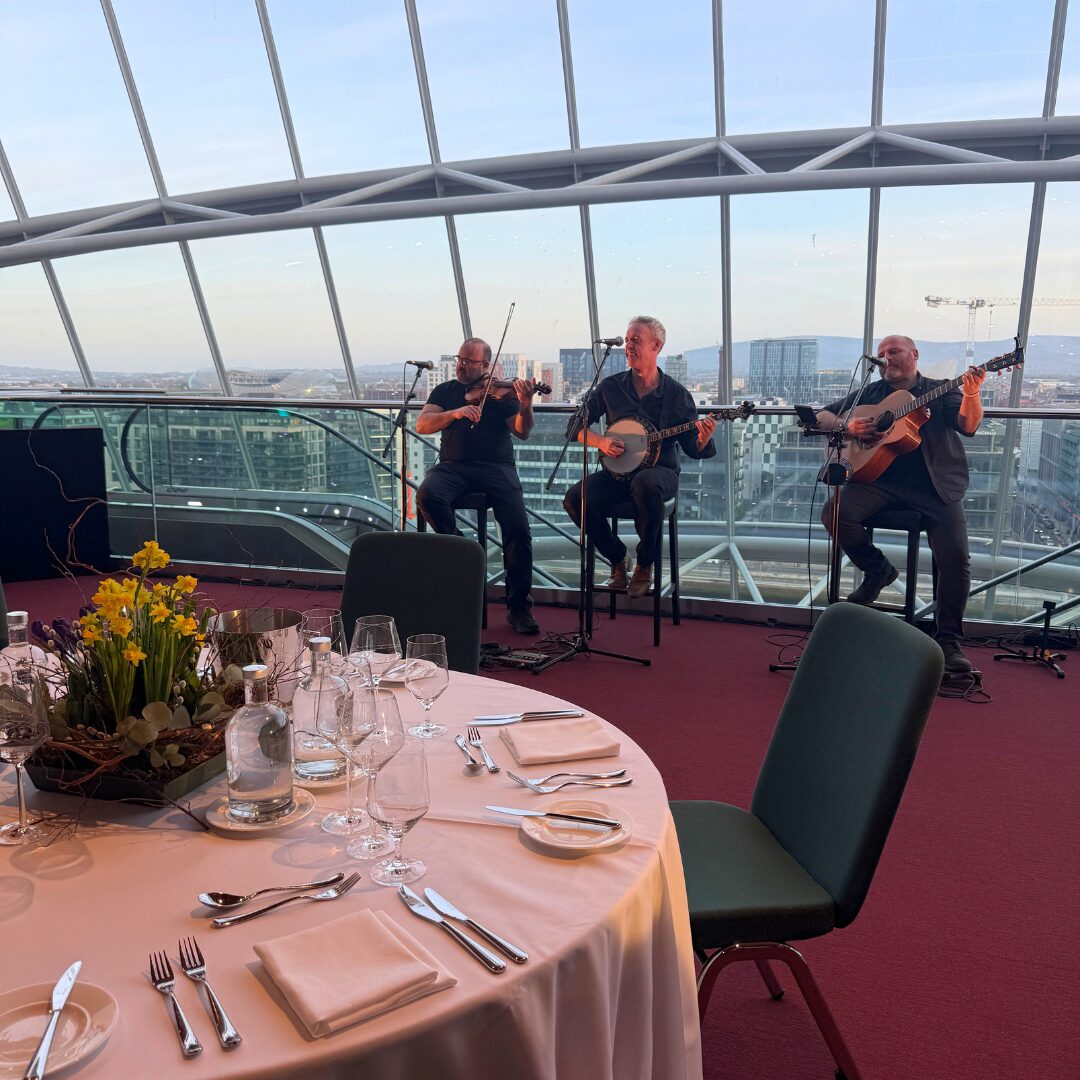
At Teeling Whiskey Distillery, local production and urban regeneration told a story that balances commercial relevance with genuine roots, brings back the family’s 1782 history. At historic Christ Church Cathedral, event hire supports a venue at the heart of the city’s life. The welcome evening at the Convention Centre Dublin (a sustainably sourced dinner overlooking the River Liffey) demonstrated how a venue of that scale can integrate sustainability meaningfully. And an unforgettable contemporary rendition of Molly Malone showed how traditional culture can be given new life without losing its soul.
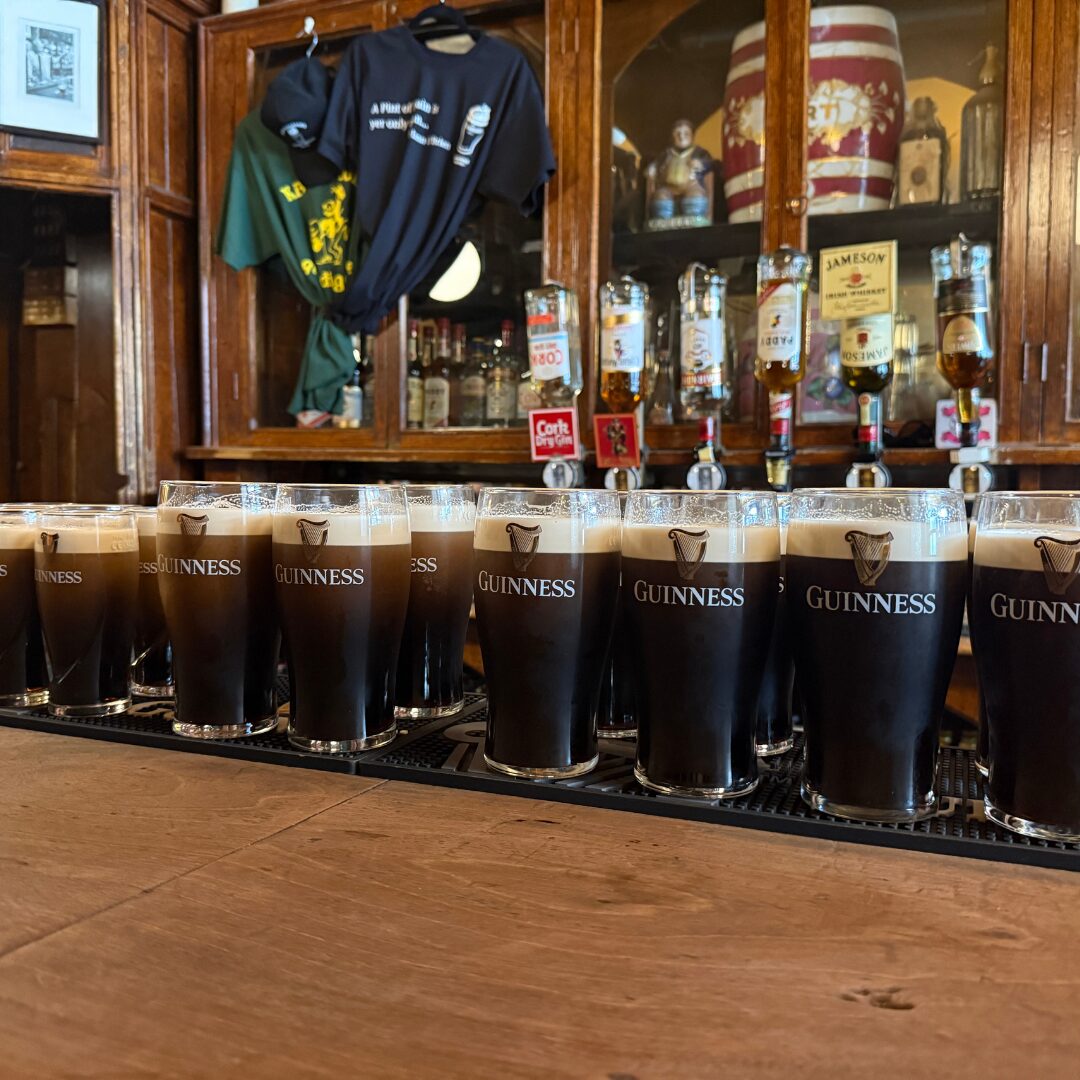
A Pull A Pint tour took the group into seventh-generation, community-focused pubs; places where learning the slow art of the perfect pour became a quiet lesson in slowing down. Places where music can sometimes be set aside altogether, not out of absence but intention, so the focus shifts entirely to the chat, the laughter, the simple act of connection.
“Getting to experience small local family-run pubs was great — gave a really lovely feeling of Dublin and what you can experience outside of the main tourist attractions.”
On Earth Day, a visit to the Museum of Literature Ireland placed the group inside Wild Earth, an exhibition where poetry, language and storytelling reconnect people to the natural world without a single slide or statistic. One of the quietest moments of the trip. One of the most impactful.
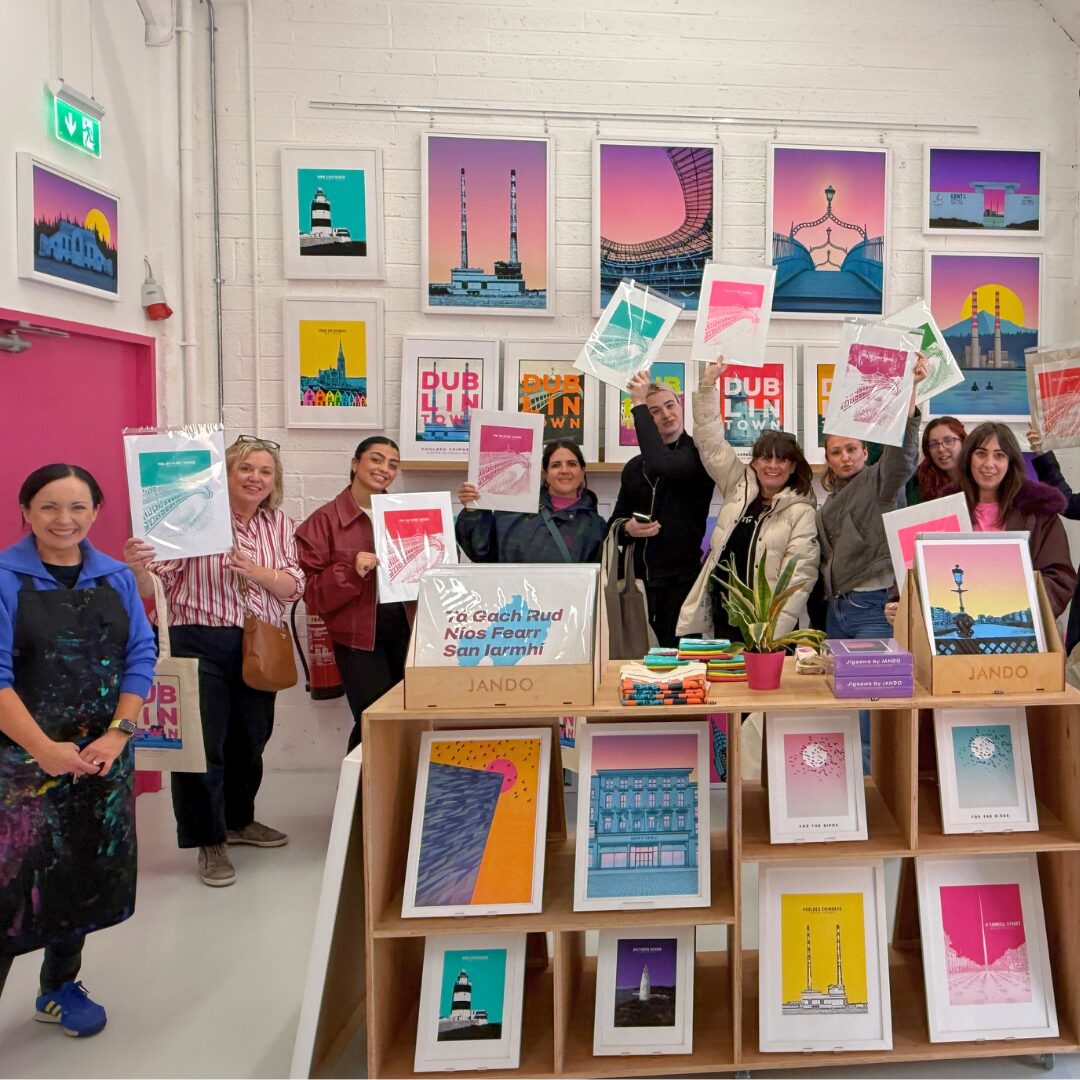
Sustainability showed up in the details too. Rather than branded bags and printed collateral, delegates screen-printed their own tote bags at Jando, a B-Corp certified print studio in Dublin. The activity itself was memorable, but what stood out equally was the space, the story behind the business and the people in it.
“It naturally created a moment of connection within the group— we were collaborating, helping each other, sharing the experience in a very organic way, as well as laughing a lot.”
Food throughout Dublin felt rooted in place: locally sourced, shared generously, at Hugos and beyond. Sustainability in Dublin isn’t just about what is measured; it’s about what is felt, valued and remembered.

Kerry: where sustainability is felt
If Dublin energised, Kerry grounded. And somewhere between the two, the group did too.
The journey west by rail marked another shift, from city pace to open landscape. An onboard quiz prompted reflections on the journey so far and gave the group a chance to earn points towards a charity CSR initiative. A reminder that how we move shapes how we experience.
Ranked #12 in the Global Destination Sustainability Index, among the highest in Europe, Kerry offered something different. Where Dublin showed sustainability operating at urban scale, Kerry showed it running deeper: into landscape, community and lived experience.
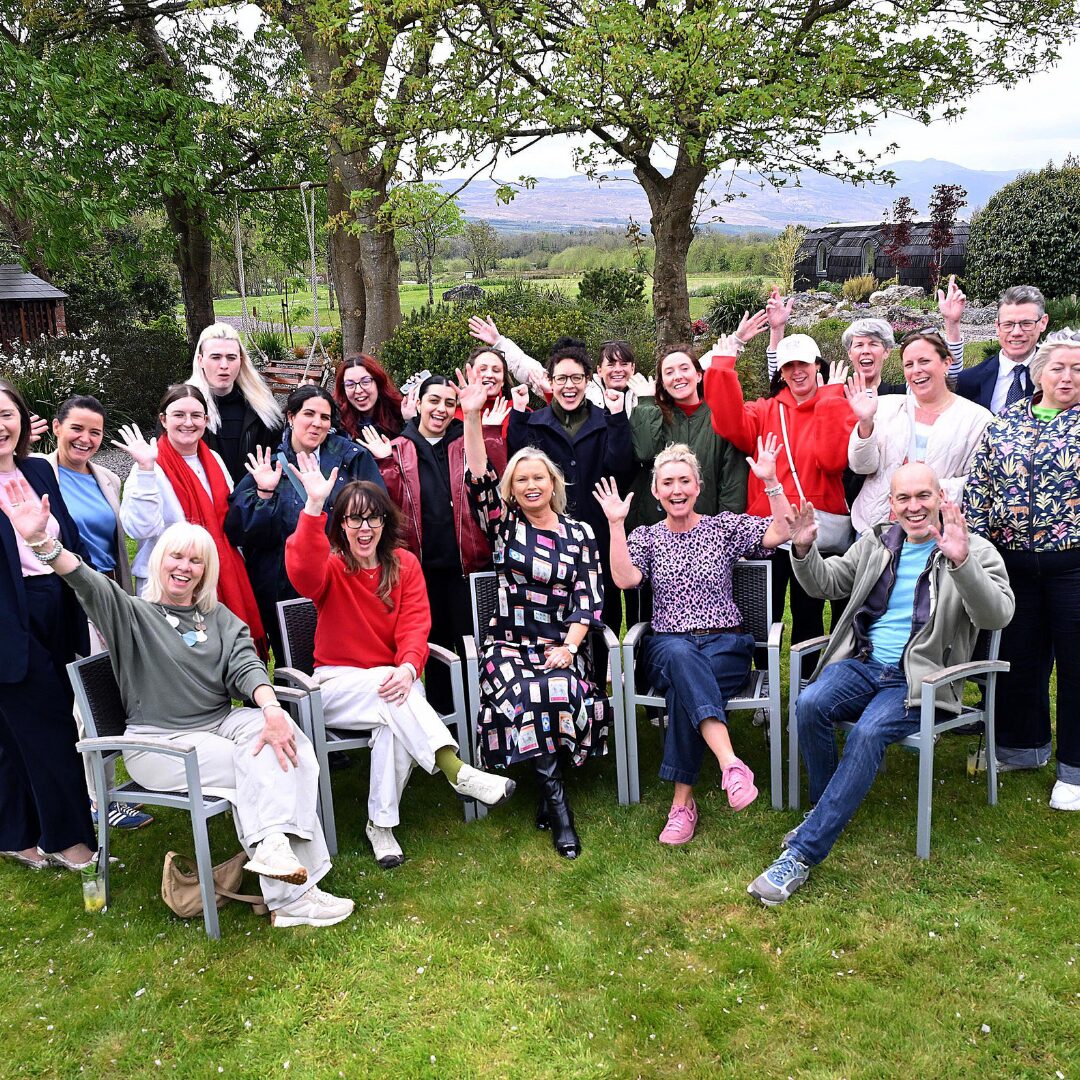
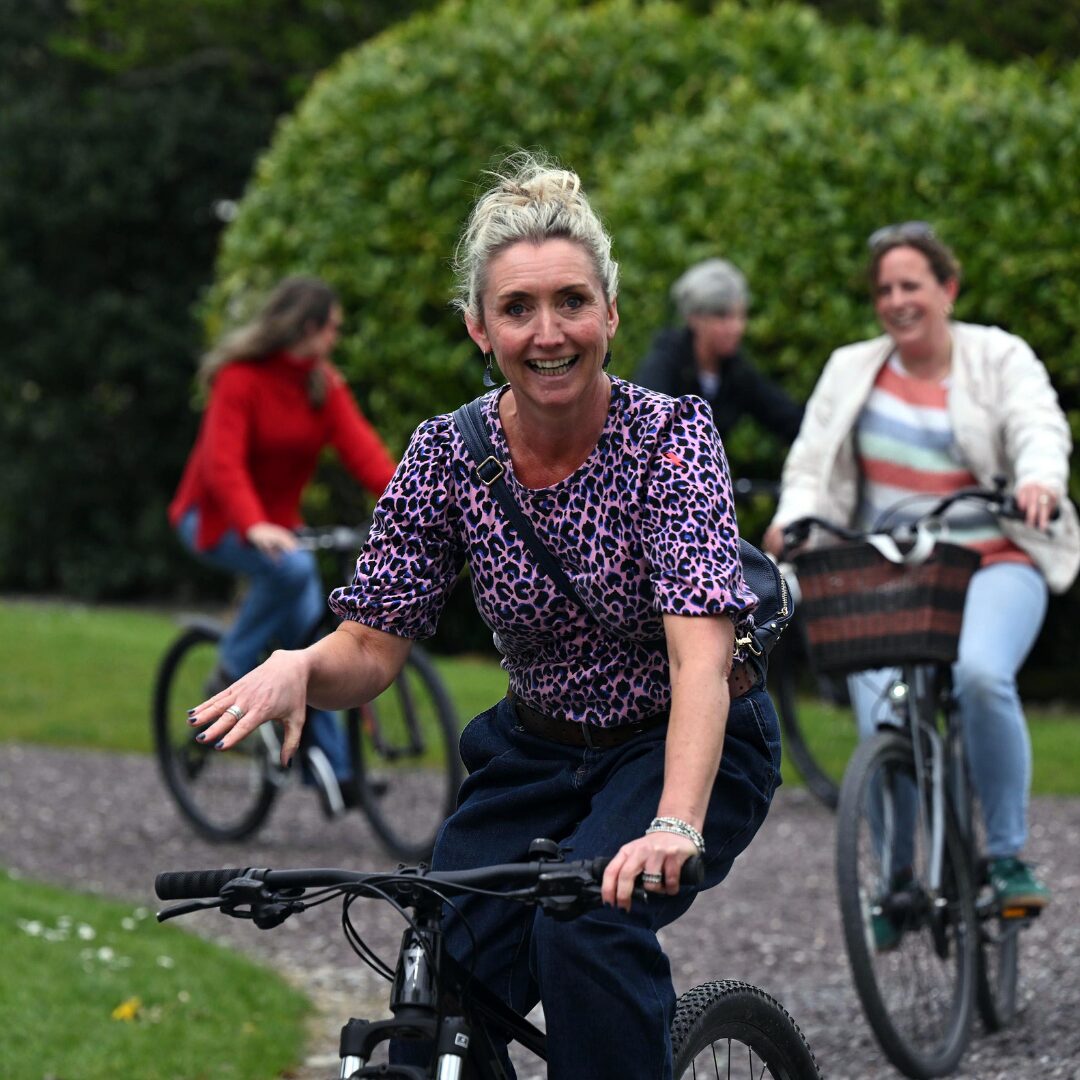
At Ballygarry Estate, connection was built through shared activity; cycling, netwalking (guided walking that replaced 1-2-1 meetings), beekeeping and locally sourced food. The Killarney Park shared its sustainability journey and ambitions for the whole town to become paper and plastic cup free. Insights into the collaboration between The Brehon, Gleneagle Conference & Events, Great Southern Killarney and other properties across Killarney demonstrated the scope for a range of events including larger events requiring multiple venues or accommodation options.
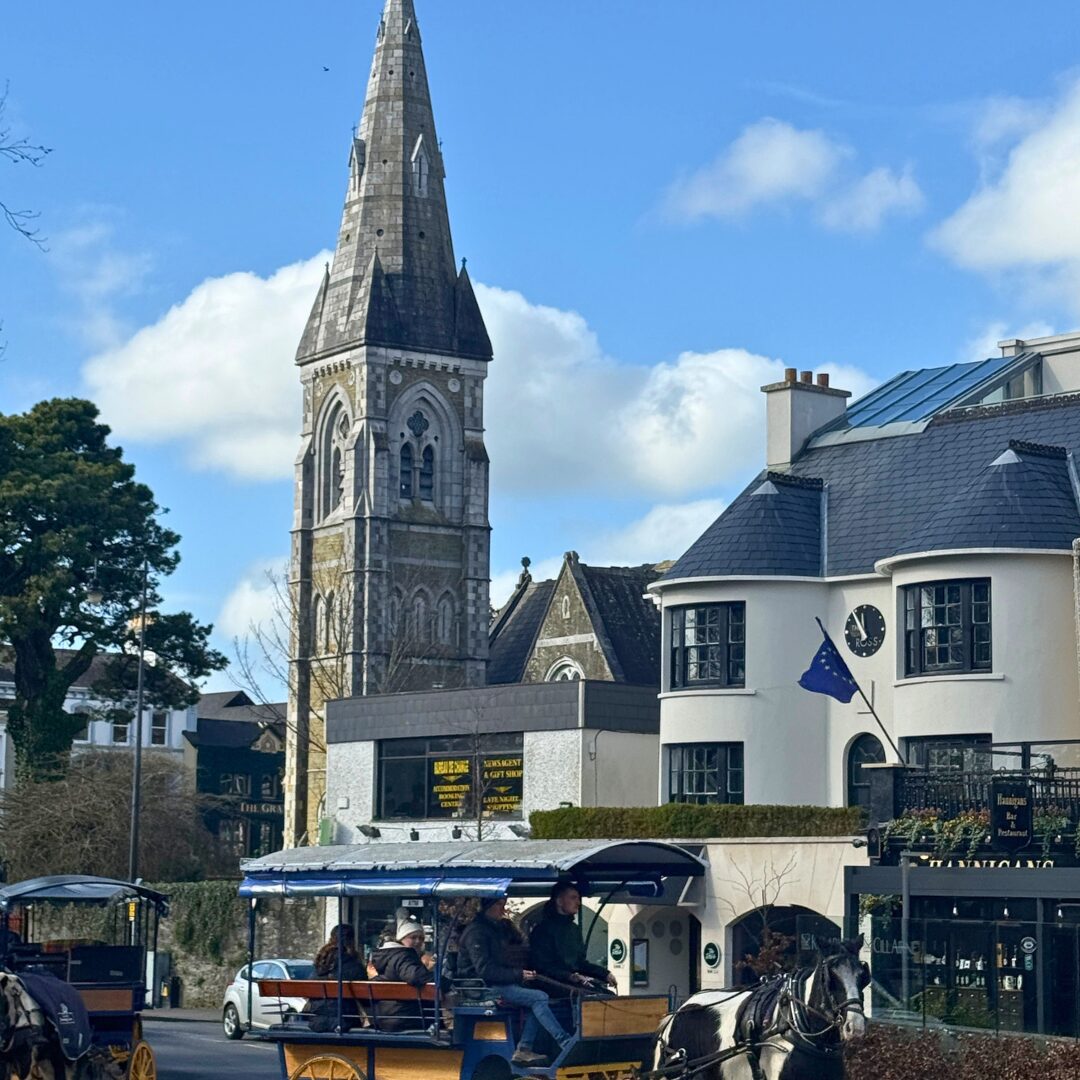
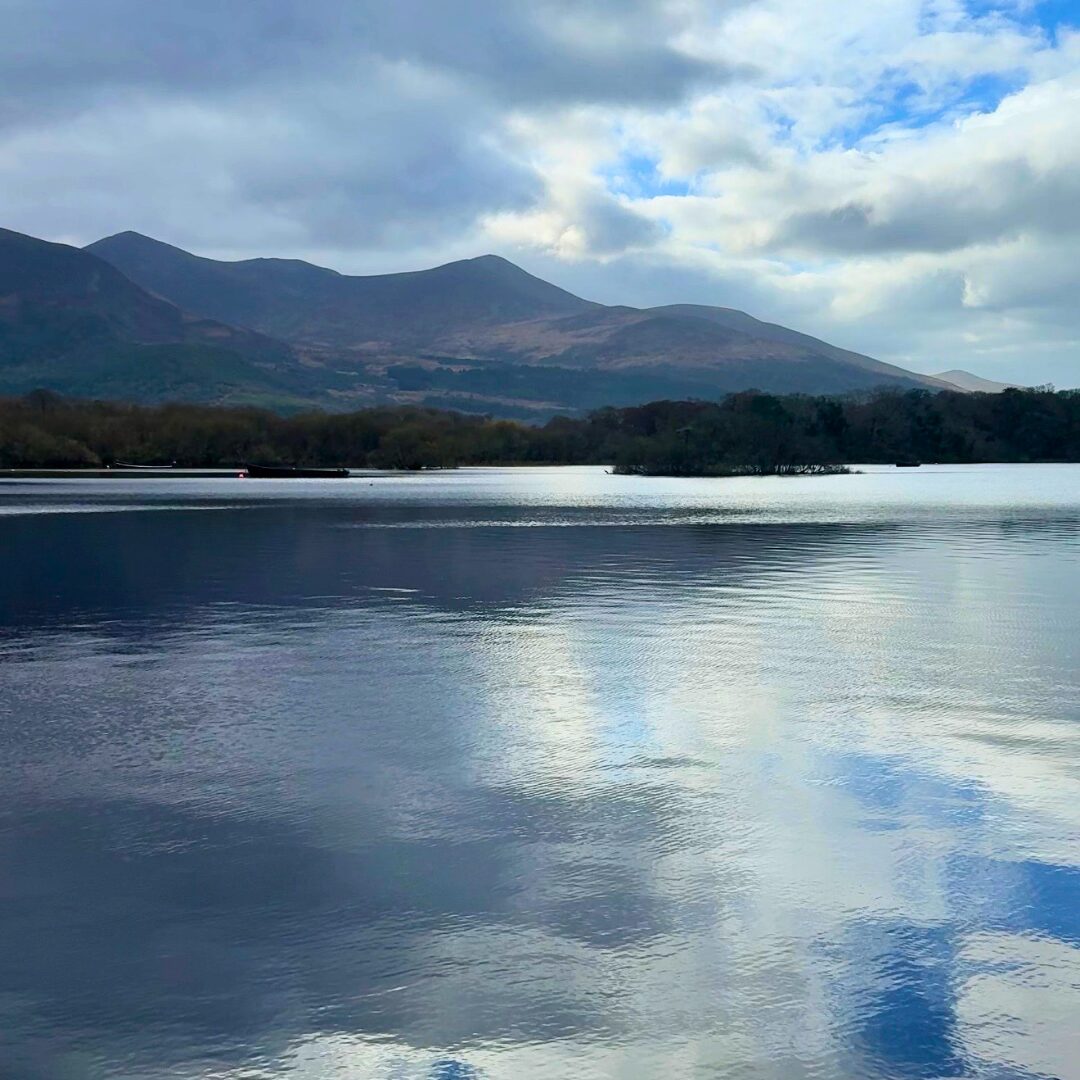
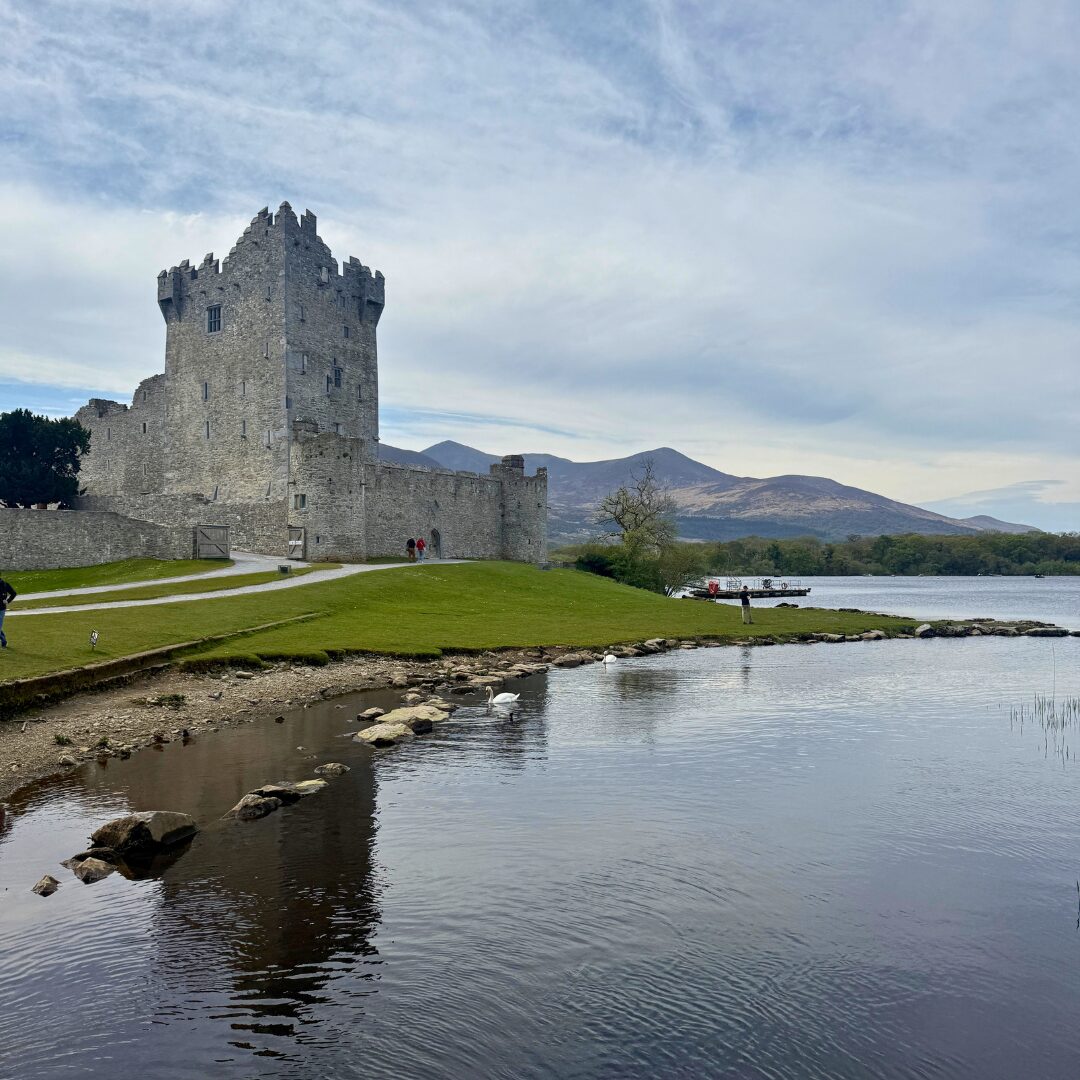
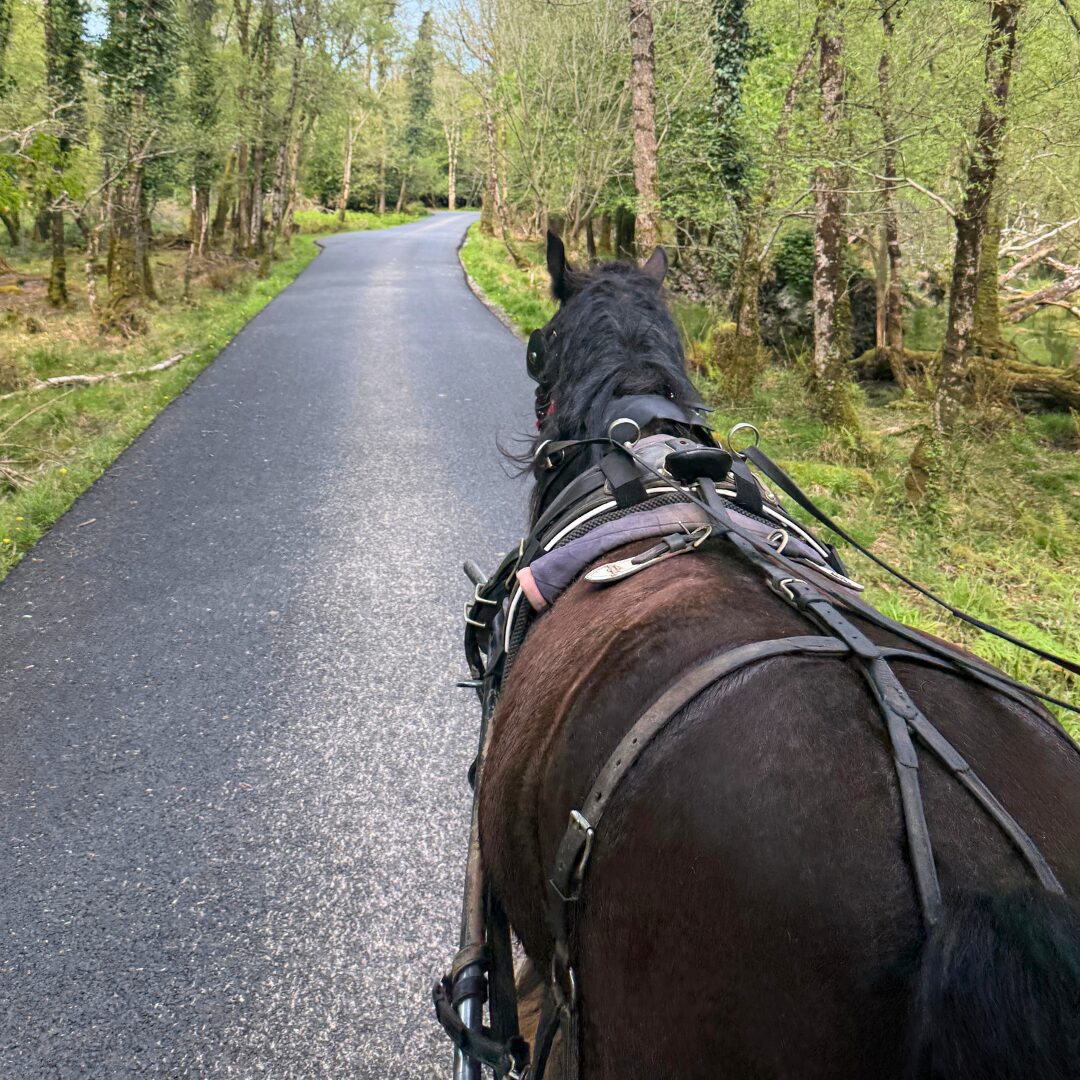
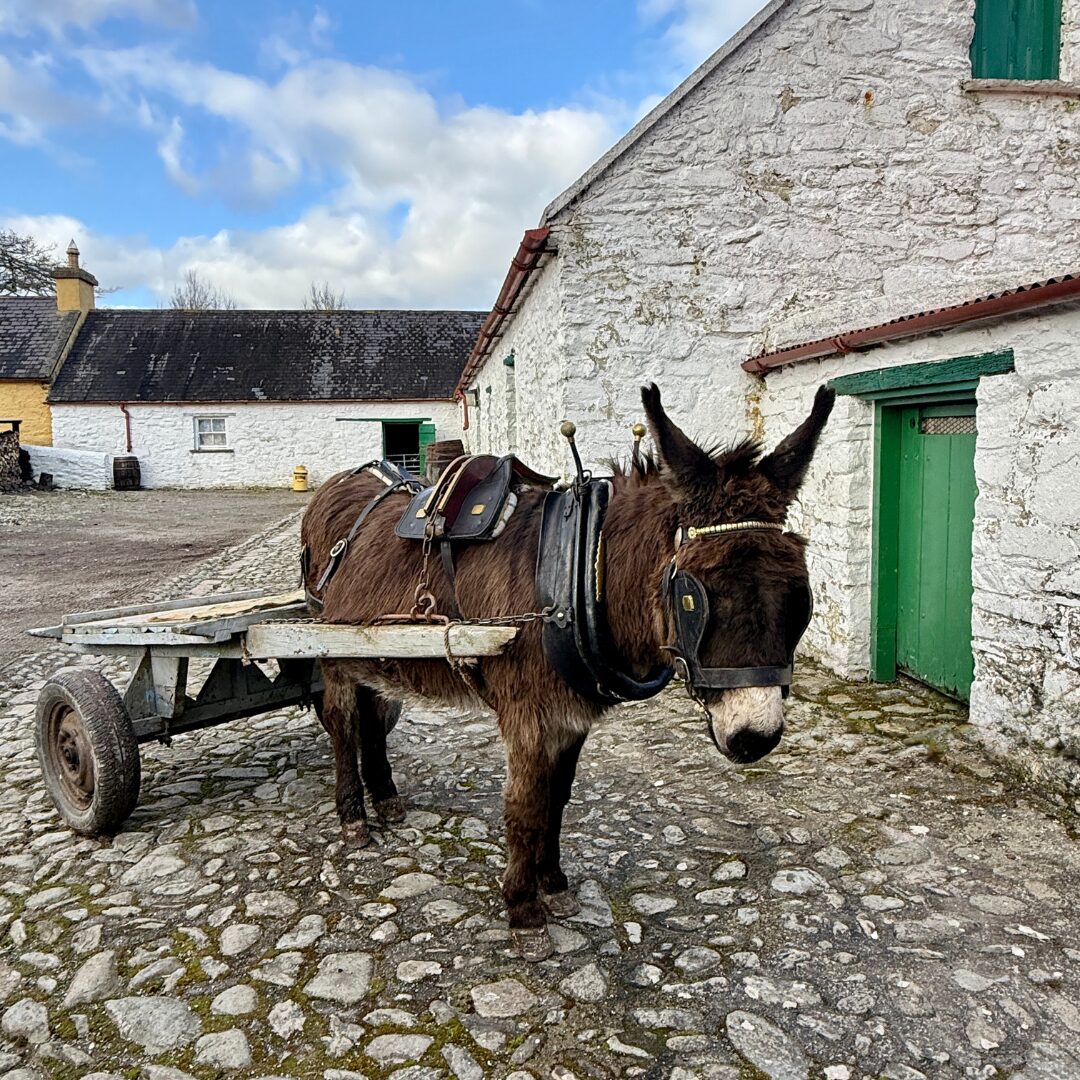
Time on the Lakes of Killarney brought the group to Innisfallen Island by open boat, where a wellbeing session held in the ruins of a monastery, built centuries ago for solitude and reflection, felt entirely fitting. From the water, the journey continued, this time by jaunting car through Killarney National Park, hooves on quiet roads, adding another layer to a day that kept finding new ways to slow down.
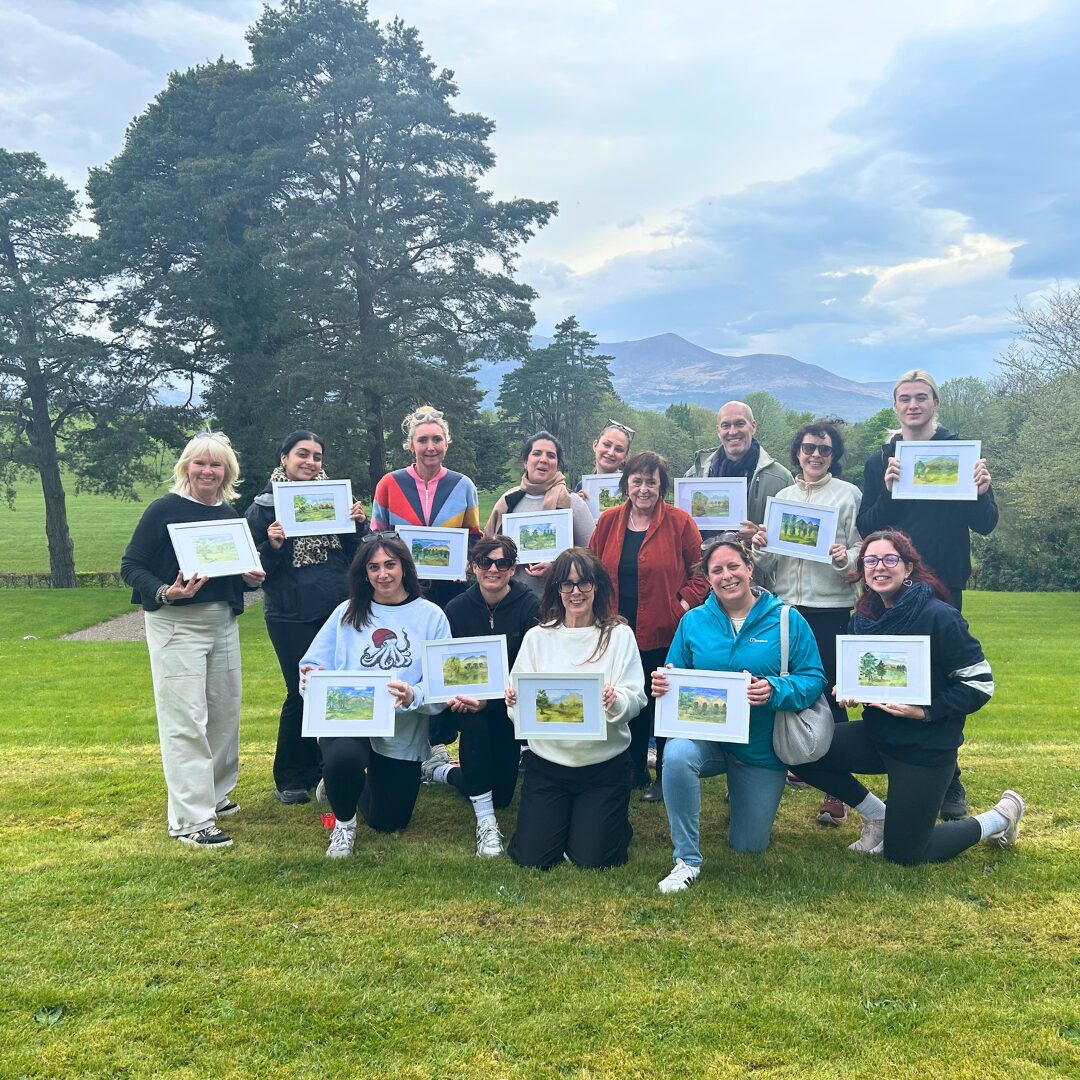
A watercolour class with local artist Ronnie Moore at Coolclogher House saw every delegate (including those who arrived convinced they had no artistic ability) leave with a painting and a visual memory of their time in Ireland.
“A fantastic moment to get in touch with the creative parts of our brain after so much logical networking.”
A seanchaí at Pigs Lane held the group through story in a way that no presentation ever could. The seanchaií (keeper of Ireland’s oral tradition, bringing tales of history, mythology and folklore to life) left the room silent. You could hear a pin drop. Even the walls seemed to lean in.
Live music and dancing at Tigh Mary Donals, drinks and locally sourced dinner at The Europe Hotel with a memorable sing-along with the O’Neill Sisters, rounded out evenings that felt as considered as the days.
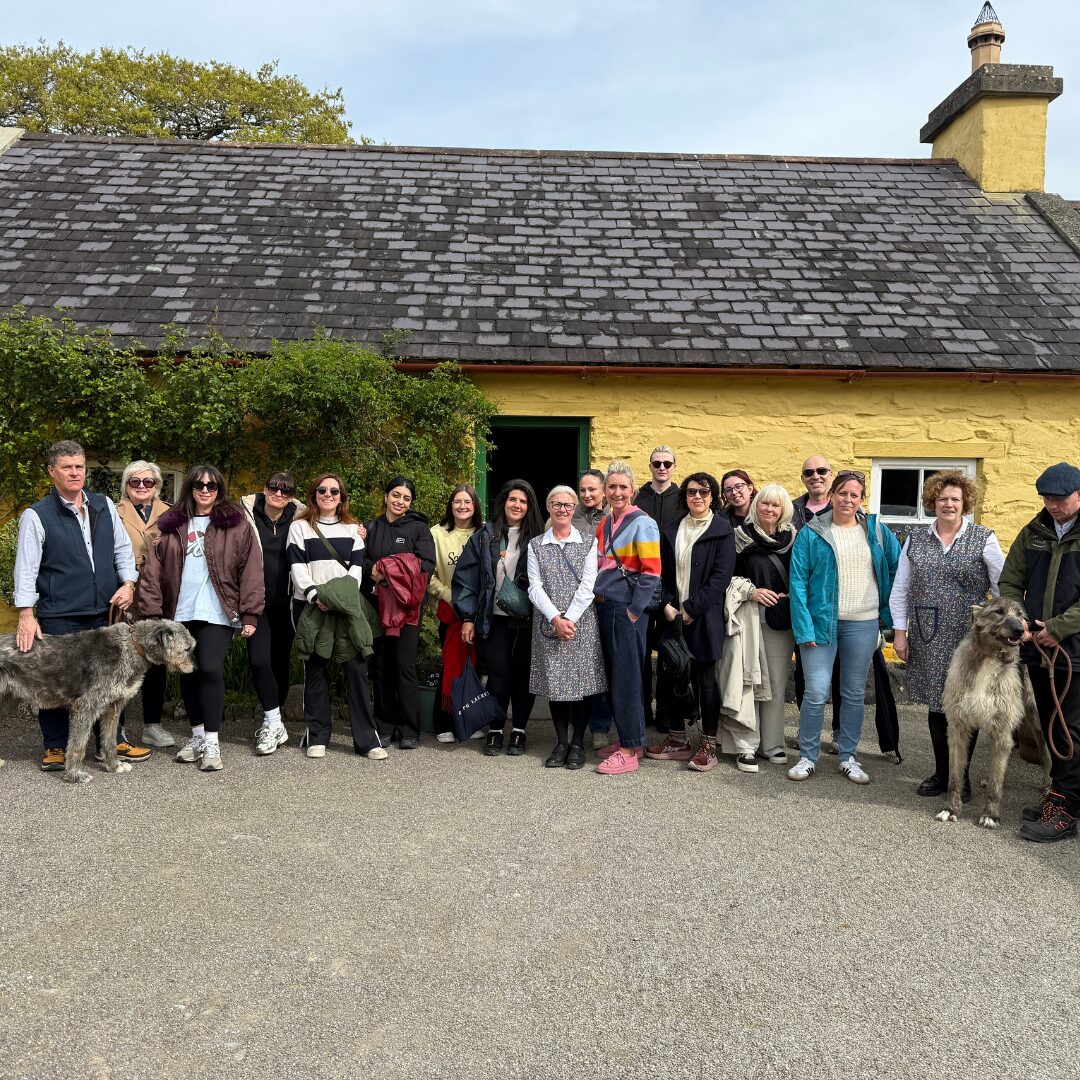
Traditional farming, craft skills and a breakfast at Muckross Farm, with butter churned by the group, brought heritage to life in the most tangible way.
“It gave that real feeling of Ireland and tradition. The setting is beautiful, but also the way everything is done. The staff were amazing, and seeing older women still involved in the business, passing on their knowledge and wisdom, was very, very special. It felt really meaningful, and it also made me think about how you could host events there in a very authentic and grounded way.”
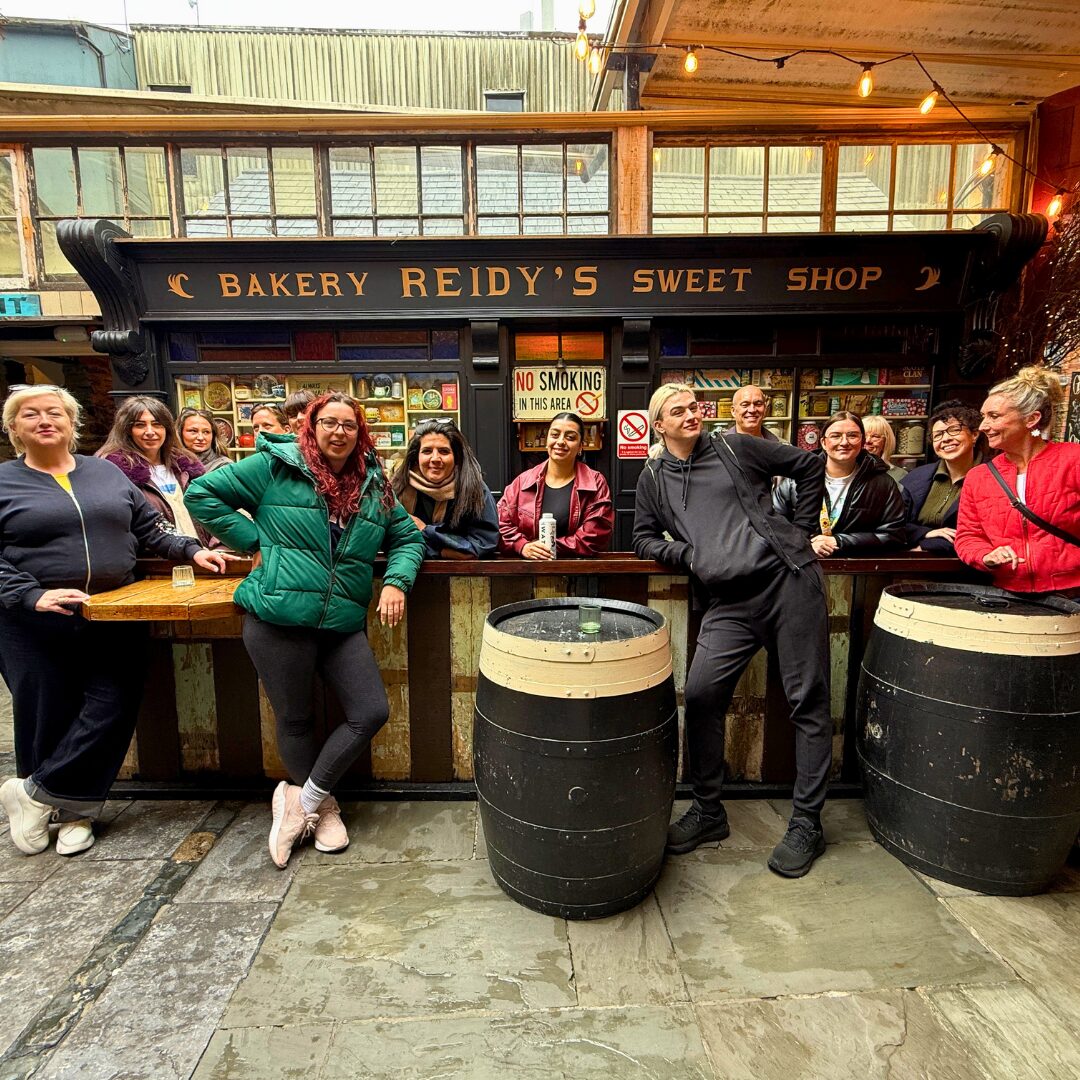
A social impact challenge, organised by Orangeworks, sent teams into the corners of Killarney – including the historic bar and sweet shop of J.M. Reidys and Killarney Urban Farm (Ireland’s first hospitality hydroponic urban farm, growing for and servicing bars, restaurants, and hotels in the Kerry region such as The Tan Yard) – as the group competed for points for a Go Give charity challenge, supporting four local causes. A reminder that sustainability is as much about people as it is about carbon.
Before leaving Kerry, each delegate was gifted a handmade ceramic cup by Grounded Pottery, made by a family-run studio from natural materials, designed to last a lifetime. Ireland’s gentle nudge toward a more sustainable event culture: replace the disposable with the enduring.
“What makes Kerry particularly strong is that you can combine that level of infrastructure and logistics with a setting that still feels very natural, authentic and almost countryside-like, which is quite rare.”
Together, the Ireland Overland FAM to Dublin and Kerry made an argument no brochure could: that Ireland’s approach to sustainable events isn’t concentrated in one place or one type of experience. It runs across the island; in its cities, its landscapes, its makers and its stories.
The human side of sustainabilty
This trip also surfaced something the industry doesn’t talk about enough: human sustainability. Wellbeing partner Be In Your Element, represented by owner and practitioner Lucy Eden, travelled with the group throughout, weaving breathwork, movement and moments to pause into the programme from the train to the shores of Killarney. Not as an extra. As part of the design.
“Even tiny moments of calm built into a busy programme can be powerful tools to ground you and connect you to the location and your fellow team.”
Sustainable events aren’t just about reducing impact. They’re about designing experiences where people arrive more present, more connected and more ready to engage.
Why Ireland
With Kerry ranked #12 and Dublin #19 in the Global Destination Sustainability Index (and multiple regions across the island in the top 40) Ireland isn’t catching up, it’s leading.
But beyond the rankings, it’s the consistency that stands out. Sustainability here isn’t something that’s added on. It’s already there; in infrastructure, in experiences and in how visitors are invited to connect with place. There’s a deep sense of community, of collaboration and care and a genuine pride that stretches from local streets into the land itself.
“Ireland has opened my eyes as a leading destination for meetings and events. The genuine warmth of the welcome, exceptional venues, collaborative approach and clear commitment to sustainability combine to create an outstanding and memorable experience.”
“It felt like the sustainable message was front and centre of their whole approach – not just words, but very definite actions.”
“Ireland is inherently sustainable. They don’t even think about sustainable events. Their events just ARE sustainable. This is how everyone should approach it.”
And just when we thought the journey was over, our travel guide Andrew reappeared at Cork Airport to wave us off. A small gesture that perfectly captured something much bigger: this is a destination that genuinely cares. As well as a demonstration of the meaningful, lasting connections that slow travel makes possible.
The return flight home was quicker. Efficient. Familiar. But it also made the contrast impossible to ignore. As everyone picked up their book or put in their earphones, the group dynamic shifted from collective to individual. Yes, the journey was faster but along with the increased carbon footprint, it felt like we’d lost something.
The Numbers
From Now, who joined and partnered with on the programme, awarded Ireland Overland a Platinum rating for Holistic Sustainability, placing the event in the top 1% of all reports measured by From Now and “demonstrating exceptional commitment, innovation and impact across environmental and social outcomes.” Measurement was also supported by Fáilte Ireland’s new Business Events Carbon Calculator, the independent assessment generated by its partner EarthCheck, providing a robust baseline for future measurement.
Sustainable Initiatives: a snapshot
The following is a summary of the sustainable practices embedded throughout Ireland Overland.
Travel: Travel was deliberately designed as a mixed experience (standard and first class, train, ferry and flight) giving event planners comparative, lived insights they can take back to clients with confidence. Standard tickets were included to demonstrate that sustainable travel doesn’t require a premium.
Accommodation: All accommodation partners held recognised sustainability accreditations:
- Aloft Dublin City — Green Key Certified
- Hyatt Centric Dublin — Green Hospitality Gold Medal Award 2024
- Iveagh Gardens Hotel — Europe’s First Sustainable Hotel
- The Cahernane, Kerry — Green Tourism Programme Member
- The Brehon, Kerry — Failte Ireland Climate Action Programme Member
- The Victoria, Kerry — Independent, place-based hotel
Total carbon emissions from accommodation across the event: 684.4kg CO₂e (equivalent to 129 Google searches).
Food & Drink: Food was sourced locally, reducing transport emissions and supporting regional producers. Red meat was removed from the standard menu; where included, it was sourced exclusively from local farmers.
Wellbeing: Wellbeing was embedded at every stage, from slower, more mindful travel to on-hand support from Be In Your Element. Guided meditation, accessible breathwork and opportunities for morning movement created a calmer, more restorative experience throughout.
Community: A strong focus on local suppliers, purpose-led businesses and meaningful social causes ensured spending was directed back into the regional economy. Direct contributions were made to social enterprises and community organisations across Dublin and Kerry, creating a positive legacy beyond the event itself.
“I was completely blown away by both the richness of the programme and how seamlessly it all came together. Ireland revealed itself in a new light, with an approach to sustainability that feels both intricate and deeply resourceful. What stood out most was the power of storytelling to embed purpose, alongside a clear philosophy of building experiences and venues that are designed to last.”
Beyond Venue Capacities: Rethinking the FAM
Ireland Overland wasn’t about simply discovering more venues. It asked a question the industry rarely puts to a FAM trip: what if the measure of success wasn’t how many venues were visited or how many bed nights were showcased, but how profoundly a destination changed the way planners think?
For too long, FAM trips have been defined by logistics; site inspections, capacities, catering packages. Ireland Overland was built on a different premise: that the most powerful thing a destination can do is bring itself alive. To let planners feel it, not just assess it.
“The Ireland Overland FAM trip across Dublin and Kerry went far beyond showcasing the destination. It offered a different way of travelling, designed to create real connection while bringing to life what sustainable tourism, events and hospitality can look like in practice. It’s clear how far ahead Ireland is in this space, and what a strong example it sets for the industry.”
The result was a group of event professionals who returned not with a checklist, but with a conviction that Ireland is not just a destination to be considered, but a blueprint to be followed.
‘Go gcasfar le chéile sinn arís’ — may we meet again. We rather think we will.
With Thanks
Ireland Overland was made possible through genuine collaboration. Our thanks to Dublin Convention Bureau, Kerry Convention Bureau and Meet In Ireland, and to our collaborators Rail Tours Ireland, Irish Ferries, Meet In Wales, GoodiePack, Be In Your Element and FromNow.
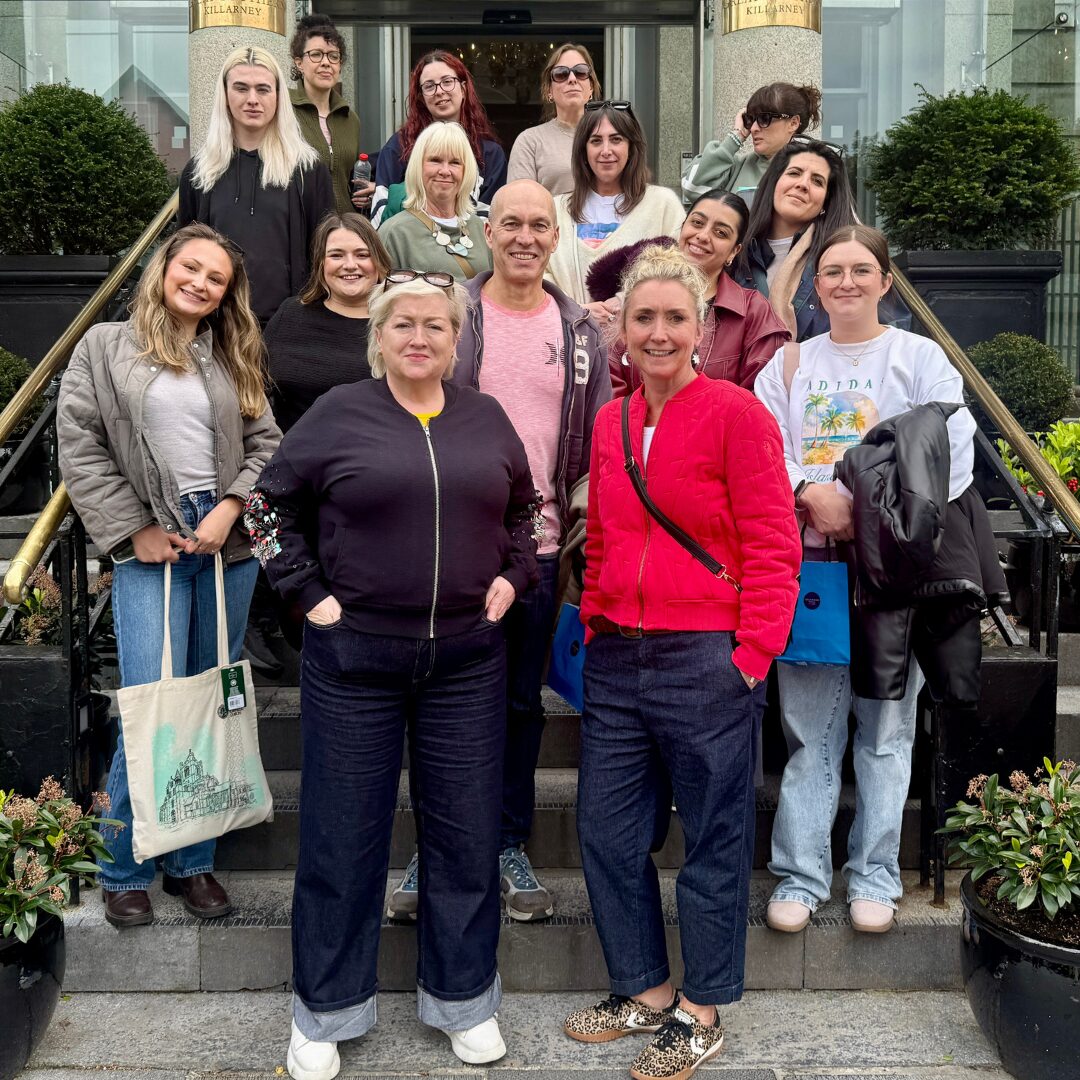
And to the group of event planners who came with open minds and a willingness to try something new. Because this only works if we explore it together.
Ready to Host Your Next Event in Ireland?
We’ve experienced first-hand what makes this destination work for events and we’d love to share those insights with you, from venue sourcing and programme design to on-the-ground logistics and cultural experiences. Get in touch to discuss how we can bring your Faroe Islands event to life.