
Clarion Hotel Mestari Helsinki: A MICE Hotel Review
Sea Arrivals, Master Builders and Saunas on the Shore: Why Clarion Hotel Mestari Works for Groups in Helsinki
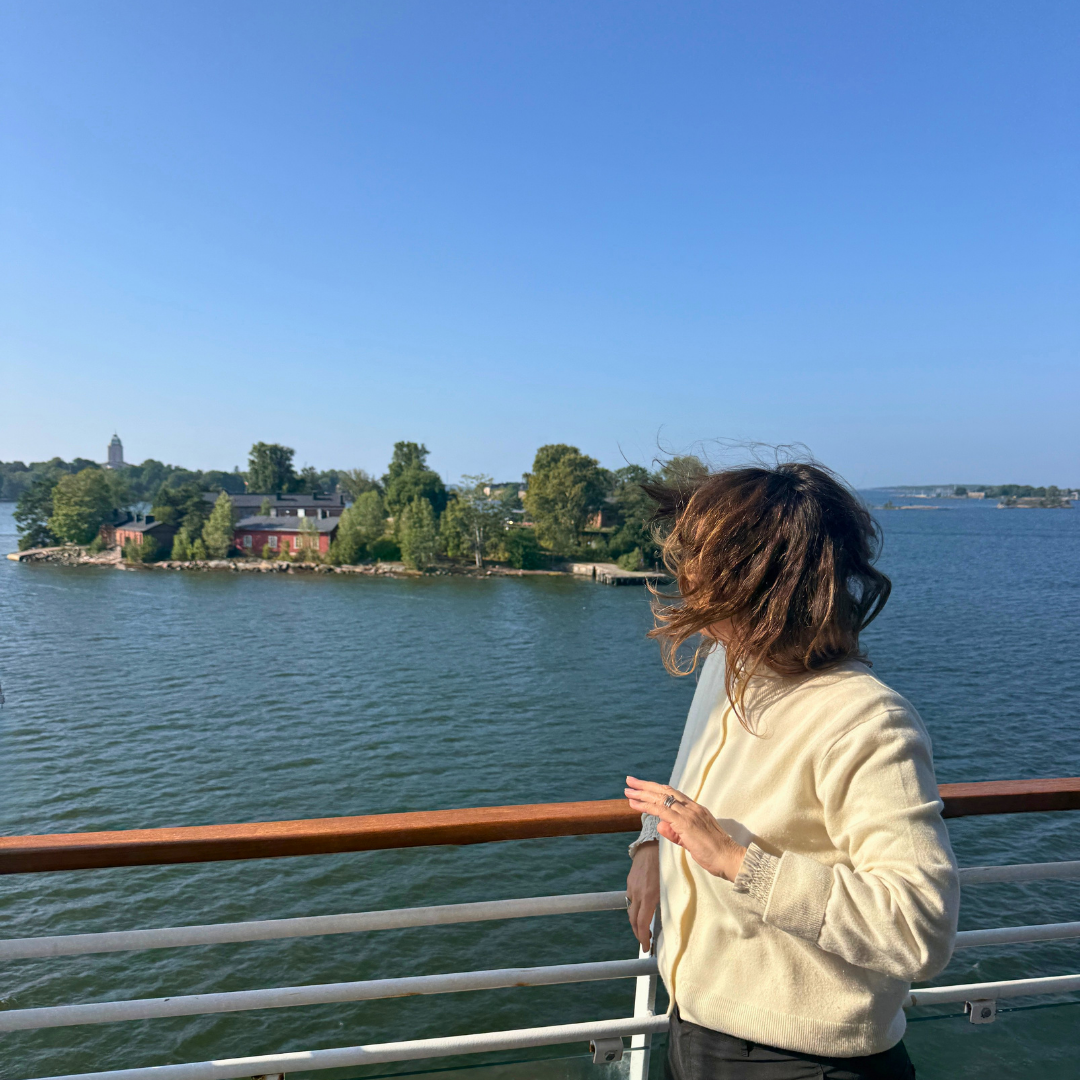
There’s a particular kind of quiet you only find at sea, very early in the morning. We’d taken the overnight ferry from Stockholm to Helsinki, and by dawn the deck was the only place to be. The Helsinki archipelago was sliding past. Granite islands. Pine trees. Red-roofed summer cottages. A lone sauna hut on a rock, with a little jetty running into the sea.
No announcements. No rush. Just a capital city appearing slowly out of the islands.
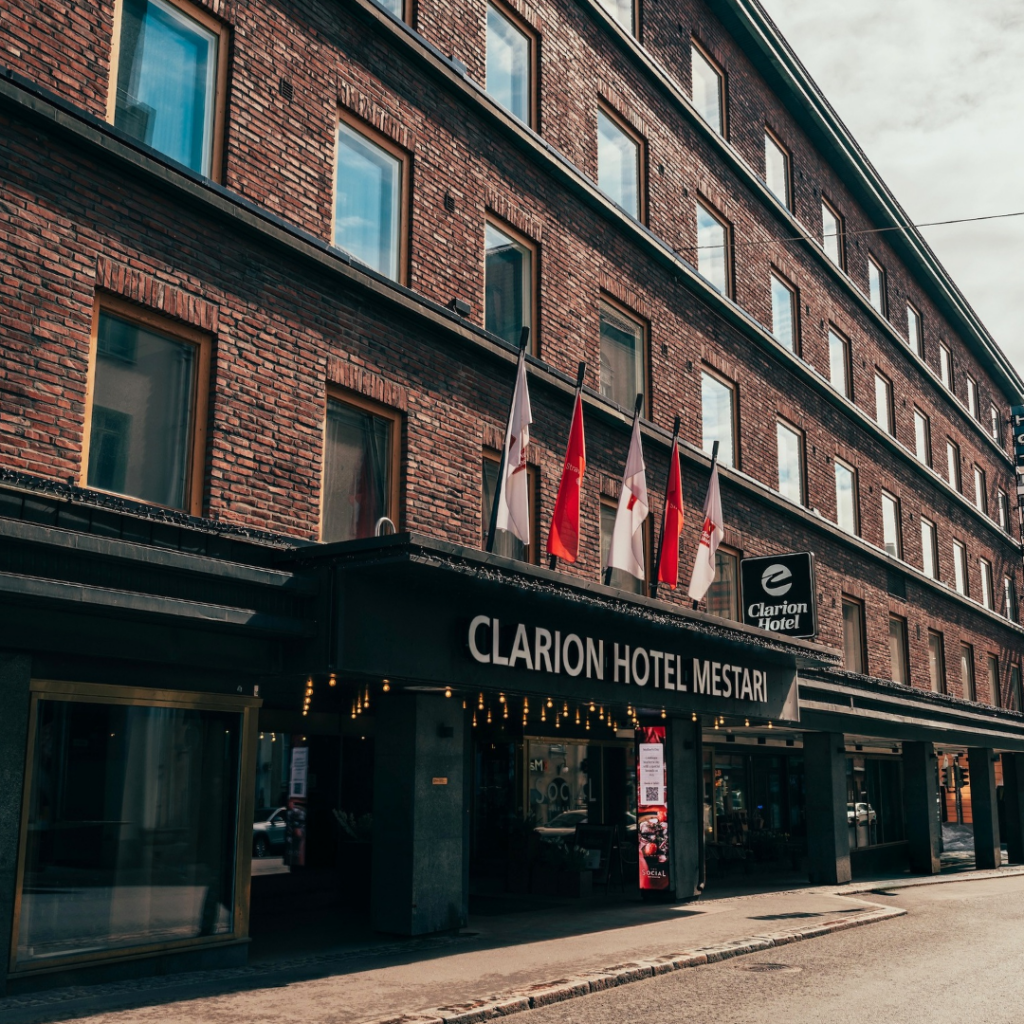
It’s a very Finnish way to arrive, and it set the tone for the whole stay. An hour after docking, we were wheeling our bags up Fredrikinkatu, past cafés opening their doors and trams rumbling by. On the corner of Eerikinkatu stood a handsome brick building with a long, low arcade at street level. This was Clarion Hotel Mestari, our base for the next few days.
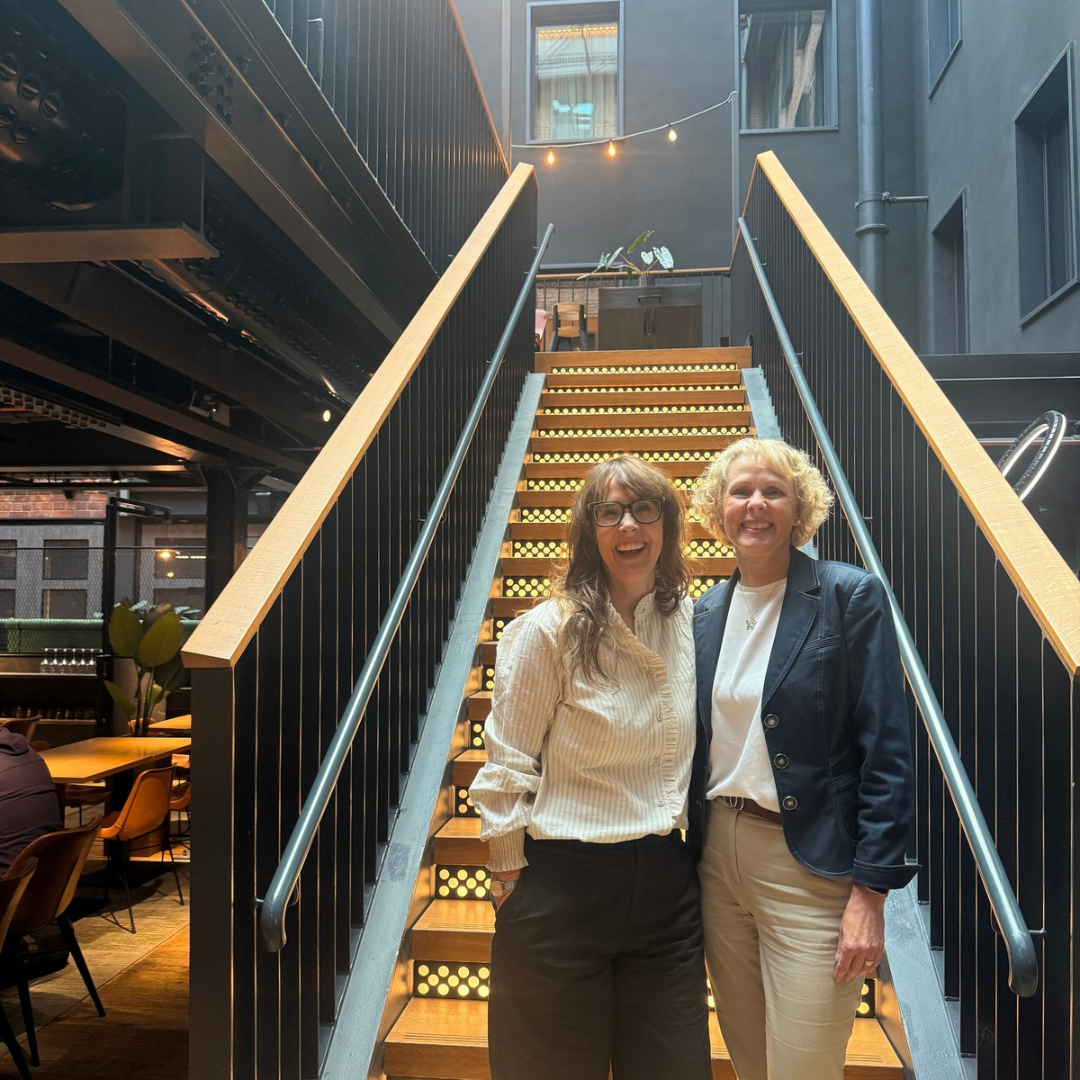
We stayed at the hotel this summer and did a full site visit with Lilli Herrala. Here’s what we learned about why it works so well for meetings, incentives and conferences, and why your delegates will slip into Helsinki’s calmer pace from the moment they arrive.
A house built by builders
Most hotels are built by builders. This one was built for them. The Master Builders’ House was the headquarters of Helsinki’s Builders’ Association, completed in 1932 to a design by architect Heikki Kaartinen. He left a big mark on the city’s early 20th-century residential architecture. Getting it finished during the economic hardship of the early 1930s was no small feat. But if anyone was going to get a building over the line, it was this lot.
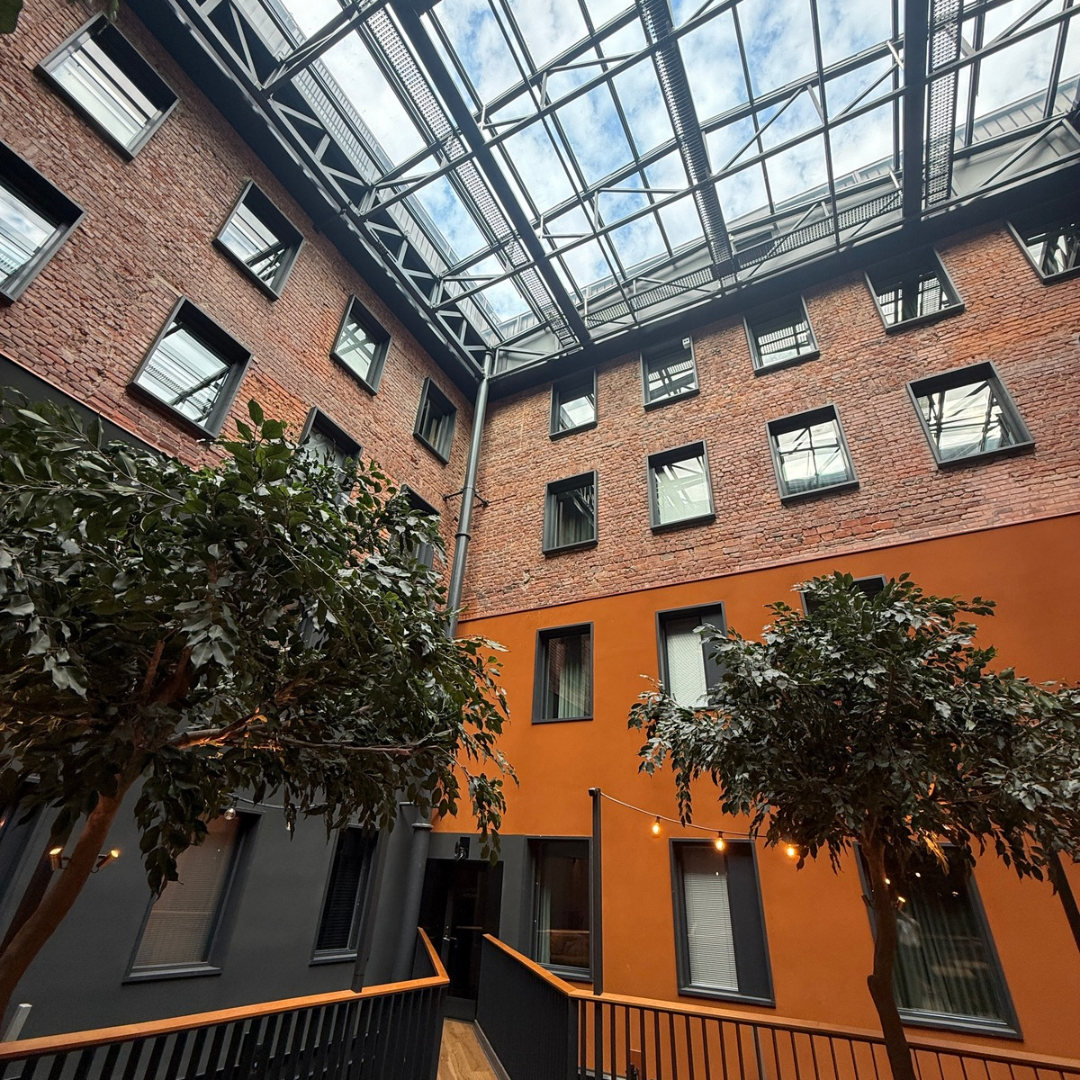
By the 1960s the Association had outgrown it. Architects Helmer Stenros and Risto-Veikko Luukkonen, the duo behind the Turku City Theatre on the banks of the Aura River, added an extension alongside the original and into the inner courtyard. The interiors were by Pirkko Stenros, who designed furniture for Muurame and won the prestigious Kaj Franck Design Prize.
The clever part is how the two eras fit together. The new wing speaks its own 1960s language, but borrows its proportions and lines from the 1930s original. The whole complex was brought to one height, with a unified roofline. And at street level, an arcade ties the two sections together. Stenros felt an arcade was more welcoming to visitors than a glass façade built straight onto the pavement. Walk under it today and you’ll see what he meant.
The building has lived several lives. Offices. Shops. Apartments rented to Association members. And from the 1960s until the early 2000s, the legendary supper club Vanha Maestro, where generations of Helsinki couples danced the night away. Ask a local over a certain age and there’s a good chance they have a story.
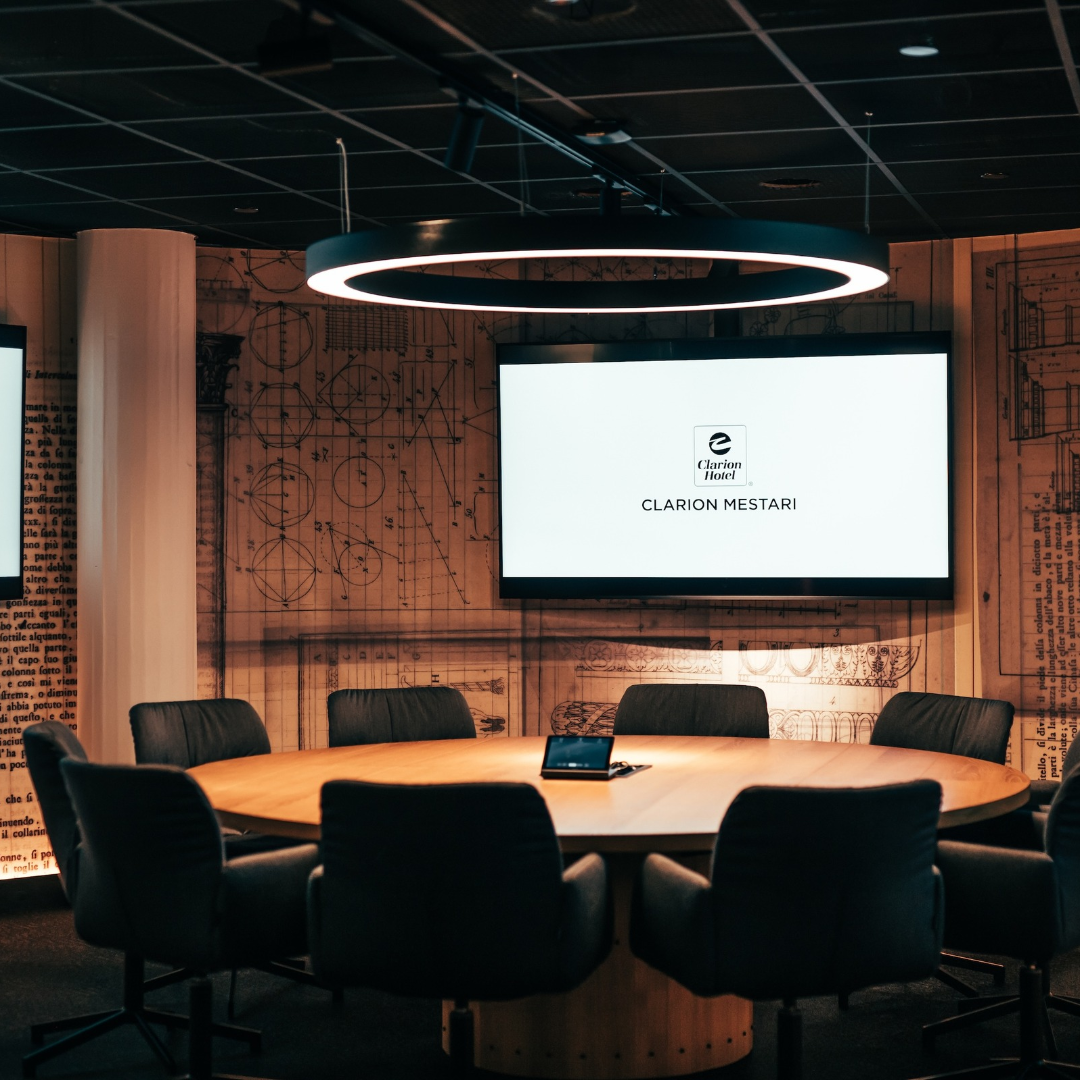
Clarion Hotel Mestari is the newest chapter. The interior design nods to the building’s heritage, and the meeting rooms are named after builders’ tools: Leka (sledgehammer), Höylä (plane), Viila (file), Vasara (hammer), Mitta (measure) and Saha (saw). It’s a small detail, but it gives the place a genuine sense of who it is.
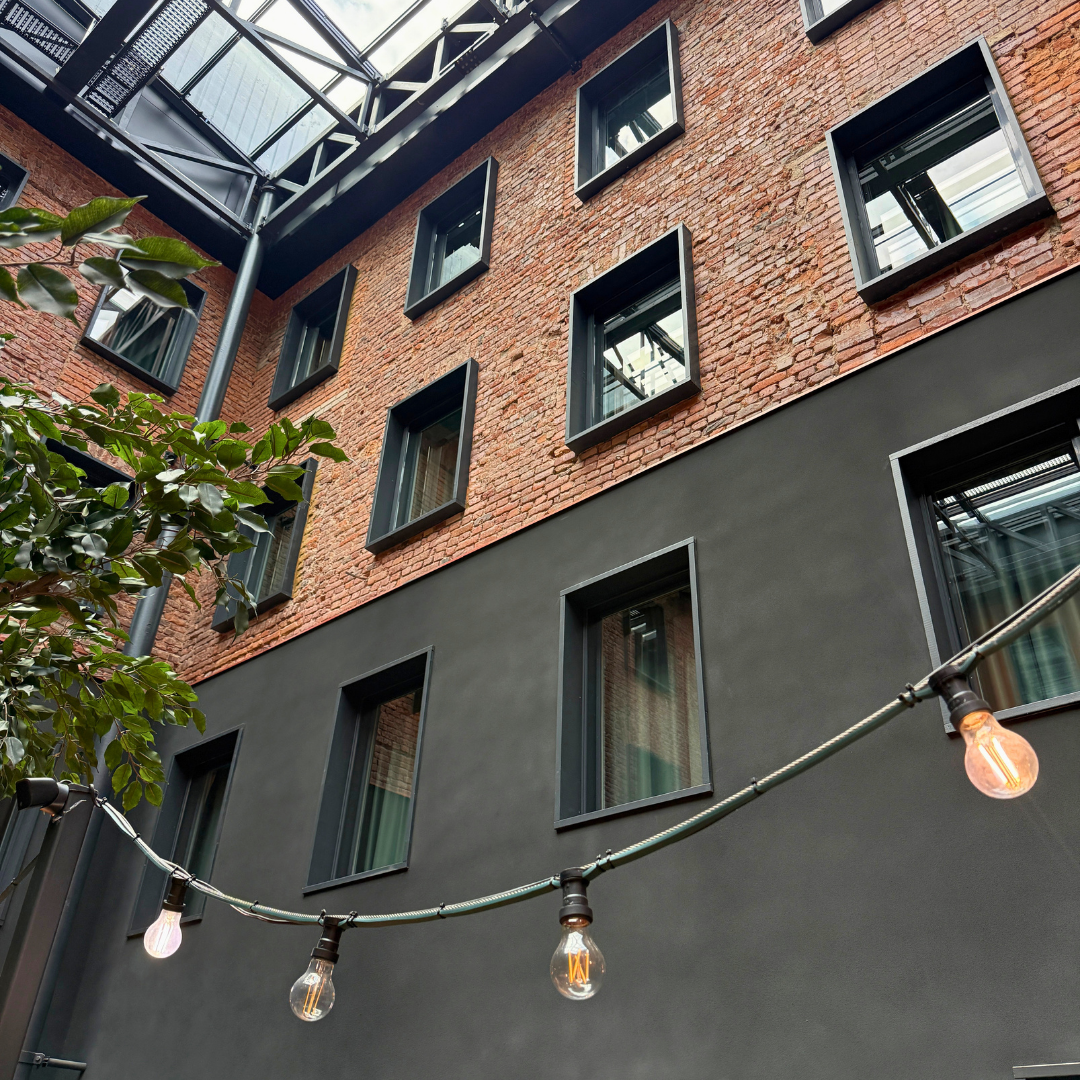
Meet like a Helsinki local: from boardroom to banquet
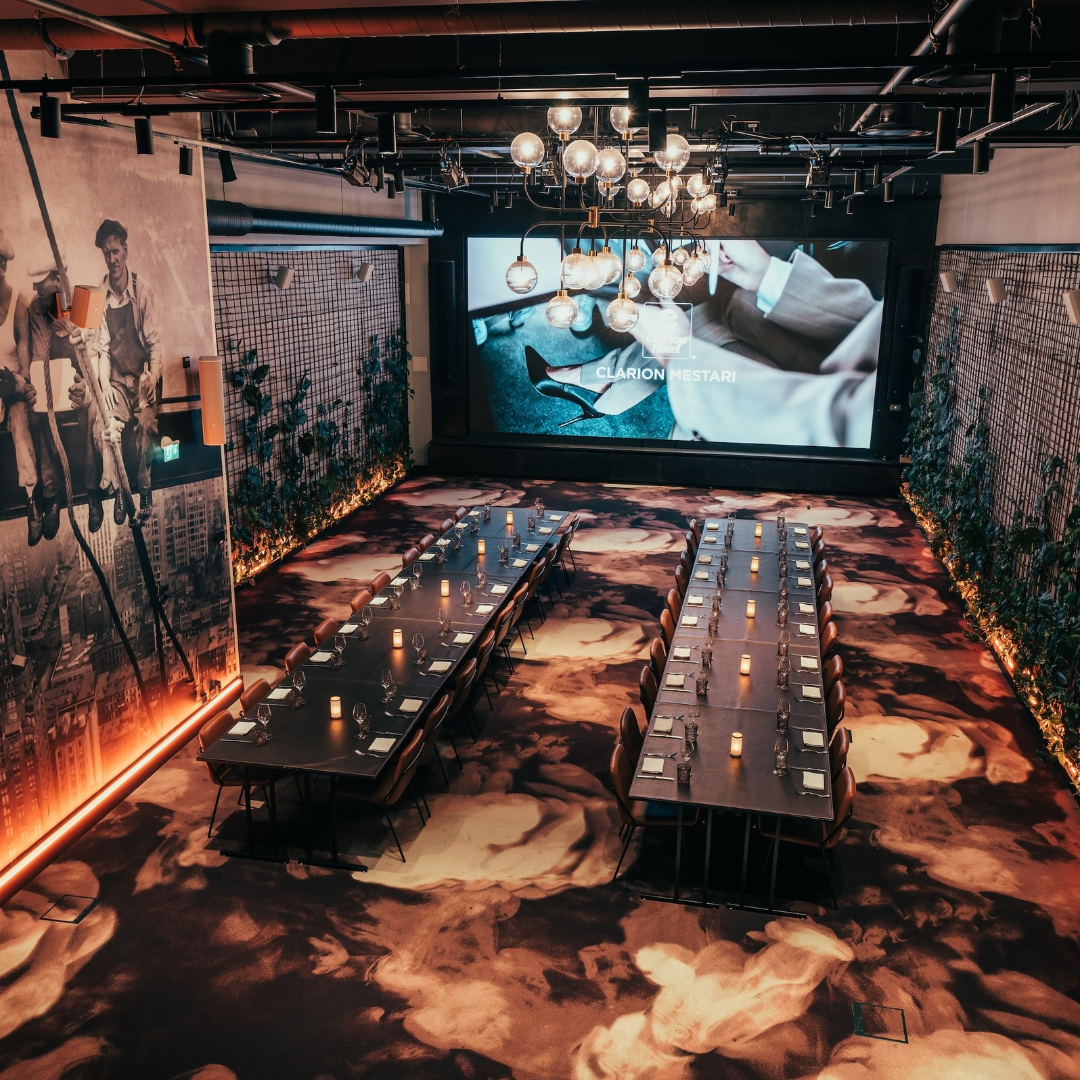
The hotel has nine meeting rooms and they cover a useful range. Smaller rooms have fixed boardroom tables, ideal for leadership teams and board meetings. Flexible spaces take workshops and breakouts of up to around 50. For bigger sessions, Höylä-Viila (around 110 m²) seats about 100 theatre-style, while Leka, the largest space at around 150 m², takes up to 250 for a standing reception.
That makes it a strong fit for:
- Board meetings and leadership offsites
- Workshops and training days with breakouts
- Product launches and small conferences of up to around 140
- Drinks receptions and celebration dinners
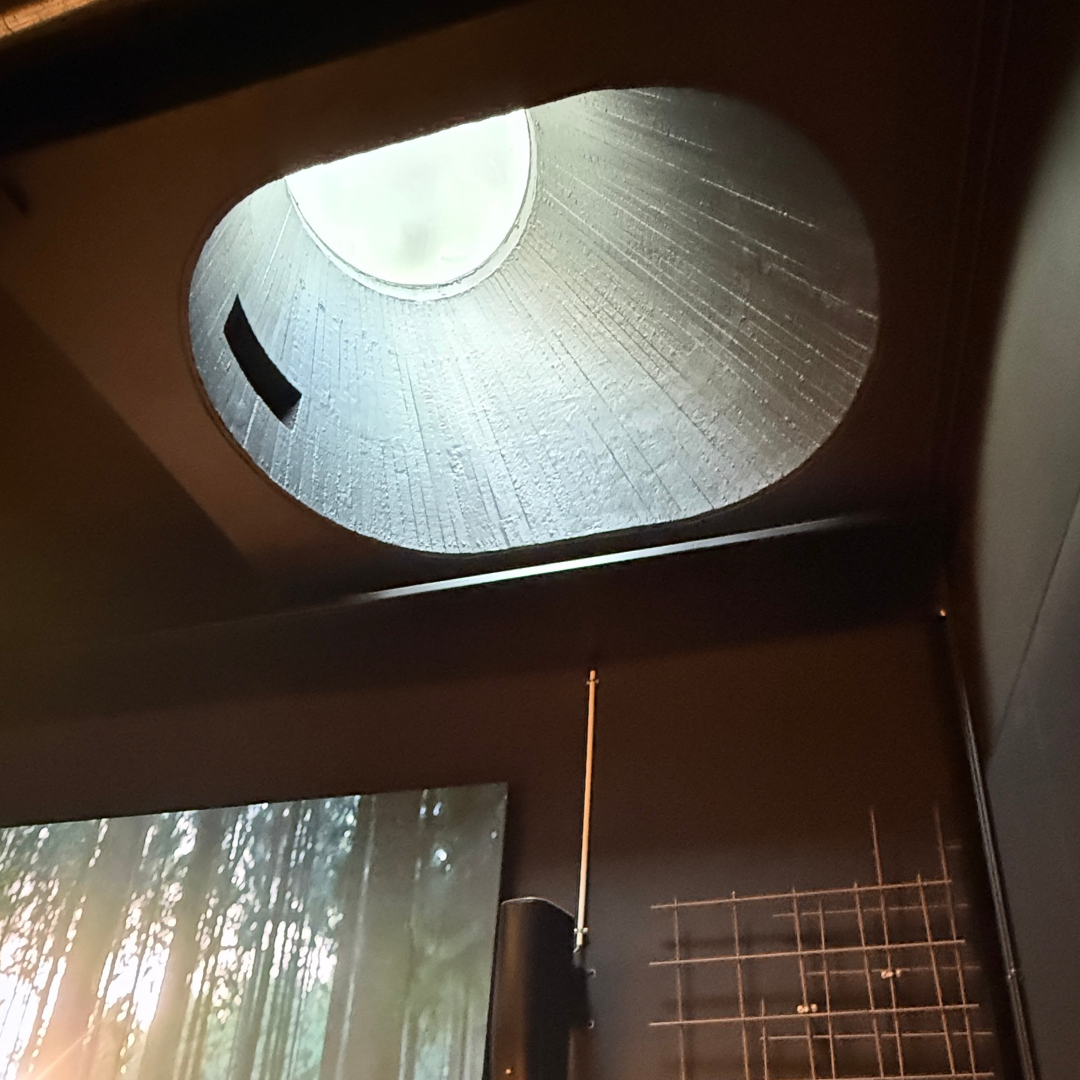
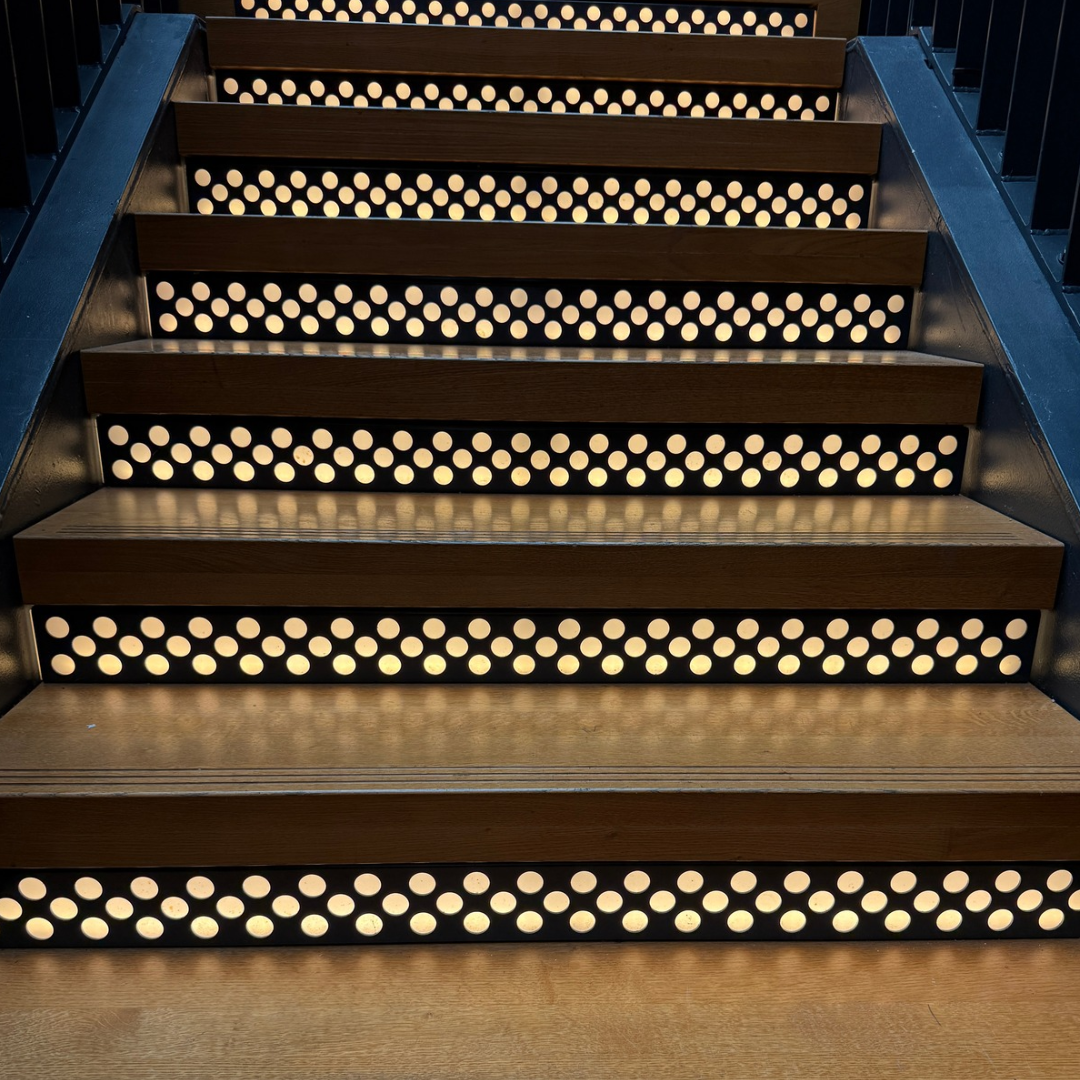
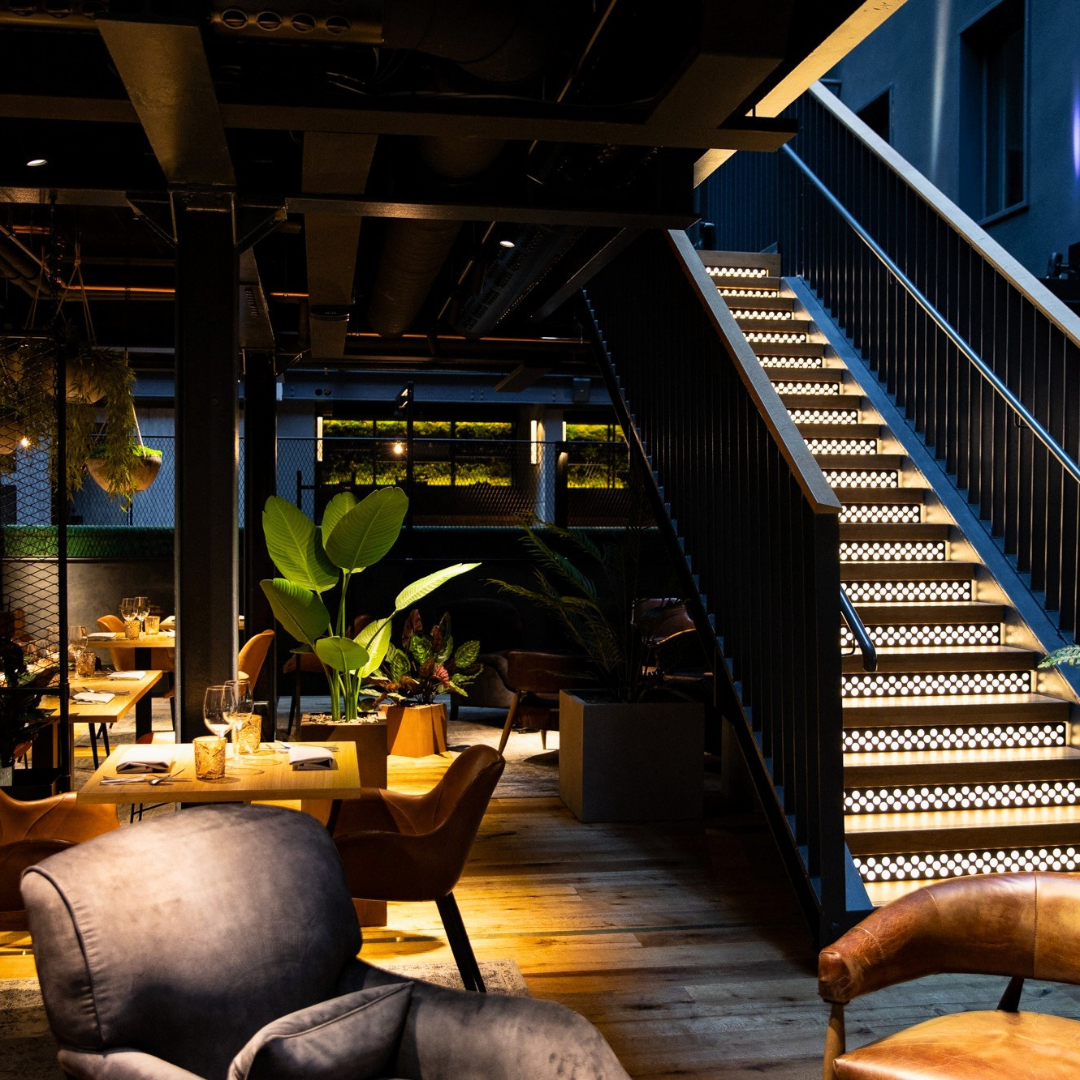
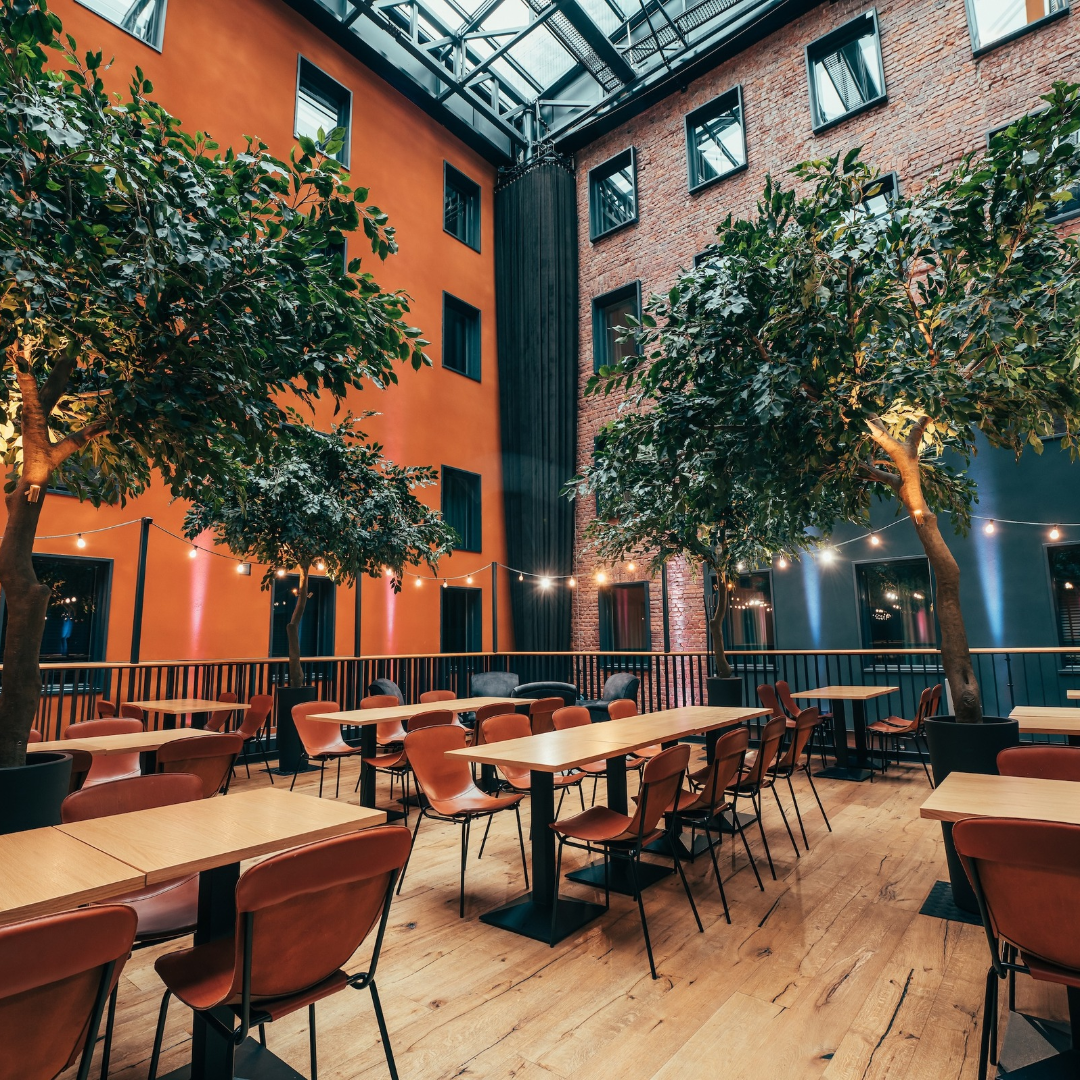
Rooms have natural daylight, free Wi-Fi and AV as standard. The building’s industrial-meets-contemporary design gives the meeting floors real character, so you won’t feel like you’re in another beige box.
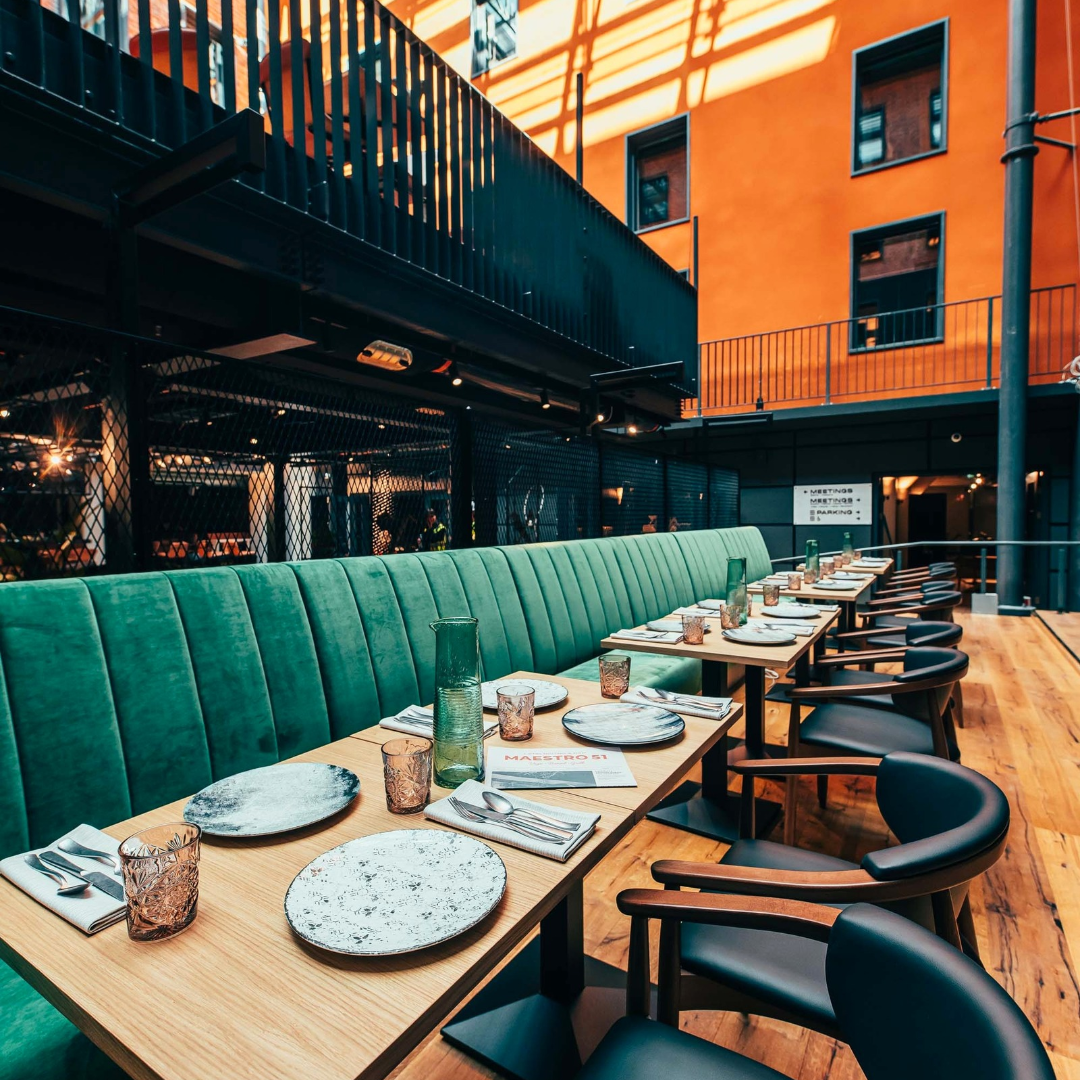
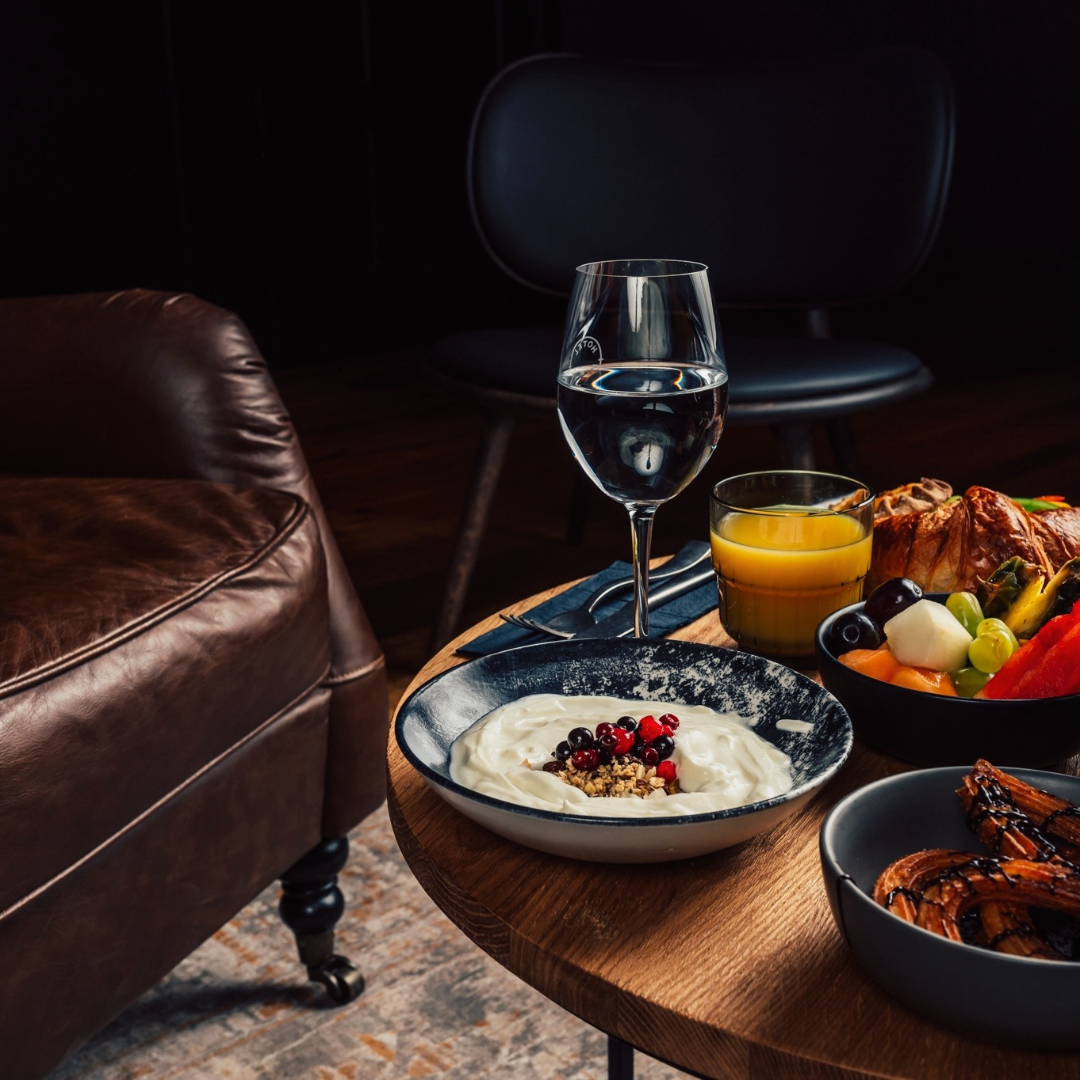
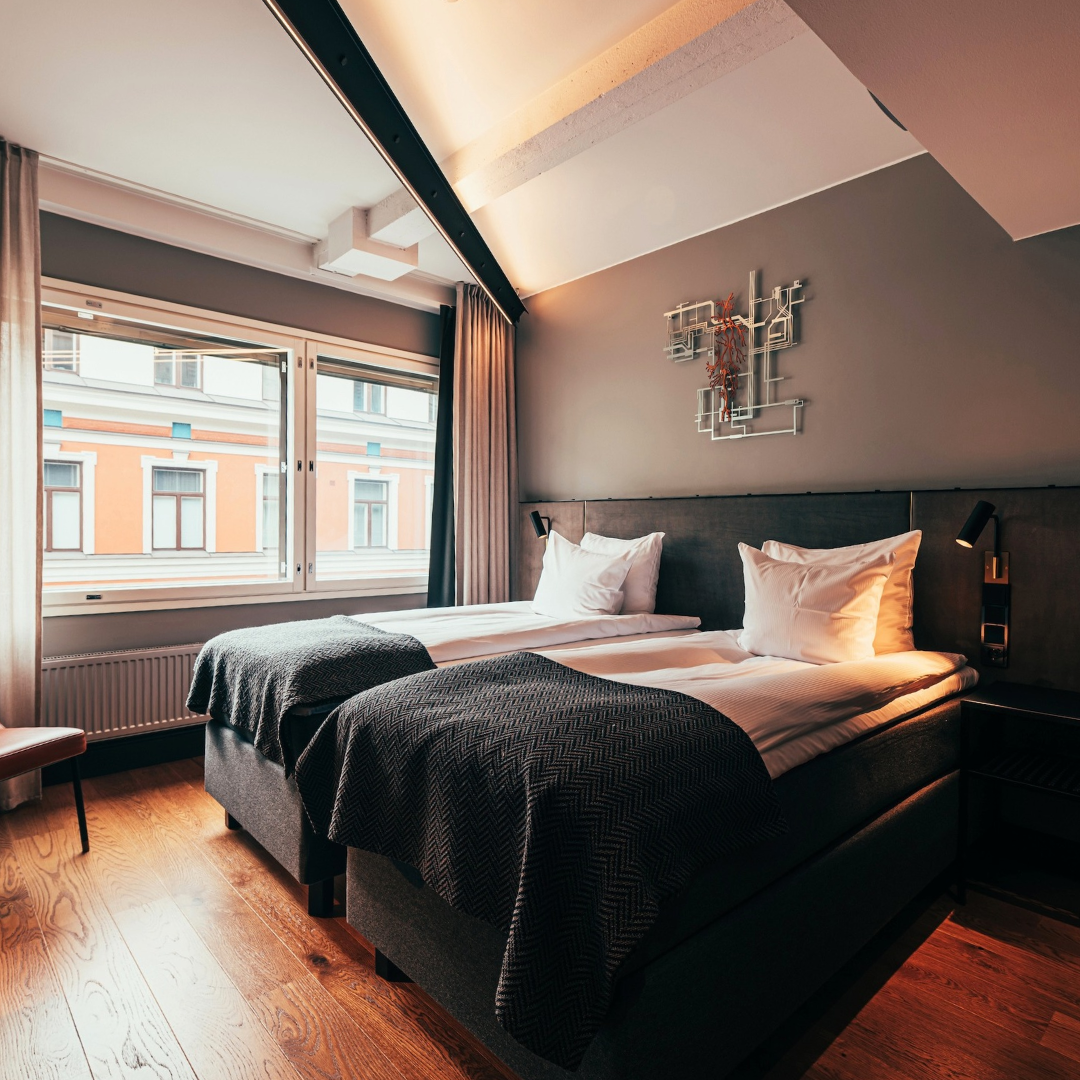
With 237 bedrooms, the hotel can house a sizeable group under one roof. Rooms are decorated in earthy, natural tones that feel calm after a full day of sessions. There’s a restaurant and bar for group dining, a gym and a guest sauna. This is Finland, after all. An in-house sauna evening is an easy, no-transfer way to round off a working day.
A useful extra for planners: Mestari is part of the Strawberry group, which has a large portfolio across Helsinki. If your numbers grow, or you need a VIP upgrade for senior guests, there are sister hotels a short walk away (more on that below).
Three certificates, not a greenwash
Plenty of hotels talk about sustainability. Mestari has the paperwork to back it up, with three independent certifications:
- Nordic Swan Ecolabel. The official ecolabel of the Nordic countries, with strict requirements on energy use, waste, chemicals and resource use. Strawberry has moved its whole portfolio onto the Swan, so this isn’t a one-off badge.
- Green Key. The international eco-label for tourism businesses, run by the Foundation for Environmental Education.
- Sustainable Travel Finland. Visit Finland’s own programme, which takes businesses through a structured development path before they earn the label.
Then there’s the building itself. A 1930s landmark, carefully extended in the 1960s and given a new purpose today, is about as low-impact as a hotel can get. No new-build footprint, just a good building kept in use.
The location does a lot of the heavy lifting too. Most of what your group will want to see is walkable, so there’s little need for coaches or taxis. And Helsinki can even be reached from London without flying at all; we travelled by rail to Stockholm and the overnight ferry across the Baltic and can vouch for the view at breakfast.
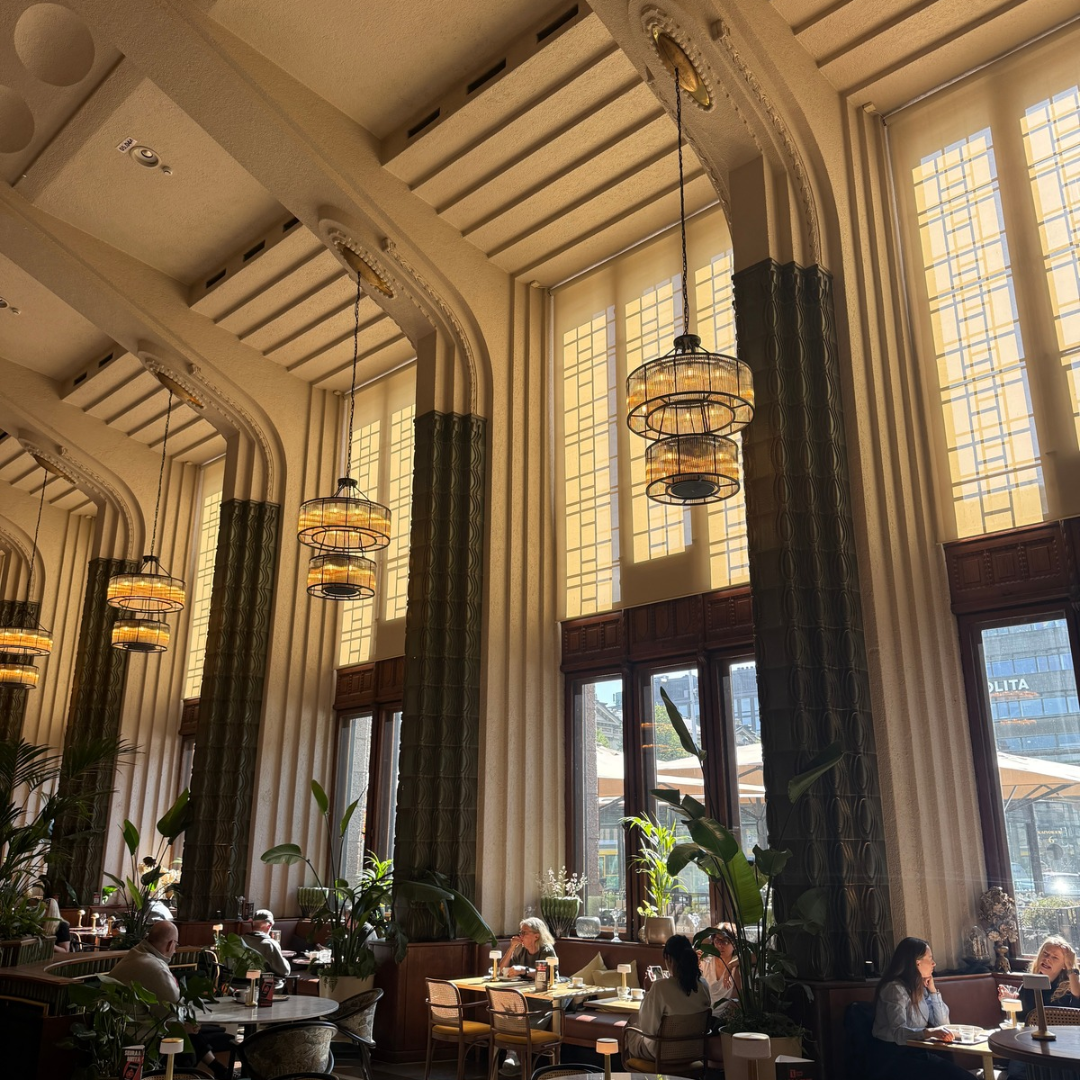
Move like a Helsinki local: everything on foot
Mestari sits in Kamppi, right in the centre, with the metro on the doorstep. But step outside and it feels like a neighbourhood, not a tourist zone. Locals cycling to work. Independent cafés. Small restaurants that are full on a Tuesday.
Helsinki is a compact city, and almost everything a group needs is within walking distance:
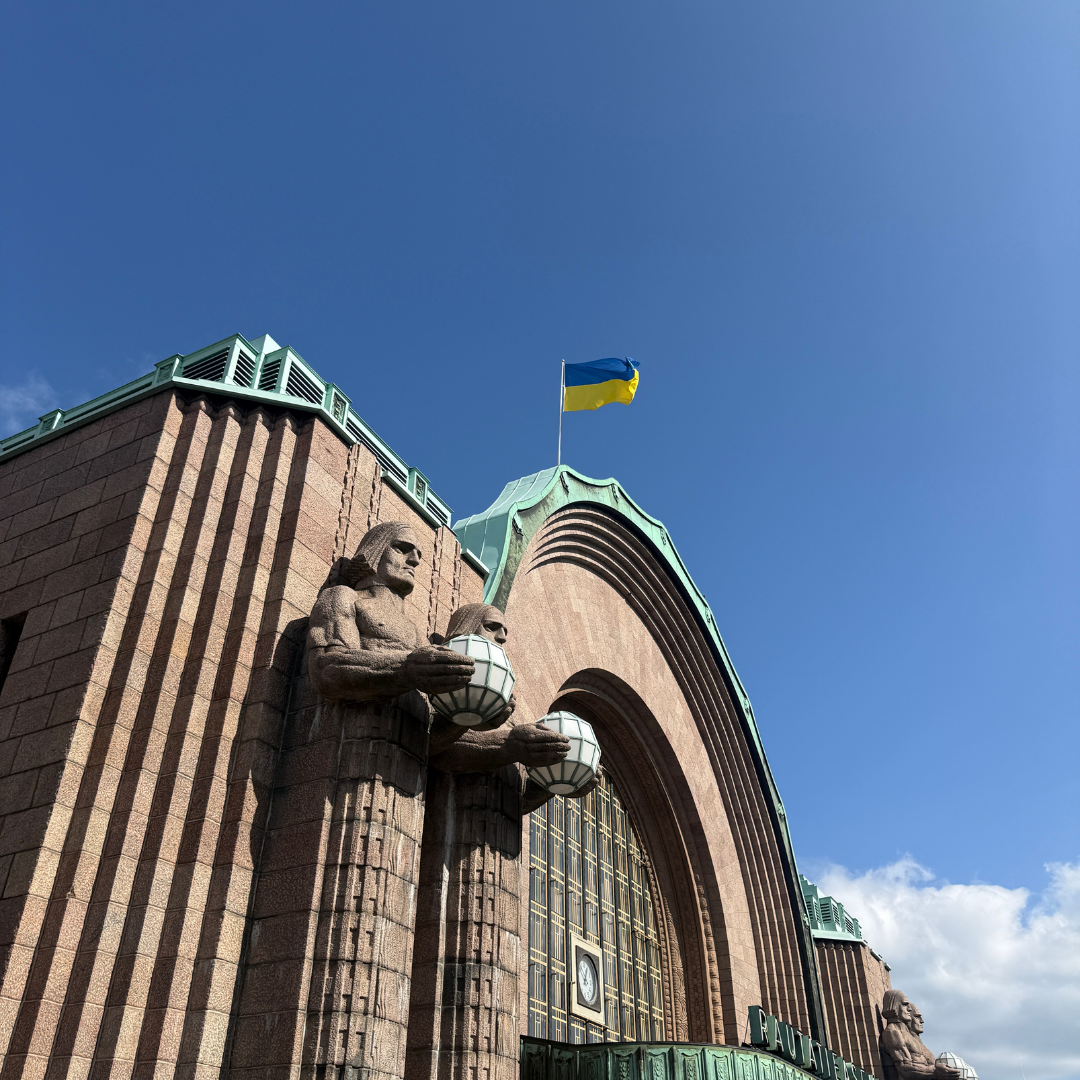
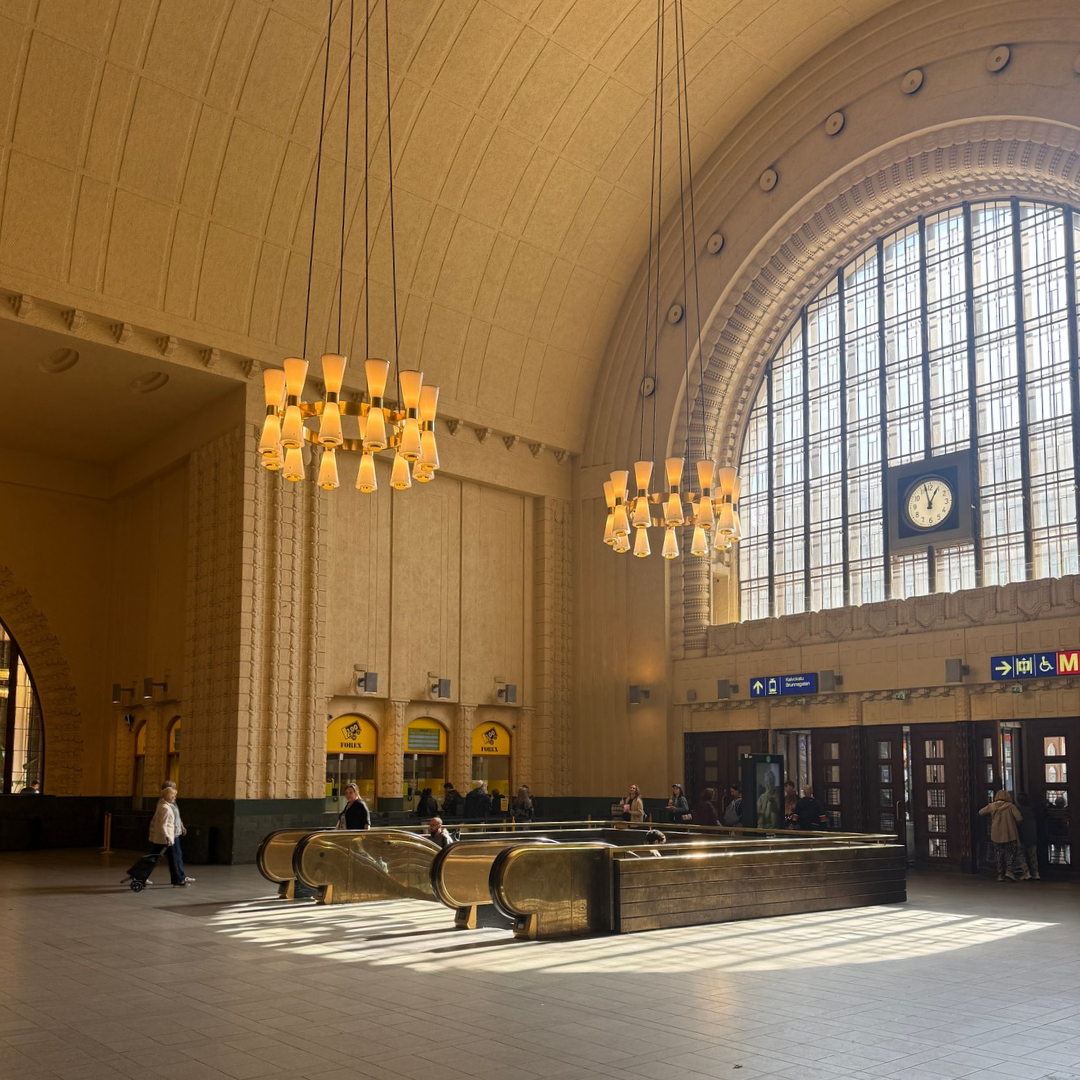
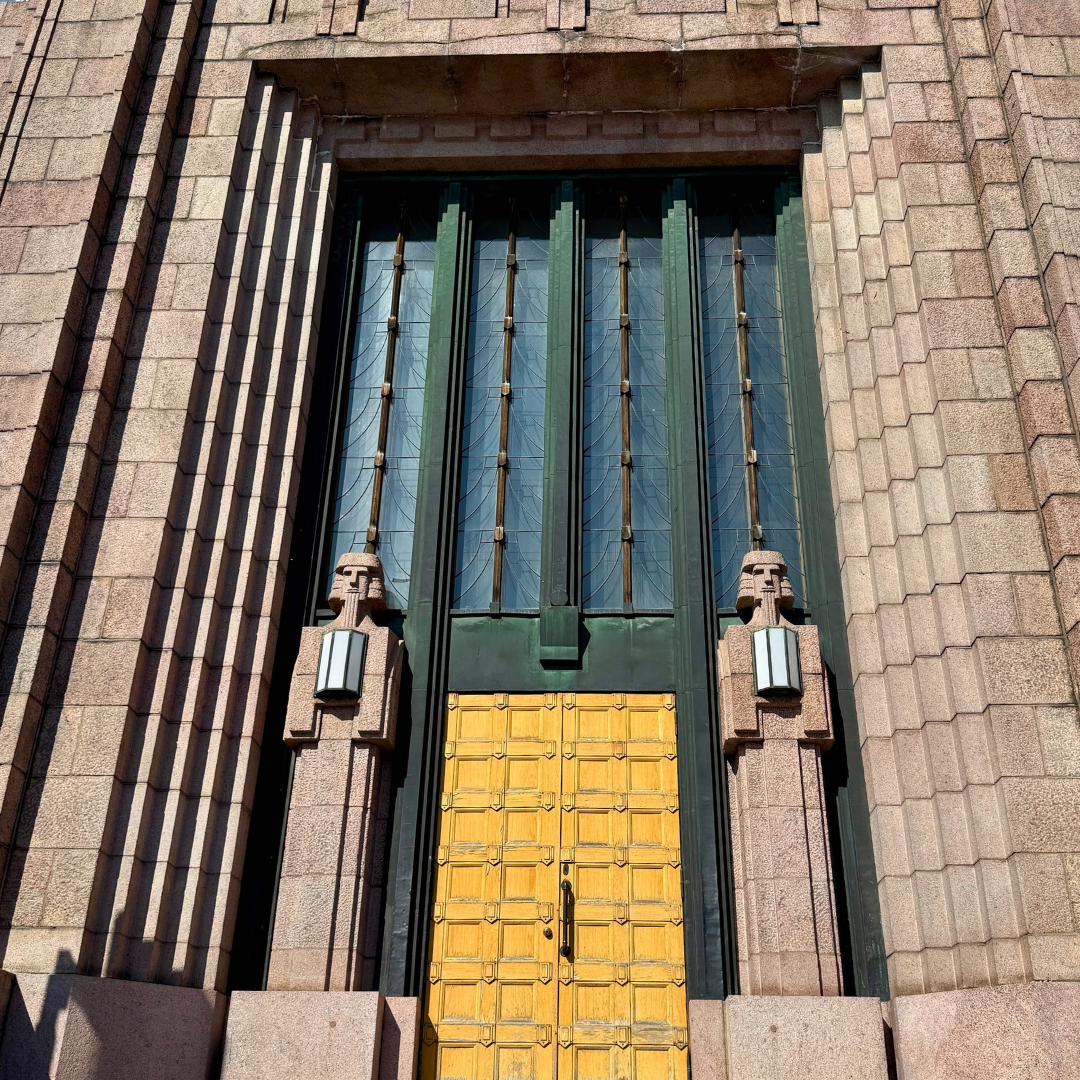
- Helsinki Central Station. A short stroll away, and the airport train runs straight into it, so arrivals are simple. Start a walking tour here under the station’s four giant granite lantern-bearers.
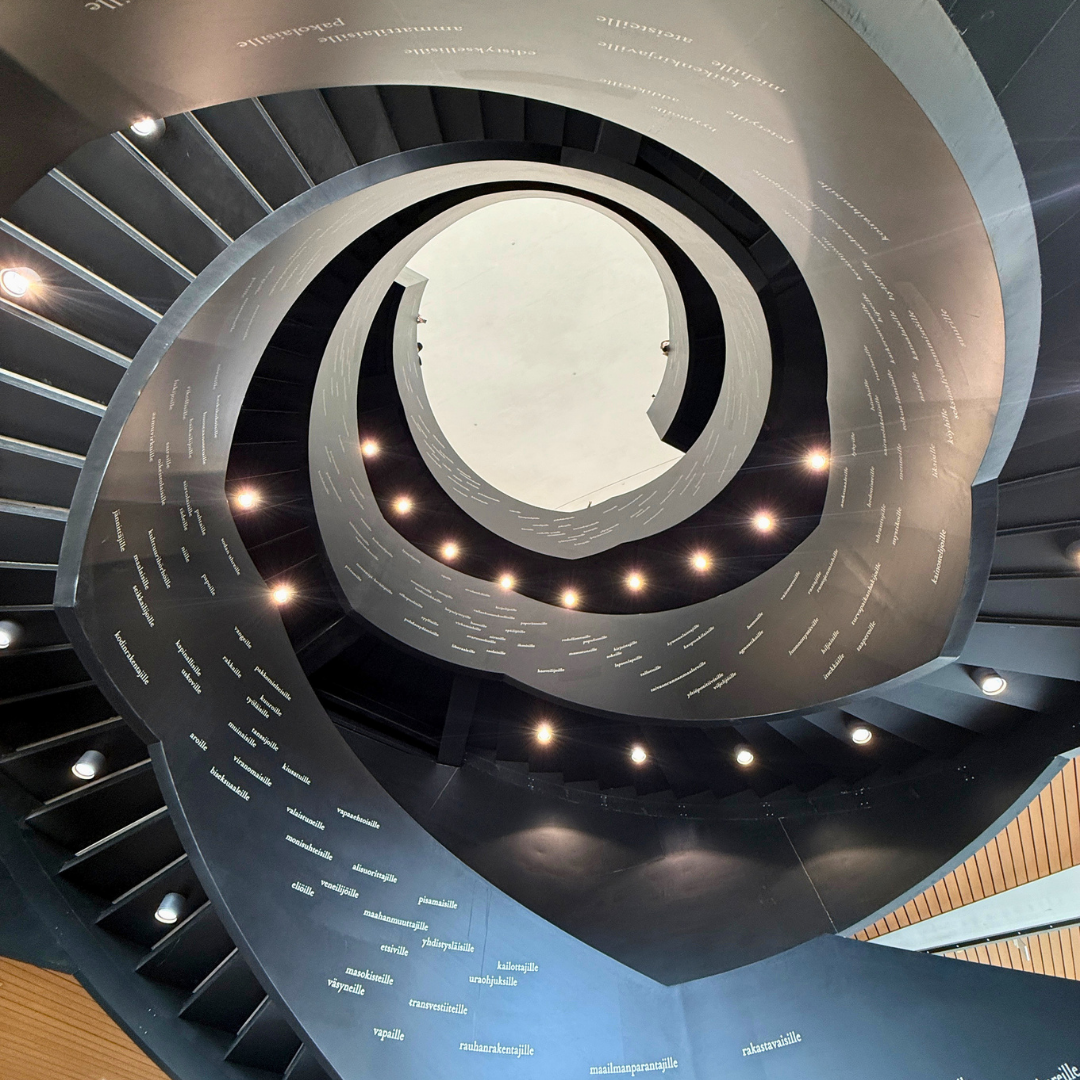
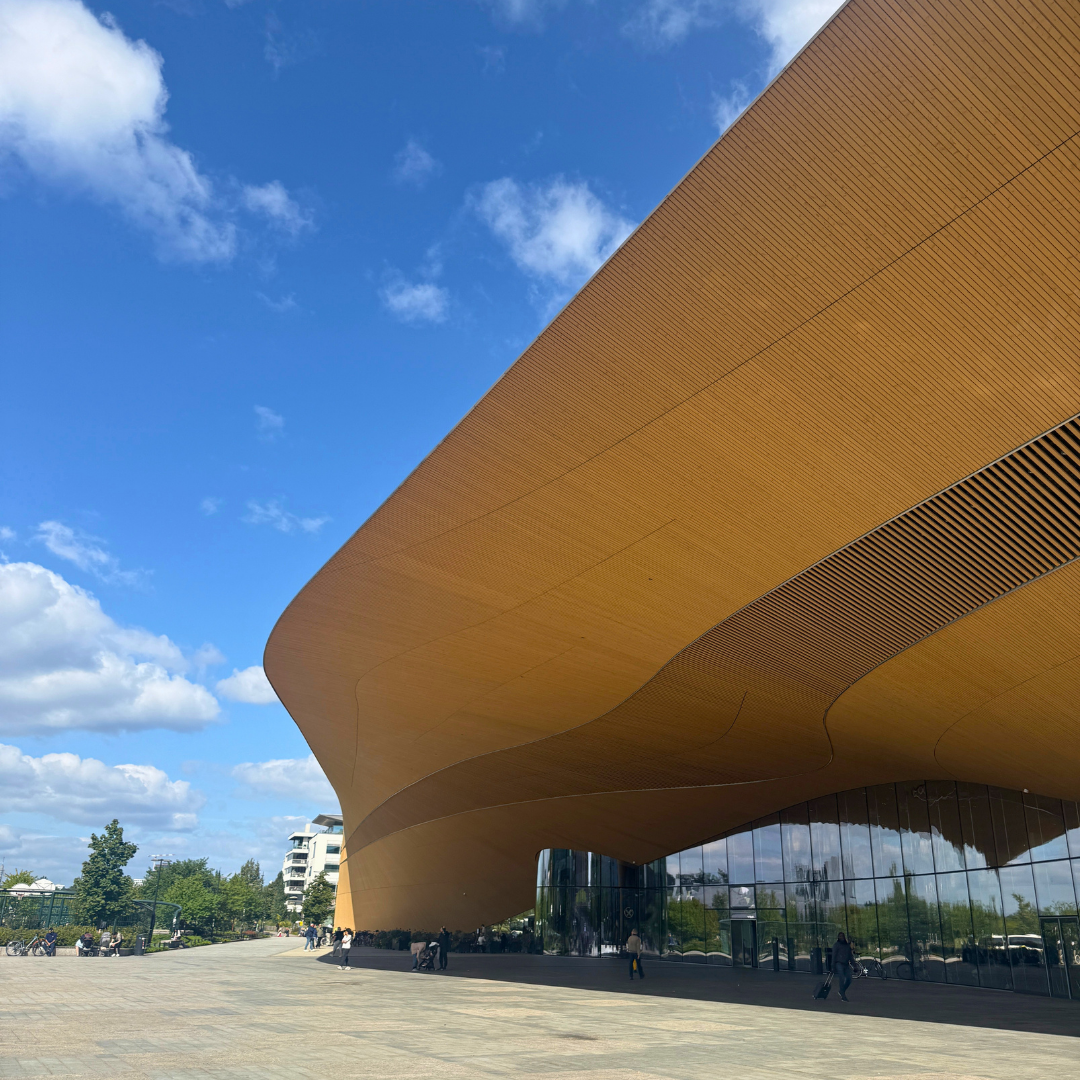
- Oodi Central Library. Far more than a library: meeting rooms, recording studios, a rooftop terrace and robots that shelve the books. A brilliant stop for groups interested in how Helsinki designs for wellbeing.
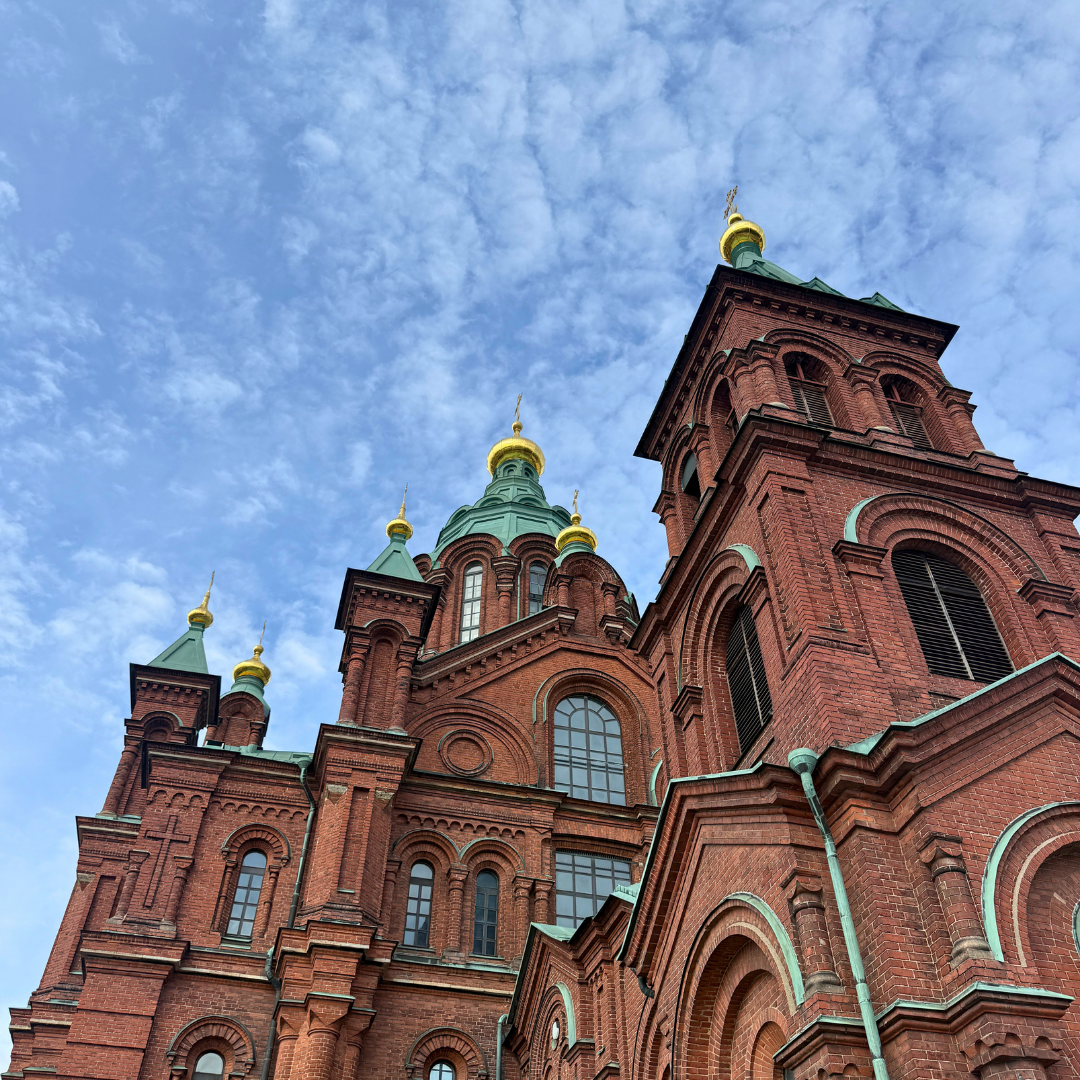
- Jugend (Art Nouveau) buildings. The surrounding streets are full of them, with carved façades and folklore motifs worth slowing down for.
- Kamppi Chapel of Silence. A curved wooden chapel in the middle of the busiest square in town. Five minutes inside and you’ll feel the volume of the day drop.
Dinner at Nolla
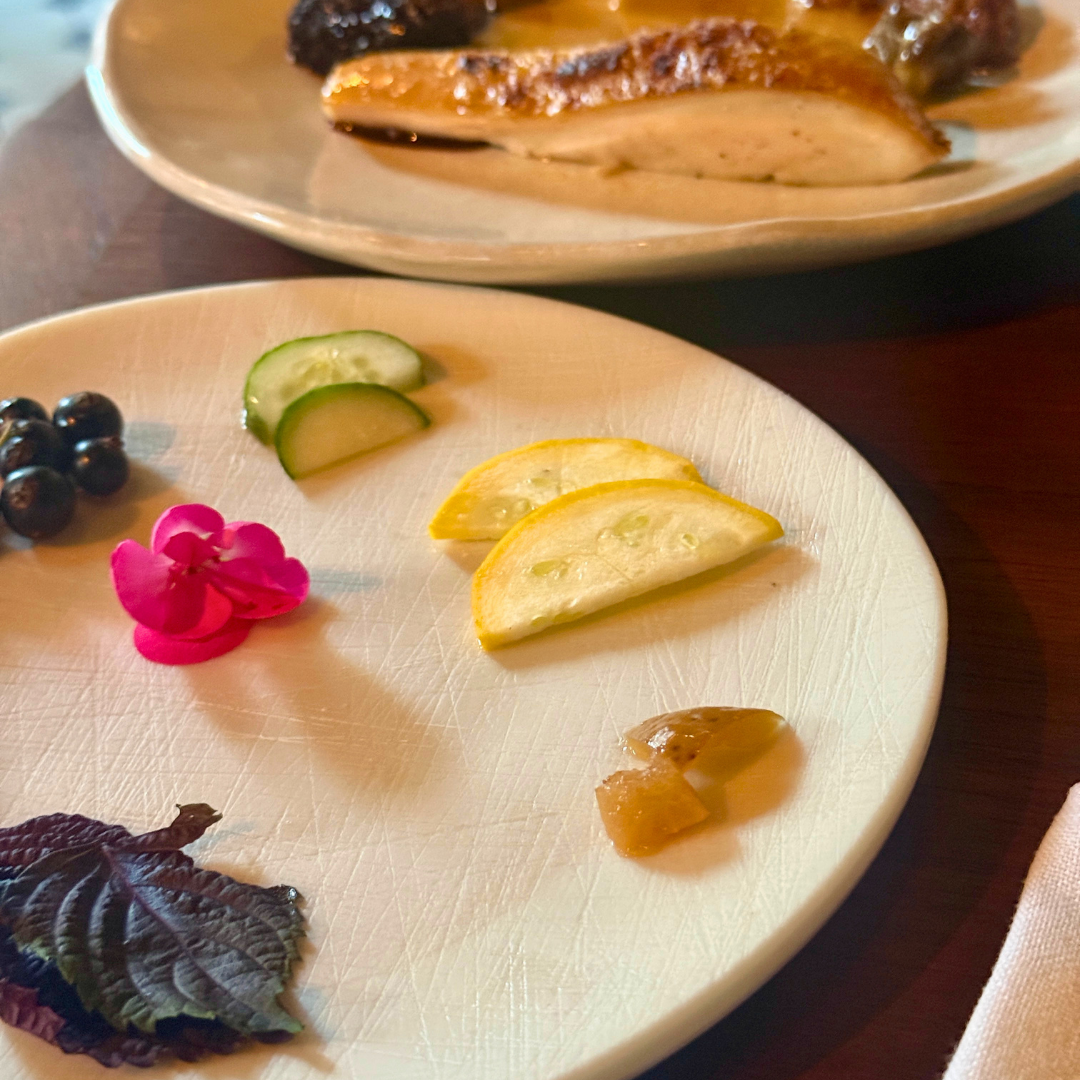
One of our best meals was a short walk down the same street, at Nolla. The name is Finnish for ‘zero’, and it’s a clue to how the place runs. This buzzy neighbourhood restaurant works to a zero-waste philosophy: food scraps go into its own composter, ingredients come from local farmers and fishermen, and the staff uniforms are made from old bed linen. It holds a Michelin Bib Gourmand, and the food has real punch. It’s a memorable and meaningful meal out.
Sauna like a Finn: two saunas, two moods
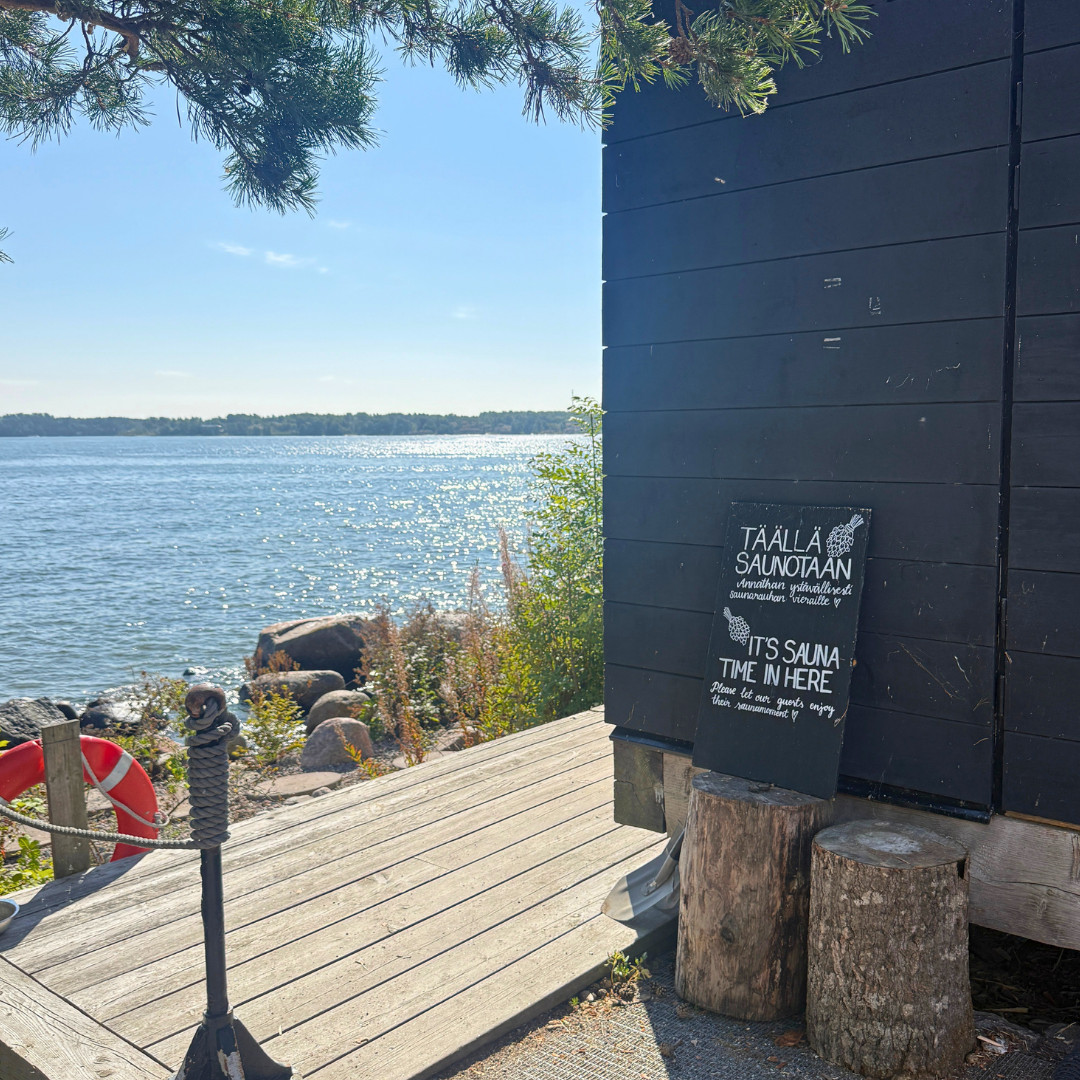
If you do just one thing in Helsinki, make it sauna. There are around 3.3 million of them in Finland and sauna culture has been on UNESCO’s Intangible Cultural Heritage list since 2020. For a group, it’s the ultimate leveller. Job titles don’t count for much in a wooden room at 80°C. We tried two, and both would slot neatly into a programme.
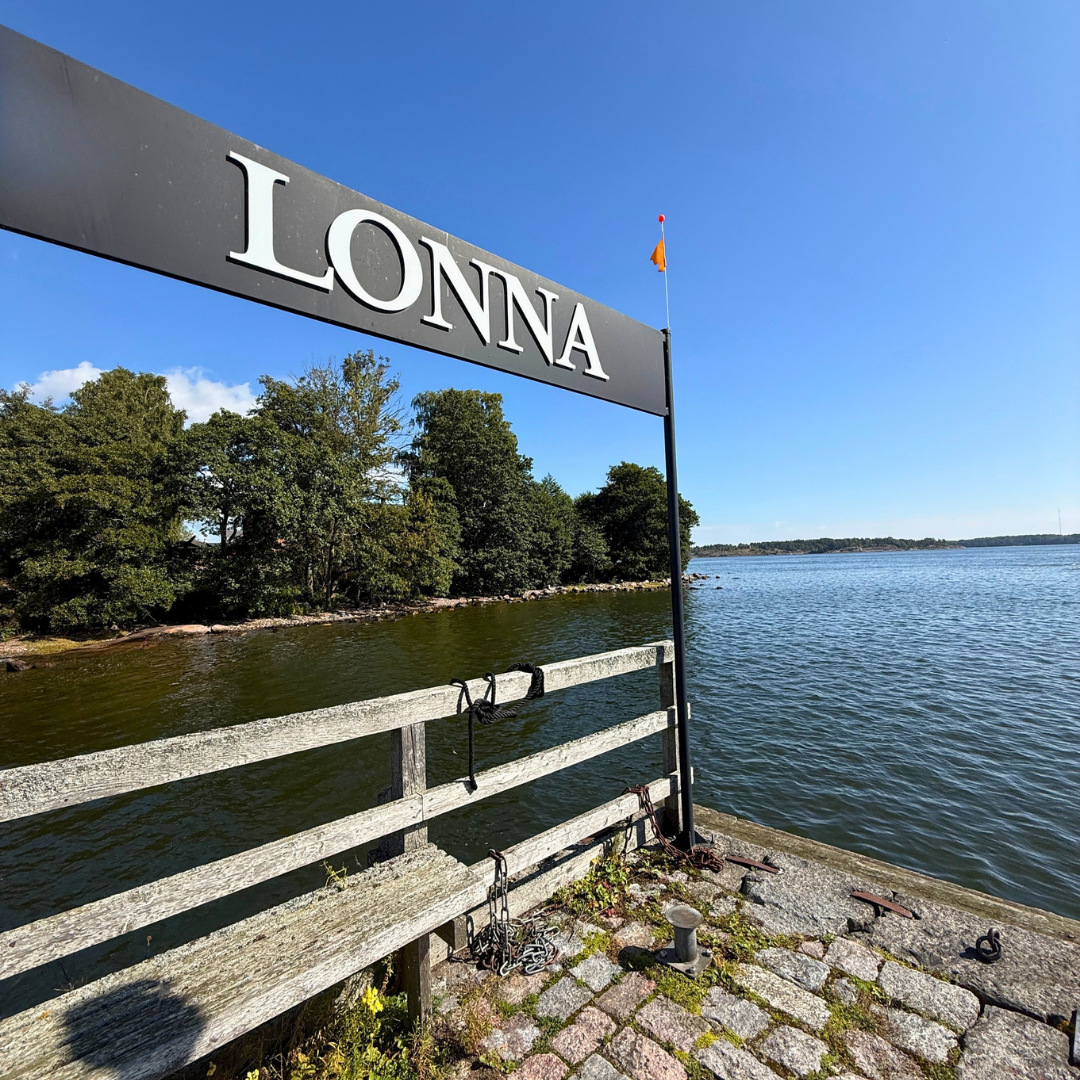
Lonna: an island sauna. Lonna is a tiny island between Market Square and Suomenlinna, about a ten-minute waterbus ride from the city. It was once used to clear naval mines and only opened to the public in 2014. Its old stone military buildings now hold a wood-heated public sauna, a seasonal restaurant using local, mostly organic Finnish ingredients and a bar. Sweat, swim in the sea, then eat dinner looking back at the city. Lonna is open from May to the end of September, so it’s a summer treat.
Löyly: the design sauna. On the Hernesaari waterfront, Löyly is all angular timber slats and big sea views. It’s the city’s design-led take on sauna, with a smoke sauna, ladders straight down into the Baltic, and a restaurant and terrace for afterwards. Unlike Lonna, it’s open all year, so in winter your group can try the full Finnish experience: sauna, then a dip through a hole in the ice. Sisu, in action.
Why Helsinki works for events
Have you heard? Finland has been named the World’s Happiest Country for the ninth year in a row. Spend a few days here and it starts to make sense. Work-life balance isn’t a fleeting illusion. Nature is never far away, with the Baltic on one side, forest on the other, and around 300 islands scattered offshore. Wellbeing isn’t an add-on to the programme. It’s woven into how the city works.
For planners, there are practical reasons too:
- Sustainability leader. Helsinki has been ranked the number one destination in the Global Destination Sustainability Index.
- Easy to reach. Helsinki has good direct flight connections, and Finnair has announced 12 new international routes from Finland for next summer (2027). Or arrive the slow way, by sea.
- Compact and walkable. Less time in transfers, more time together.
- Experiences with a sense of place. Island hopping, sauna, foraging in Nuuksio National Park, all within easy reach of the centre.
And if you need more than one hotel, Strawberry has an unusually deep reach in the Helsinki region. There are four full-service Clarion hotels, three Comfort hotels, two Home hotels and the Quality Hotel Sveitsi resort. Then there are the individual luxury and lifestyle hotels: the iconic Hotel Kämp, freshly refurbished, the luxurious St. George, the elegant Hotel Lilla Roberts and the vibrant Hobo Hotel. One group, one contract and options for every budget and every VIP.
For more information about hosting incentives and events in Helskini see our Destination Guide.
Why we’d book it
If you want a Helsinki hotel that combines a central, walkable location with real character and credentials you can actually point to, Clarion Hotel Mestari is it.
Nine meeting rooms, 237 bedrooms, a sauna on site, Nolla down the road and the islands a short hop away. Add a building with nearly a century of stories in its walls and your delegates get far more than a place to sleep. They get a feel for how Helsinki lives: calmly, sustainably and with a sauna never far away.
🌱 Sustainability note: Clarion Hotel Mestari holds the Nordic Swan Ecolabel, Green Key and Sustainable Travel Finland certifications. It occupies a restored and repurposed 1930s landmark rather than a new-build, most city highlights are on foot, and Helsinki is reachable from London by rail and sea.
Our honest take: It’s a brilliant fit for groups of around 20 to 140 who want a city-centre base with personality. For a full plenary of several hundred, you’ll want a bigger venue, though Strawberry’s larger Helsinki hotels can take over there. For leadership teams, incentives and small conferences, it’s an easy recommendation.
Find your next venue with Evolve
We don’t choose venues from brochures. Every week our team is out on site visits, showcases and FAM trips. So we know what a space is really like to be in: where the light falls, how a room sounds when it’s full and where the Wi-Fi gives up.
That’s what our venue finding service is built on:
- First-hand knowledge. Our recommendations come from somewhere we’ve seen for ourselves.
- Beyond the ballroom. Hidden gems, historic spaces, new openings and unusual venues across Europe.
- Lower-impact. Destinations you can reach by train (or ferry), restored buildings and genuine sustainability credentials. Always a bonus, never a lecture.
Tell us your dates, group size and brief, and we’ll send you a shortlist of venues we’ve walked through ourselves.
Call 020 7610 2808, contact the Evolve Events team or email anna@evolve-events.com.